Building Business Credit from Scratch in 2026: 4 Steps

Building business credit from scratch in 2026 is a vital process for new entrepreneurs, enabling access to funding and fostering financial independence for their ventures.
For any aspiring entrepreneur, the journey of launching a new venture is filled with excitement and challenges. Among the most critical early steps is understanding how to begin building business credit from scratch in 2026. Establishing a strong credit profile for your business is not just an option; it’s a fundamental pillar for sustainable growth, offering access to better financing terms, larger loans, and a clear distinction from your personal finances. This guide will walk you through the essential initial steps, ensuring your business starts on solid financial ground.
Understanding Business Credit’s Importance in 2026
In today’s dynamic economic landscape, business credit is more than just a score; it’s a strategic asset. It dictates your company’s ability to secure loans, lines of credit, and even favorable terms with suppliers. For new entrepreneurs, differentiating personal from business credit is paramount to protect personal assets and unlock growth opportunities.
The year 2026 brings with it evolving financial regulations and lending practices, making a clear understanding of business credit even more critical. Lenders and suppliers increasingly scrutinize a company’s financial health, and a robust business credit score signals reliability and lower risk. Without it, your business may struggle to obtain the capital needed for expansion, inventory, or even daily operations.
Why Separate Business and Personal Credit?
Many new entrepreneurs mistakenly use personal credit for business expenses. While convenient initially, this approach can lead to significant problems down the line. Separating your business and personal credit protects your personal assets from business liabilities and makes your business appear more professional and stable to potential lenders and partners.
- Asset Protection: Shields personal savings and property from business debts.
- Professional Image: Enhances credibility with suppliers, lenders, and investors.
- Easier Funding: Qualify for larger loans and better interest rates.
- Business Valuation: Contributes to a clearer financial picture for potential buyers or investors.
Ultimately, prioritizing the establishment of dedicated business credit from day one sets a professional tone and provides a robust financial framework for your company’s future. It’s an investment in your business’s longevity and capacity for independent financial growth.
Step 1: Formalize Your Business Entity
The very first and arguably most crucial step in building business credit is to legally establish your business as a separate entity. This isn’t just about paperwork; it’s about creating a distinct legal and financial identity for your company. Without this foundational step, your business will remain inextricably linked to your personal finances, hindering your ability to build independent business credit.
Choosing the right business structure—whether it’s an LLC, Corporation, or Partnership—has significant implications for liability, taxation, and your ability to establish business credit. Each structure offers different benefits and requirements, so it’s essential to consult with legal and financial professionals to determine the best fit for your specific venture and long-term goals.
Register Your Business Name and Structure
Once you’ve decided on a legal structure, the next step is to officially register your business. This typically involves filing with your state’s Secretary of State or a similar regulatory body. This process makes your business a legally recognized entity, a prerequisite for almost all subsequent steps in building credit.
Beyond state registration, consider any local licenses or permits required for your industry and location. Compliance with all legal requirements is not only essential for operation but also demonstrates a level of professionalism and legitimacy that lenders appreciate.
- LLC (Limited Liability Company): Offers liability protection for owners and flexible tax treatment.
- Corporation (S-Corp or C-Corp): Provides strong liability protection and can attract investors, but involves more complex regulations.
- Partnership: Suitable for businesses with two or more owners, but often carries shared liability.
Properly formalizing your business entity creates the necessary legal separation between you and your company, laying the groundwork for establishing its own creditworthiness. This initial investment in legal structure pays dividends by protecting your personal assets and facilitating future financial endeavors.
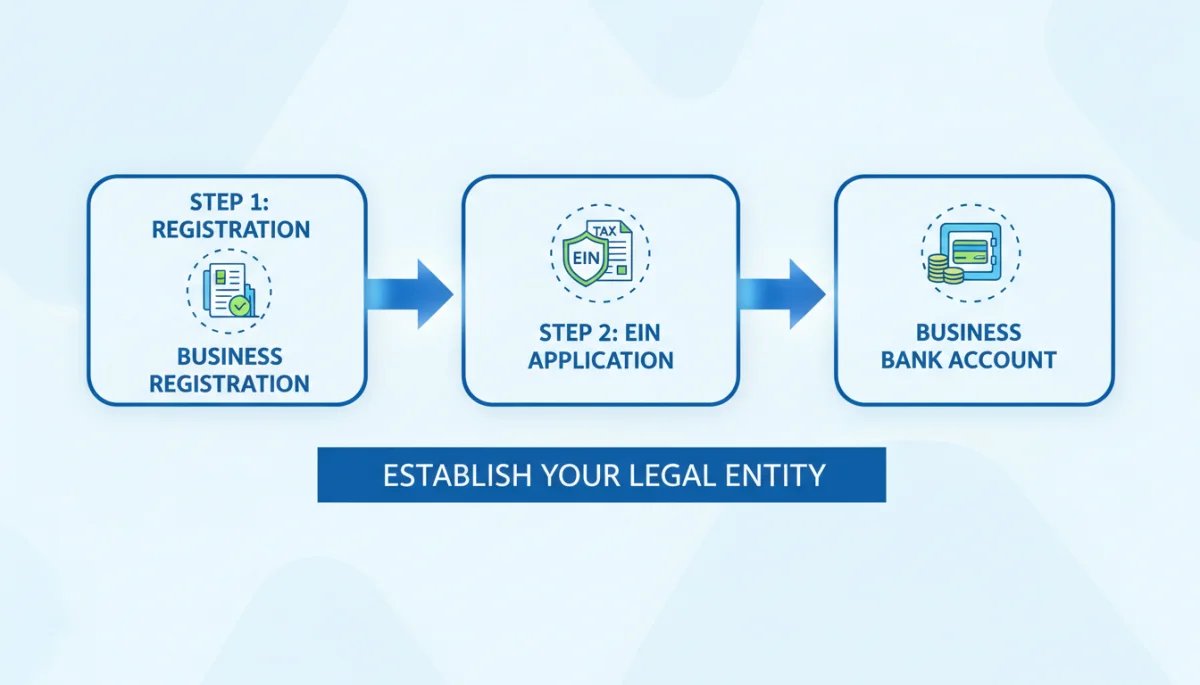

Step 2: Obtain an Employer Identification Number (EIN)
After formalizing your business entity, securing an Employer Identification Number (EIN) is the next critical step. An EIN is essentially a Social Security number for your business, issued by the IRS. It’s a unique nine-digit number that identifies your business for tax purposes and is indispensable for many financial transactions.
Even if you’re a sole proprietor without employees, obtaining an EIN is highly recommended. It helps to further separate your business from your personal identity, especially when opening a business bank account or applying for business credit. This separation is key to establishing an independent credit profile for your company.
How to Apply for an EIN
Applying for an EIN is a straightforward process that can typically be completed online through the IRS website. The application is free, and you can usually receive your EIN immediately after completing the online form. You’ll need to provide basic information about your business, such as its name, address, and legal structure.
Having an EIN is not only a requirement for many business activities but also a clear signal to credit bureaus and lenders that your business is a legitimate, separate entity. It streamlines tax filings and is often a prerequisite for opening business accounts and securing financing.
- Online Application: The quickest method, usually providing the EIN instantly.
- Fax or Mail: Slower options, but available if online application isn’t feasible.
- Required Information: Business name, address, type of entity, and reason for applying.
The EIN serves as a cornerstone of your business’s financial identity. It’s a vital piece of information that will be used repeatedly throughout your journey of building business credit, from banking to vendor applications.
Step 3: Open a Dedicated Business Bank Account
With your business legally established and an EIN in hand, the next logical and essential step is to open a bank account exclusively for your business. This is not merely a convenience; it’s a fundamental practice for financial transparency, legal protection, and, most importantly, for building business credit. Commingling personal and business funds can blur the lines, making it difficult to track business expenses and revenues, and complicating tax preparation.
A dedicated business bank account provides a clear record of your company’s financial activities. This separation is crucial for demonstrating financial responsibility to potential lenders and credit bureaus. When your business has its own financial footprint, it begins to establish its own independent credit history, distinct from your personal credit score.
Choosing the Right Business Bank
When selecting a bank for your business, consider more than just convenience. Look for institutions that offer business-specific services, such as business checking and savings accounts, merchant services, and potentially small business loans. Some banks also offer perks tailored to new businesses, like waived fees or introductory bonuses.
Ensure the bank you choose has a strong reputation for supporting small businesses and understands the unique needs of entrepreneurs. A good banking relationship can be a valuable asset as your business grows and its financial needs evolve.
- Separate Funds: Essential for maintaining legal separation and clear financial records.
- Professionalism: Enhances your business’s image with clients and suppliers.
- Credit Building: A prerequisite for obtaining business loans and credit lines.
- Tax Preparation: Simplifies accounting and makes tax filing much easier.
A dedicated business bank account is a non-negotiable step for any serious entrepreneur looking to build a financially sound and creditworthy business. It’s the primary channel through which all business transactions flow, creating a verifiable financial history.
Step 4: Establish a Business Phone Number and Address
To further solidify your business’s independent identity and enhance its credibility, establishing a dedicated business phone number and a professional business address is paramount. This goes beyond mere aesthetics; it’s a vital step that impacts how credit bureaus and potential lenders perceive your company. A legitimate business presence, distinct from your personal information, is a key indicator of professionalism and stability.
Using your personal phone number or home address for all business dealings can signal to lenders that your business might not be fully separated from your personal life, potentially hindering your ability to secure business-specific credit. A professional contact presence helps to build trust and authority in the eyes of financial institutions and customers alike.
Why a Dedicated Business Contact is Crucial
Credit reporting agencies and lenders often verify business information through public records and directories. A consistent and professional business phone number and address listed across all platforms (website, business registrations, directories) provide a clear, verifiable identity for your company. This consistency is a critical factor in how your business’s creditworthiness is assessed.
Moreover, a professional business presence reinforces your brand’s image. Customers and partners are more likely to trust and engage with a business that presents itself professionally, with dedicated contact information rather than personal details.
- Credibility: Lenders and credit bureaus view dedicated contact information as a sign of a legitimate business.
- Professionalism: Enhances your brand image and customer trust.
- Privacy: Protects your personal phone number and home address from public exposure.
- Directory Listings: Essential for accurate listings in business directories, which credit bureaus often check.
By establishing a distinct business phone number and address, you are actively constructing the public and financial identity of your company, an identity that is critical for successfully building business credit.
Leveraging Vendor Credit and Trade Lines
Once the foundational steps of formalizing your business, obtaining an EIN, opening a business bank account, and establishing a professional presence are complete, the next strategic move in building business credit is to leverage vendor credit and trade lines. This is often the initial gateway to establishing a credit history directly tied to your business, as many traditional lenders require a pre-existing credit profile before extending significant credit.
Vendor credit, sometimes referred to as ‘trade credit,’ involves obtaining goods or services from suppliers on credit terms, typically Net 30, Net 60, or Net 90. This means you have a certain number of days to pay for invoices without incurring interest or penalties. When these payments are made on time, the vendors may report your payment history to business credit bureaus, such as Dun & Bradstreet, Experian Business, and Equifax Business. These timely payments are the building blocks of your business credit score.
Identifying Business-Friendly Vendors
Not all vendors report to business credit bureaus. Therefore, it’s crucial to proactively seek out suppliers who are known to report payment activity. Many office supply companies, shipping services, and industry-specific suppliers offer Net 30 accounts that report to credit bureaus. Researching and specifically applying for these types of accounts is a deliberate strategy to build your credit file.
Start with smaller credit lines and always pay your invoices punctually, or even early. This demonstrates reliability and can lead to higher credit limits and more favorable terms in the future. As your business credit grows, you’ll find it easier to secure credit from a wider range of vendors and, eventually, traditional financial institutions.
- Net 30 Accounts: Seek vendors offering these terms to build payment history.
- Timely Payments: Always pay invoices on or before the due date to ensure positive reporting.
- Diverse Vendors: Establish trade lines with multiple vendors to create a robust credit profile.
- Monitor Reports: Regularly check your business credit reports to ensure accurate reporting.
Leveraging vendor credit is a practical and effective way for new businesses to begin accumulating positive payment history, which is fundamental for establishing and strengthening their business credit score over time.
Monitoring and Maintaining Your Business Credit
Building business credit is an ongoing process that extends far beyond the initial setup. Once you’ve established your foundational steps and begun leveraging vendor credit, consistent monitoring and diligent maintenance are crucial for ensuring your credit profile remains strong and healthy. Just as with personal credit, business credit reports can contain errors, and proactive management can prevent potential issues from derailing your financial progress.
Regularly checking your business credit reports from agencies like Dun & Bradstreet, Experian Business, and Equifax Business allows you to identify any inaccuracies or fraudulent activity promptly. These reports provide insights into your payment history, credit utilization, and overall financial standing, which are key factors considered by lenders and suppliers.
Strategies for Ongoing Credit Health
Maintaining excellent business credit involves more than just paying bills on time. It requires strategic financial management and a proactive approach to your credit profile. Keep your credit utilization low, ideally below 30%, to demonstrate responsible credit management. Avoid maxing out credit lines, even if you pay them off quickly.
Continuously foster strong relationships with your vendors and lenders. Positive interactions and a history of reliable payments can often lead to more flexible terms and increased credit limits. Remember, your business credit is a dynamic asset that requires continuous attention and care to support your company’s long-term financial health.
- Regular Review: Obtain and review your business credit reports annually, or more frequently if actively seeking financing.
- Dispute Errors: Immediately challenge any incorrect information found on your credit reports.
- Low Utilization: Maintain low credit utilization ratios to signal financial stability.
- Consistent Payments: Continue to make all payments on time, including vendor invoices and credit card bills.
Proactive monitoring and diligent maintenance are indispensable for safeguarding your business credit. By staying informed and managing your credit strategically, you ensure that your business remains in a strong financial position for future growth and opportunities.
| Key Step | Brief Description |
|---|---|
| Formalize Entity | Legally establish your business (LLC, Corp) to create separation from personal finances. |
| Obtain EIN | Acquire an Employer Identification Number from the IRS for tax and identification purposes. |
| Business Bank Account | Open a dedicated bank account to keep business finances separate and trackable. |
| Professional Presence | Establish a dedicated business phone number and address for credibility. |
Frequently Asked Questions About Business Credit
The primary benefit is gaining access to better financing options, such as lower interest rates and higher loan amounts, specifically for your business. It also protects your personal assets by separating business liabilities from your personal credit profile, fostering a stronger financial foundation.
Establishing a basic business credit profile can take anywhere from 6 to 12 months, provided you consistently follow the foundational steps and make timely payments to vendors who report to credit bureaus. Building a strong, robust profile can take longer.
While personal credit can sometimes be used as a guarantor for initial business loans, it’s crucial to establish separate business credit. Relying solely on personal credit can expose your personal assets and limit your business’s growth potential. The goal is complete separation.
Vendors offering ‘trade credit’ (e.g., Net 30 accounts) are vital. When you consistently pay these invoices on time, vendors report your positive payment history to business credit bureaus, directly contributing to your business’s credit score and overall credit profile.
It is advisable to monitor your business credit reports at least once a year. If your business is actively seeking new financing or undergoing rapid growth, checking reports quarterly can help you stay on top of your financial standing and identify any potential issues quickly.
Conclusion
Embarking on the journey of building business credit from scratch in 2026 is an indispensable endeavor for any new entrepreneur. By meticulously following the first four foundational steps—formalizing your business entity, obtaining an EIN, opening a dedicated business bank account, and establishing a professional presence—you lay a robust framework for your company’s financial future. These initial actions not only protect your personal assets but also signal legitimacy and reliability to lenders and suppliers. As you progress, leveraging vendor credit and maintaining vigilant oversight of your credit reports will solidify your business’s creditworthiness, unlocking greater opportunities for growth and sustained success in the competitive landscape of 2026 and beyond.