Credit Card Balance: 19.99% APR on $3,000 Costs Analyzed

Understanding the real financial impact of a credit card balance is crucial; carrying a $3,000 balance at a 19.99% APR can lead to significant hidden costs that extend beyond the principal amount, affecting long-term financial health.
Have you ever wondered about the true cost of that credit card purchase? It’s not just the sticker price. When you carry a balance, especially with a high Annual Percentage Rate (APR), the financial implications can be far-reaching. This article will meticulously dissect the hidden costs of carrying a credit card balance: an analysis of a 19.99% APR on $3,000, providing clarity on what that really means for your wallet.
Decoding the APR: What 19.99% Really Means
The Annual Percentage Rate, or APR, is more than just a number on your credit card statement; it’s the annual cost of borrowing money. For many, a 19.99% APR might seem like a manageable figure, especially when compared to higher rates, but its impact on an outstanding balance can be substantial and often underestimated. This rate dictates how much extra you pay beyond the principal for the privilege of using borrowed funds.
A 19.99% APR translates to a daily or monthly interest charge that quickly compounds, significantly increasing the total amount you owe. It’s a critical component in understanding the long-term financial burden of credit card debt. Many consumers overlook the mechanics of APR calculation, leading to surprises when they see their total payments. The higher the APR, the faster your debt grows, even with consistent payments.
How Interest is Calculated
- Daily Periodic Rate: Your APR is typically divided by 365 (or 360) to get a daily rate.
- Average Daily Balance: This rate is applied to your average daily balance over the billing cycle.
- Compounding: Interest is often compounded daily, meaning interest accrues on both the principal and previously accrued interest.
Understanding these calculations is fundamental to grasping the true cost. Failing to pay off your balance in full each month means you’re essentially paying for the convenience of borrowing, and at 19.99%, that convenience comes at a significant price. The interest charges can quickly erode any financial gains or savings you might have, creating a cycle of debt that is difficult to break.
The $3,000 Balance: A Case Study in Interest Accumulation
Let’s consider a practical scenario: a $3,000 credit card balance with a 19.99% APR. This isn’t an uncommon situation for many Americans, whether it’s due to an unexpected expense, a large purchase, or simply managing everyday costs. While $3,000 might not seem like an insurmountable amount, the interest accumulating on it can transform it into a much larger burden over time, far exceeding the initial principal.
The key here is understanding how quickly interest can snowball. Each month, interest is calculated on the remaining balance, which includes any previously unpaid interest. This compounding effect means that if you only make minimum payments, a significant portion of your payment goes towards interest, barely touching the principal. This can extend the repayment period dramatically and inflate the total cost.
Minimum Payment Impact
- Low Principal Reduction: Minimum payments are designed to keep you indebted, often covering little more than the accrued interest.
- Extended Repayment Time: Paying only the minimum can stretch a $3,000 balance repayment over many years.
- Increased Total Cost: The longer the repayment period, the more interest you will ultimately pay.
The seemingly small minimum payment can be a deceptive trap. While it provides immediate relief, it masks the true financial drag. A $3,000 balance at 19.99% APR, if only minimum payments are made, could end up costing you thousands more than the original amount, highlighting the urgency of paying more than the minimum whenever possible.
Minimum Payments vs. Strategic Repayment: A Cost Comparison
The difference between making only minimum payments and adopting a strategic repayment plan is staggering, especially when dealing with a 19.99% APR on a $3,000 balance. Minimum payments are often calculated as a small percentage of your outstanding balance (e.g., 1-3%) or a fixed small amount, whichever is greater. This approach, while seemingly affordable in the short term, is a costly long-term strategy that keeps you in debt for an extended period.
A strategic repayment plan, on the other hand, involves paying more than the minimum whenever possible. Even an extra $50 or $100 per month can dramatically reduce the total interest paid and shorten the repayment timeline. This proactive approach not only saves you money but also frees up your credit line sooner, improving your financial flexibility.
The Power of Extra Payments
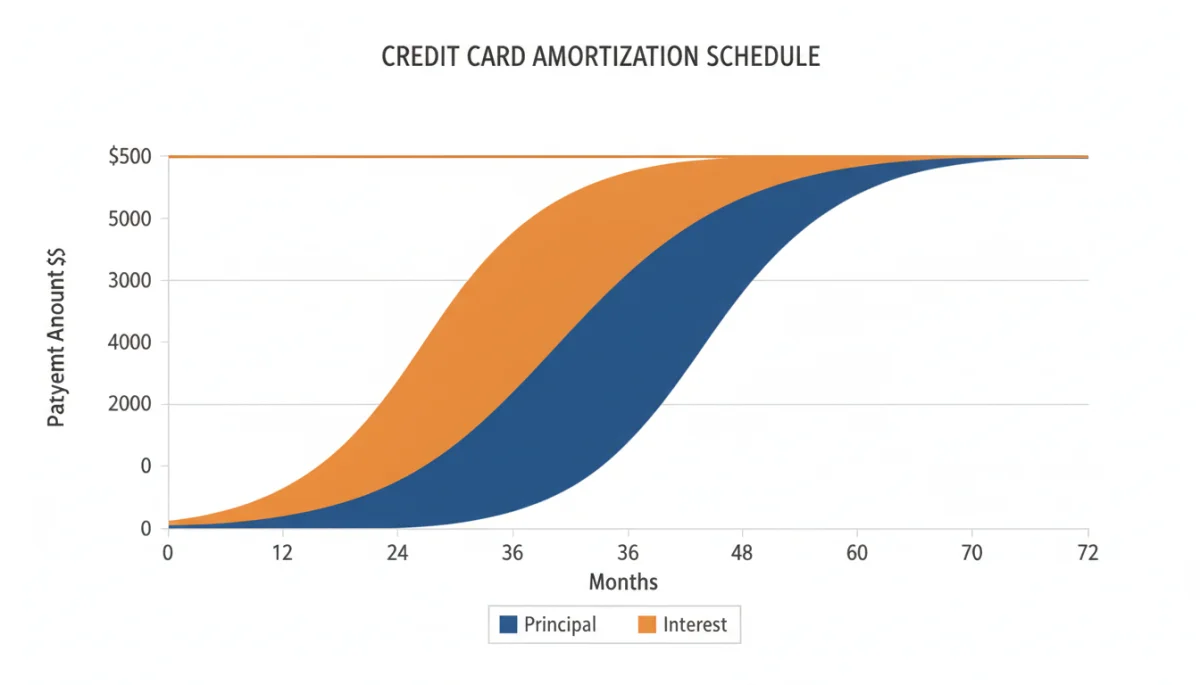
Let’s illustrate with an example. Suppose your minimum payment on a $3,000 balance at 19.99% APR is around $75. If you only pay this amount, you could be looking at a repayment period of over 10 years and paying well over $2,000 in interest alone. However, if you increase your payment to $150 per month, you could cut the repayment time to under three years and save hundreds, if not thousands, in interest. This direct comparison reveals the profound impact of even modest additional payments.
The choice between minimum payments and strategic repayment is a fundamental one in personal finance. Understanding the mechanics of interest and committing to a plan that prioritizes debt reduction can save you significant amounts of money and accelerate your journey to financial freedom.
The Long-Term Impact on Your Financial Health
Carrying a credit card balance, particularly one with a high APR like 19.99% on $3,000, extends its influence far beyond just monthly interest charges. It can cast a long shadow over your entire financial landscape, affecting everything from your credit score to your ability to achieve future financial goals. The cumulative effect of interest payments can derail savings plans, delay major purchases, and even impact your mental well-being.
One of the most significant long-term impacts is on your credit utilization ratio, which is a key factor in your credit score. A high balance on your credit card means a high utilization ratio, which can negatively affect your score. A lower credit score can lead to higher interest rates on future loans, making it more expensive to borrow for things like a car or a home, perpetuating a cycle of higher costs.
Credit Score Implications
- High Utilization: A $3,000 balance on a card with a $5,000 limit represents 60% utilization, which is considered high and can lower your score.
- Difficulty Obtaining New Credit: Lenders view high balances as a risk, making it harder to get approved for new credit or favorable terms.
- Increased Borrowing Costs: A lower credit score often translates to higher interest rates on mortgages, car loans, and other forms of credit.
Moreover, the mental burden of persistent debt can be taxing. The stress of managing payments, the constant worry about rising balances, and the feeling of being trapped can impact your overall quality of life. Addressing a credit card balance strategically is not just about saving money; it’s about safeguarding your future financial opportunities and peace of mind.
Strategies to Reduce Your Credit Card Balance and Interest
Effectively tackling a credit card balance, especially one with a 19.99% APR, requires a proactive and disciplined approach. Simply making minimum payments will prolong your debt and maximize the interest you pay. Several proven strategies can help you reduce your balance more quickly, saving you money and accelerating your path to financial freedom. The key is to choose a method that aligns with your financial situation and stick to it consistently.
One of the most popular and effective strategies is the ‘debt snowball’ or ‘debt avalanche’ method. The debt avalanche, on the other hand, prioritizes debts with the highest interest rates, which is often more financially advantageous as it saves you the most money on interest.
Practical Debt Reduction Methods
- Pay More Than the Minimum: Even a small extra payment can significantly reduce the total interest and repayment time.
- Balance Transfer Cards: Consider transferring your balance to a card with a 0% introductory APR, but be mindful of fees and the promotional period.
- Debt Consolidation Loans: A personal loan with a lower interest rate can consolidate multiple credit card debts into one manageable payment.
- Budgeting and Expense Reduction: Create a strict budget to identify areas where you can cut spending and allocate those savings towards debt repayment.
Another powerful strategy involves negotiating with your credit card company. Sometimes, they may be willing to lower your interest rate or offer a temporary hardship plan if you’re struggling to make payments. It’s always worth a phone call to explore these options. Whichever strategy you choose, consistency and a clear plan are paramount to successfully overcoming your credit card debt.
Preventing Future Credit Card Debt: Best Practices
Once you’ve navigated the complexities of reducing an existing credit card balance, the next crucial step is to implement practices that prevent falling back into debt. Preventing future credit card debt involves a combination of smart financial habits, disciplined spending, and a clear understanding of your financial limits. It’s about building a robust financial foundation that protects you from the pitfalls of high-interest debt.
A cornerstone of debt prevention is creating and sticking to a realistic budget. A budget allows you to track your income and expenses, identify areas of overspending, and allocate funds strategically. Without a clear understanding of where your money is going, it’s easy to fall into the trap of relying on credit cards for everyday purchases, which can quickly accumulate into a significant balance.
Essential Habits for Debt Prevention
- Live Within Your Means: Spend less than you earn to avoid needing to borrow.
- Build an Emergency Fund: A robust emergency fund can cover unexpected expenses, preventing the need to rely on credit cards.
- Pay Off Balances in Full: Aim to pay your credit card statement balance in full every month to avoid interest charges entirely.
- Monitor Your Spending: Regularly review your credit card statements and bank accounts to catch unauthorized charges and track your spending patterns.
Furthermore, being mindful of your credit utilization and credit limits can help maintain a healthy credit score, which provides access to better financial products and lower interest rates when you do need to borrow. Regularly reviewing your credit report for inaccuracies and understanding the factors that influence your score are also vital preventative measures. By adopting these best practices, you can create a financial future free from the burden of high-interest credit card debt.
| Key Point | Brief Description |
|---|---|
| APR Impact | A 19.99% APR significantly inflates the total cost of a $3,000 balance due to compounding interest. |
| Minimum Payments | Paying only the minimum extends repayment periods and drastically increases total interest paid. |
| Strategic Repayment | Paying more than the minimum or using methods like debt avalanche saves significant money and time. |
| Long-Term Effects | High balances negatively impact credit scores, future borrowing costs, and overall financial well-being. |
Frequently Asked Questions About Credit Card Balances
Credit card interest is typically calculated using a daily periodic rate (APR divided by 365) applied to your average daily balance. This interest then compounds, meaning you pay interest on both the principal and previously accrued interest, significantly increasing your total debt over time.
The real cost can be thousands more than the original $3,000. If only minimum payments are made, the repayment period could stretch over a decade, with a substantial portion of each payment going towards interest, rather than reducing the principal.
Minimum payments are designed to keep you indebted longer. They primarily cover accrued interest, leaving little for principal reduction. This extends the debt repayment period significantly and results in paying much more in total interest over the life of the loan.
Effective strategies include paying more than the minimum, using debt snowball or avalanche methods, considering balance transfer cards with 0% introductory APRs, or exploring debt consolidation loans. Creating a strict budget to free up funds for extra payments is also crucial.
Preventing future debt involves living within your means, creating and sticking to a budget, building an emergency fund for unexpected expenses, and always aiming to pay your credit card balance in full each month to avoid interest charges entirely.
Conclusion
The analysis of carrying a $3,000 credit card balance at a 19.99% APR clearly illustrates that the true cost extends far beyond the initial principal. The compounding effect of interest, coupled with the often-insufficient nature of minimum payments, can trap individuals in a prolonged cycle of debt, significantly increasing the total amount repaid and impacting overall financial health. Understanding these hidden costs is the first step towards taking control. By implementing strategic repayment methods, such as paying more than the minimum or utilizing balance transfers, and adopting preventative measures like budgeting and building an emergency fund, consumers can effectively mitigate the financial burden of credit card debt. Ultimately, financial prudence and consistent effort are key to achieving and maintaining a healthy financial future, free from the heavy weight of high-interest credit card balances.