Financial Planning for Major Life Events in 2026: US Guide
Effective financial planning for major life events in 2026, such as a new baby or wedding, is crucial for US residents to ensure economic stability and achieve significant personal milestones without undue stress.
By: Rafaela on September 23, 2026
Financial planning for major life events in 2026, including a new baby or wedding, requires strategic budgeting and proactive savings to navigate significant expenses effectively in the United States.
Embarking on significant life milestones like a new baby or a wedding in 2026 brings immense joy, but also substantial financial considerations. This guide will walk you through essential strategies for financial planning major events in the US, ensuring you can celebrate these moments without future financial strain. Understanding how to budget, save, and invest wisely now can pave the way for a secure and joyful future.
Understanding the Costs of Major Life Events
Before diving into specific strategies, it’s vital to grasp the potential financial impact of major life events in the United States. Whether it’s the joyous arrival of a new family member or the celebration of a lifelong partnership, these occasions come with a price tag that often exceeds initial expectations. A realistic understanding of these costs is the first step towards effective planning.
For a new baby, expenses extend far beyond just hospital bills. There are ongoing costs for diapers, formula, clothing, childcare, and potentially larger living spaces. Similarly, a wedding involves significant upfront costs for venues, catering, attire, and numerous other details that quickly add up. Recognizing the full scope of these financial commitments is crucial for developing a sound budget.
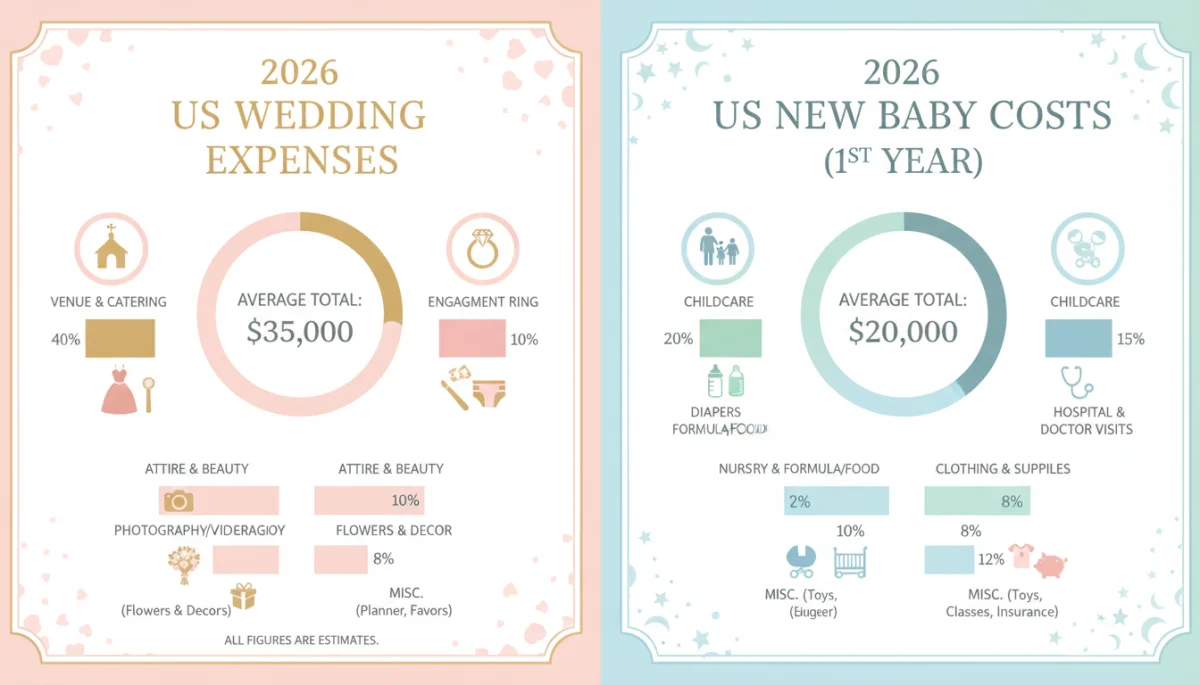
Average Wedding Expenses in the US
Weddings in the US can range dramatically in price, but understanding averages can provide a useful benchmark for your planning. Many couples find themselves spending tens of thousands of dollars, making it one of the most significant single expenditures they will face.
Venue and Catering: Often the largest portion, accounting for 40-50% of the total budget.
Attire and Accessories: Gowns, suits, and accessories can easily run into thousands.
Photography and Videography: Capturing memories is important but comes with a premium.
Decorations and Flowers: These elements set the aesthetic but can be surprisingly costly.
These figures can vary widely based on location, guest count, and personal preferences. Researching local vendors and understanding package deals can help in managing these costs effectively.
Anticipating New Baby Expenses
The financial journey of parenthood begins long before the baby arrives and continues for many years. Initial costs can be substantial, and ongoing expenses require careful consideration within your household budget.
Maternity and Delivery Costs: Even with insurance, out-of-pocket expenses can be significant.
Nursery Setup: Cribs, changing tables, and other essentials add up.
Diapers and Formula: These recurring necessities represent a continuous expense.
Childcare: For working parents, this can be one of the largest monthly costs.
Creating a detailed list of anticipated expenses for both a wedding and a new baby allows for a more accurate budget and helps identify areas where you might be able to save or adjust your plans. This proactive approach ensures you’re prepared for the financial realities of these exciting life changes.
Crafting a Realistic Budget for 2026
Once you have a clear picture of potential costs, the next step in effective financial planning major events is to create a realistic budget. A well-structured budget serves as your financial roadmap, guiding your spending and saving habits to ensure you meet your goals without unnecessary stress. This process involves tracking income, identifying fixed and variable expenses, and setting realistic limits.
Starting early is paramount. For events planned in 2026, you have a valuable window to assess your current financial situation, make necessary adjustments, and accumulate the funds needed. This proactive budgeting allows for flexibility and reduces the need for last-minute financial maneuvers.
Assessing Your Current Financial Landscape
Before you can plan for the future, you need to understand your present. This involves a thorough review of your income and expenditures. Identify all sources of income, including salaries, bonuses, and any side hustles. Then, meticulously track where your money goes.
Fixed Expenses: Rent/mortgage, loan payments, insurance premiums. These are generally consistent.
Variable Expenses: Groceries, entertainment, dining out. These fluctuate and offer areas for adjustment.
Discretionary Spending: Non-essential items that can be reduced or eliminated if needed.
Using budgeting apps or spreadsheets can simplify this process, providing a clear visual of your financial flow. Understanding your current spending habits is the foundation for making informed decisions about where to allocate funds for your major life events.
Setting Financial Goals and Allocations
With your financial landscape clear, you can begin to set specific, measurable, achievable, relevant, and time-bound (SMART) financial goals for your wedding or new baby. Determine how much you need to save and by when, then break down these larger goals into smaller, manageable monthly targets.
Allocate a specific portion of your income each month towards these goals. Consider the 50/30/20 rule, where 50% of your income goes to needs, 30% to wants, and 20% to savings and debt repayment. You might need to adjust these percentages to prioritize your major event savings. Remember, consistency is key; even small, regular contributions add up significantly over time. This disciplined approach to budgeting will bring your dreams closer to reality.
Smart Saving Strategies for Big Goals
Building a substantial savings fund for a wedding or a new baby requires more than just setting aside extra cash. It demands smart, strategic approaches that maximize your earning potential and minimize unnecessary expenditures. The goal is to make your money work harder for you, ensuring that your savings grow steadily towards your 2026 targets. Automation and strategic investment choices play a significant role here.
Explore various savings vehicles and consider how each aligns with your timeline and risk tolerance. From high-yield savings accounts to more aggressive investment options, understanding your choices is crucial for effective financial planning major events.
Automating Your Savings
One of the most effective ways to ensure consistent saving is to automate the process. By setting up automatic transfers from your checking account to a dedicated savings account each payday, you eliminate the temptation to spend the money before it reaches your savings goal. This ‘pay yourself first’ mentality is a cornerstone of successful financial planning.
Direct Deposit Allocation: Many employers allow you to split your direct deposit, sending a portion directly to savings.
Scheduled Transfers: Set up recurring transfers through your bank’s online platform.
Dedicated Savings Accounts: Open separate accounts specifically for your wedding or baby fund to track progress easily.
Automated savings remove the need for willpower in the day-to-day, making it easier to stick to your budget and achieve your financial milestones without constant effort.
Exploring High-Yield Savings and Investment Options
While traditional savings accounts offer security, high-yield savings accounts (HYSAs) can help your money grow faster with competitive interest rates. For funds you won’t need immediately, consider other investment vehicles that align with your timeline and risk profile.
Certificates of Deposit (CDs): Offer higher interest rates than HYSAs, but typically require funds to be locked in for a set period.
Low-Cost Index Funds or ETFs: For longer horizons, these can offer greater growth potential, though with higher risk.
Robo-Advisors: Automated investment platforms that manage your portfolio based on your risk tolerance.
Consulting with a financial advisor can help you determine the best investment strategy for your specific situation, ensuring your savings are optimized for your 2026 goals. The right mix of security and growth can make a significant difference in your overall financial preparedness.
Managing Debt and Improving Credit
Effective financial planning major events in 2026 also involves a critical look at your existing debt and credit score. High-interest debt can significantly hinder your ability to save, while a strong credit score can open doors to better loan rates for larger purchases, such as a home for your growing family. Addressing these areas proactively strengthens your overall financial foundation.
Prioritizing debt reduction and credit improvement now will free up more disposable income for your significant life events and establish a healthier financial profile for the future. It’s an integral part of preparing for any major financial undertaking.
Strategies for Debt Reduction
Tackling debt efficiently can accelerate your savings progress. Focus on high-interest debts first, as these cost you the most over time. Two popular strategies are the debt snowball and debt avalanche methods.
Debt Avalanche Method: Pay off debts with the highest interest rates first, regardless of the balance. This saves you the most money on interest.
Debt Snowball Method: Pay off the smallest debts first to gain psychological momentum. This can be motivating for many.
Balance Transfers: Consider transferring high-interest credit card balances to a card with a 0% introductory APR, but be mindful of fees and the promotional period.
Whichever method you choose, consistency and discipline are key. Every dollar freed from debt payments is a dollar that can be redirected towards your wedding or new baby fund.
Boosting Your Credit Score
A good credit score is essential for securing favorable terms on loans and mortgages, which might be relevant if you’re planning to buy a home before or after your major life event. Several actions can help improve your score.
Pay Bills on Time: Payment history is the most significant factor in your credit score.
Reduce Credit Utilization: Keep your credit card balances low relative to your credit limits. Aim for under 30%.
Check Your Credit Report: Regularly review your report for errors and dispute any inaccuracies.
Avoid Opening Too Many New Accounts: Each new credit inquiry can temporarily lower your score.
By actively managing your debt and improving your credit score, you’re not just preparing for your 2026 events; you’re building a robust financial future. This foundation will support you through many more milestones to come.
Protecting Your Future: Insurance and Estate Planning
While focusing on immediate expenses for a wedding or a new baby, it’s easy to overlook the crucial aspects of long-term financial security. Insurance and basic estate planning are not just for later stages of life; they are fundamental components of comprehensive financial planning major events, especially when dependents enter the picture. These measures provide a safety net and ensure your loved ones are protected no matter what the future holds.
Addressing these often-overlooked areas now can prevent significant financial hardship down the line, offering peace of mind as you embark on these exciting new chapters.
Reviewing Your Insurance Coverage
Major life events necessitate a review and potential update of your insurance policies. Your needs change when you get married or have a child, and your coverage should reflect these new responsibilities.
Health Insurance: Ensure your plan covers maternity care, pediatric visits, and adds your new spouse or baby.
Life Insurance: Essential for parents and married couples to provide for dependents in case of an unforeseen event.
Disability Insurance: Protects your income if you become unable to work due to illness or injury.
Homeowners/Renters Insurance: Update your policy to reflect new assets or increased personal property.
Don’t hesitate to consult with an insurance professional to assess your current coverage and identify any gaps. Adequate insurance is a cornerstone of financial stability and protects your family’s future.
Beginning Basic Estate Planning
Estate planning might sound intimidating or premature, but even basic steps are vital, especially with a new baby or spouse. It’s about ensuring your wishes are honored and your loved ones are cared for.
Will: Designates guardians for minor children and dictates how your assets will be distributed.
Power of Attorney: Appoints someone to make financial or medical decisions on your behalf if you’re unable.
Beneficiary Designations: Update beneficiaries on life insurance policies, retirement accounts, and other financial assets.
Trusts: Can be used for more complex situations, such as providing for a child with special needs or managing significant assets.
While these conversations can be difficult, they are an act of love and responsibility. Taking these steps ensures that your family’s future is secure, allowing you to focus on the joys of your major life events.
Leveraging Technology for Financial Success
In today’s digital age, technology offers a powerful suite of tools to streamline and optimize your financial planning major events for 2026. From budgeting apps to investment platforms, leveraging these resources can make managing your money more efficient, insightful, and even enjoyable. Embracing technology can simplify complex financial tasks and keep you on track towards your goals.
The right tools can provide real-time insights, automate routine tasks, and help you visualize your financial progress, making the journey to your major life events smoother and more organized.
Budgeting and Tracking Apps
Gone are the days of manual ledger books. Modern budgeting apps connect directly to your bank accounts and credit cards, categorizing transactions and providing a clear overview of your spending. This automation saves time and offers immediate feedback on your financial health.
Mint: A popular free app for tracking spending, creating budgets, and monitoring credit scores.
You Need A Budget (YNAB): Focuses on giving every dollar a job, promoting proactive budgeting.
Personal Capital: Offers a holistic view of your finances, including investments and net worth tracking.
These apps can help you identify areas where you can cut back, track your progress towards savings goals, and ensure you’re adhering to your budget for your wedding or new baby. They transform financial management from a chore into an empowering activity.
Investment and Savings Platforms
Beyond budgeting, technology has revolutionized how we save and invest. Online platforms offer accessible and often lower-cost alternatives to traditional financial institutions, making it easier for anyone to start building wealth.
Robo-Advisors (e.g., Betterment, Wealthfront): Provide automated, diversified investment portfolios tailored to your risk tolerance and goals.
High-Yield Online Savings Accounts: Offer better interest rates than traditional banks, often managed entirely online.
Peer-to-Peer Lending (e.g., Prosper, LendingClub): An alternative for both borrowing and investing, though with higher risk.
By utilizing these technological solutions, you can optimize your savings, make informed investment decisions, and gain greater control over your financial destiny. This digital advantage is a powerful asset in your 2026 financial planning toolkit.
Long-Term Financial Vision Beyond 2026
While the immediate focus is on financial planning major events in 2026, it’s crucial to integrate these short-term goals into a broader, long-term financial vision. A wedding or a new baby isn’t just an isolated event; it’s a catalyst for a lifetime of financial decisions and responsibilities. Thinking beyond 2026 ensures that these milestones contribute positively to your overall financial well-being, rather than creating new challenges.
This forward-looking perspective involves establishing habits and strategies that will serve you and your family for decades to come, fostering sustainable financial health.
Establishing Ongoing Financial Habits
The budgeting and saving discipline you develop for your 2026 events should not end once the celebrations are over. Instead, these practices should become ingrained habits that continue to guide your financial behavior.
Regular Budget Reviews: Periodically revisit and adjust your budget as your income, expenses, and goals evolve.
Emergency Fund Replenishment: If you tapped into your emergency fund for your event, prioritize rebuilding it.
Continuous Savings: Shift your dedicated savings from event funds to other long-term goals like retirement, a down payment on a home, or your child’s education.
These ongoing habits are the bedrock of lasting financial security. They ensure that you’re always prepared for the unexpected and are continuously working towards your future aspirations.
Planning for Future Milestones
Life is a series of milestones, and your financial plan should be flexible enough to accommodate them. Looking beyond 2026, consider what other significant events or goals you might encounter and how your current planning can lay the groundwork for them.
Child’s Education Fund: Start saving early for college through 529 plans or other education savings vehicles.
Retirement Planning: Maximize contributions to 401(k)s, IRAs, and other retirement accounts.
Homeownership: If not already a homeowner, begin saving for a down payment and closing costs.
Career Development: Invest in skills and education that can enhance your earning potential.
By adopting a long-term financial vision, you transform isolated event planning into a holistic strategy for lifelong prosperity. This comprehensive approach ensures that each major life event becomes a stepping stone towards a more secure and fulfilling future for you and your family.
Key Financial Step
Brief Description
Detailed Budgeting
Create a comprehensive budget for all income and expenses, specifically allocating funds for 2026 major events.
Automated Savings
Set up automatic transfers to dedicated high-yield savings accounts to ensure consistent growth towards goals.
Debt & Credit Management
Prioritize reducing high-interest debt and improving credit scores to enhance financial flexibility and opportunities.
Future Protection
Review insurance policies and begin basic estate planning to safeguard your family’s financial future.
Frequently Asked Questions About 2026 Financial Planning
How much should I save for a wedding in the US by 2026?▼
Wedding costs vary widely, but the average US wedding can range from $20,000 to $35,000. It’s advisable to save at least 15-20% of your income monthly, adjusting based on your desired wedding scale and current financial situation. Prioritize vendors and allocate funds based on what’s most important to you.
What are the initial costs for a new baby in the US?▼
Initial baby costs can include hospital delivery fees (even with insurance), nursery setup (crib, changing table), and essential supplies. Expect to spend between $5,000 and $12,000 in the first year, depending on choices like breastfeeding vs. formula, and new vs. used items. Childcare costs will be additional.
How can I effectively budget for both a wedding and a new baby in the same year?▼
Prioritize and create two distinct savings goals within your budget. Consider scaling back on one event to fund the other, or extending your timeline if possible. Consolidating expenses where practical (e.g., leveraging gifts for both) and maximizing automated savings will be key for managing both events simultaneously.
Is it better to pay off debt or save for a major event?▼
Generally, it’s wise to pay off high-interest debt first, as the interest saved often outweighs investment returns. However, maintaining a small emergency fund is crucial. Once high-interest debt is managed, you can more aggressively save for your major event, ensuring your financial foundation is solid.
What insurance changes are necessary after a wedding or new baby?▼
After a wedding, update health and potentially auto insurance to reflect new household members. With a new baby, secure adequate health coverage for the child and consider life insurance for both parents to protect your growing family’s financial future. Reviewing disability insurance is also highly recommended.
Conclusion
Navigating the financial landscape for major life events in 2026, such as a wedding or a new baby, requires careful planning, discipline, and a forward-thinking mindset. By understanding costs, crafting realistic budgets, implementing smart saving strategies, and addressing debt and insurance, you can confidently approach these significant milestones. The journey of financial planning major events is not just about accumulating funds; it’s about building a robust financial foundation that supports your dreams and ensures long-term security for you and your growing family. Start today, stay consistent, and embrace the joy these life-changing moments bring.