Maximize Your 401(k) Contributions 2026: Catch-Up Provisions
Effectively maximize your retirement savings by understanding the 2026 401(k) catch-up provisions, allowing individuals aged 50 and over to contribute additional funds to their employer-sponsored plans.
By: Rafaela on September 23, 2026
Effectively maximize your retirement savings by understanding the 2026 401(k) catch-up provisions, allowing individuals aged 50 and over to contribute additional funds to their employer-sponsored plans.
Are you approaching retirement age and concerned about your savings? Understanding how to maximize your 401(k) contributions, especially through specific catch-up provisions, can significantly impact your financial security in 2026 and beyond. This guide provides insider knowledge on these crucial opportunities for retirement planning in the US.
Understanding 401(k) Basics and Their Importance
The 401(k) remains a cornerstone of retirement planning for many Americans. It’s an employer-sponsored defined-contribution investment account, allowing employees to save and invest for retirement on a tax-advantaged basis. Contributions are typically made pre-tax, reducing your current taxable income, and your investments grow tax-deferred until withdrawal in retirement.
For individuals serious about their financial future, understanding the mechanics of their 401(k) is not just beneficial, it’s essential. The power of compounding interest over decades can turn modest regular contributions into a substantial nest egg. However, many people only begin to seriously focus on their retirement savings later in their careers, making catch-up provisions particularly valuable.
Key Benefits of a 401(k)
Beyond the tax advantages, 401(k)s offer several other compelling benefits that make them an attractive retirement savings vehicle. These features are designed to encourage consistent saving and provide a secure financial future.
Employer Matching Contributions: Many employers offer to match a portion of your contributions, essentially providing free money that significantly boosts your savings.
Tax-Deferred Growth: Your investments grow without being taxed annually, allowing for faster compounding and greater wealth accumulation over time.
Variety of Investment Options: Most 401(k) plans offer a range of investment choices, from conservative bond funds to aggressive stock funds, allowing you to tailor your portfolio to your risk tolerance and financial goals.
Convenience of Payroll Deductions: Contributions are automatically deducted from your paycheck, making saving effortless and consistent.
In conclusion, the 401(k) is more than just a savings account; it’s a powerful tool for building long-term financial security. Leveraging its benefits, especially employer matches and tax advantages, is a fundamental step in effective retirement planning. Neglecting to contribute, particularly when an employer match is available, is akin to leaving money on the table.
The Role of Catch-Up Provisions in Retirement Planning
As individuals approach their golden years, they often find themselves in a stronger financial position, or perhaps realize they need to accelerate their retirement savings. This is precisely where 401(k) catch-up provisions become invaluable. These provisions allow individuals aged 50 and over to contribute additional amounts to their 401(k) plans beyond the standard annual limits.
The intent behind these provisions is to offer a lifeline to those who may have started saving later in life, experienced career interruptions, or simply wish to boost their retirement funds in their peak earning years. For many, these extra contributions can make a significant difference in their retirement comfort and security, transforming what might be an adequate retirement into a truly comfortable one.
Eligibility for Catch-Up Contributions
Eligibility for 401(k) catch-up provisions is straightforward: you must be age 50 or older by the end of the calendar year for which you are making the contributions. There are no income limitations or other complex requirements to meet this age criterion. However, it’s essential to ensure your plan allows for these contributions, as not all plans automatically do, though most do.
Age Requirement: Must turn 50 by December 31st of the contribution year.
Plan Participation: Must be actively participating in an eligible employer-sponsored 401(k) plan.
Contribution Limits: Must exceed the standard annual contribution limit before applying catch-up contributions.
The concept of catch-up contributions is a critical component of a comprehensive retirement strategy, particularly for those nearing the end of their working careers. It provides a legal and advantageous way to supercharge savings, ensuring a more robust financial foundation for the future. Understanding these provisions is a key piece of insider knowledge for effective retirement planning.
Projected 2026 Catch-Up Contribution Limits and Standard Limits
While the official numbers for 2026 401(k) contribution limits, including catch-up provisions, are typically released later in the year, we can project based on historical trends and economic indicators. The Internal Revenue Service (IRS) usually adjusts these limits annually to account for inflation, ensuring their relevance and effectiveness in helping Americans save for retirement. For 2026, experts anticipate a slight increase in both standard and catch-up limits due to ongoing inflationary pressures.
Staying informed about these projected limits is crucial for proactive planning. Financial advisors often recommend that individuals plan to contribute the maximum allowed, especially those eligible for catch-up contributions, to fully leverage the tax benefits and growth potential of their 401(k) accounts. This foresight can lead to substantial gains over the remaining years of one’s working life.
Estimating 2026 Contribution Figures
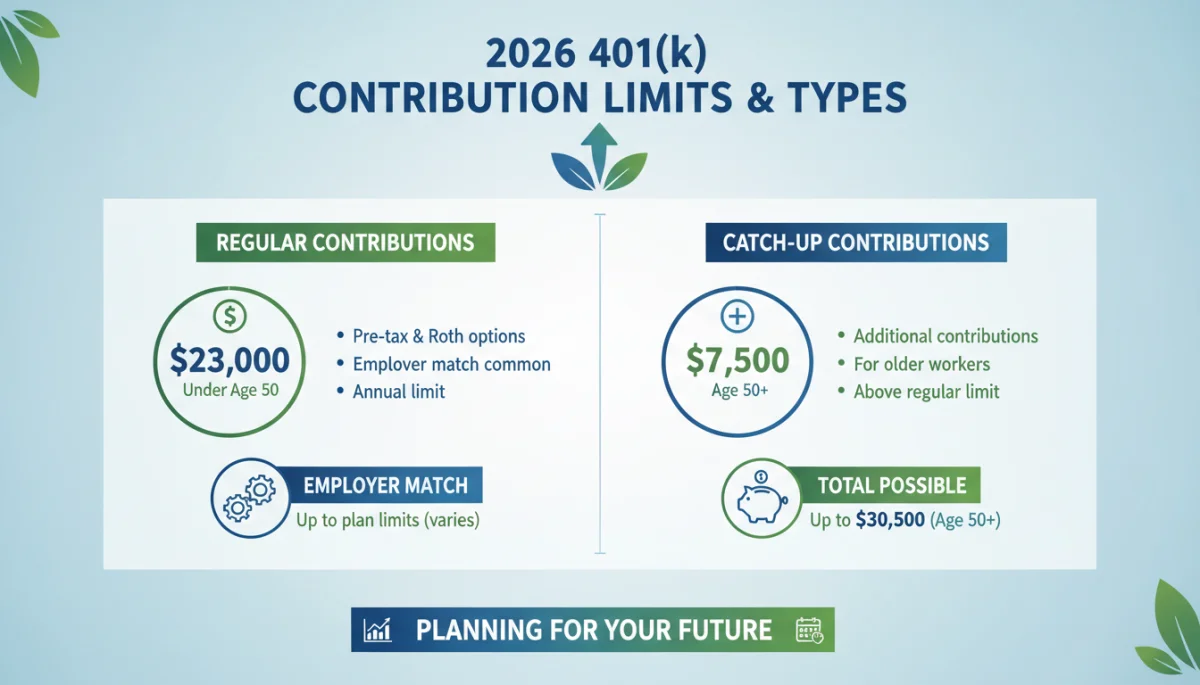
Based on recent inflationary adjustments, it’s reasonable to expect the standard 401(k) contribution limit for 2026 to be around $24,000 to $24,500. For individuals aged 50 and over, the catch-up contribution limit is projected to be in the range of $7,500 to $8,000. These figures are estimates and will be subject to final IRS announcements.
Standard 401(k) Limit (2026 Estimate): ~$24,000 – $24,500
Total Maximum (2026 Estimate for 50+): ~$31,500 – $32,500
It’s important to remember that these are separate limits. You can contribute up to the standard limit and then an additional amount up to the catch-up limit if you qualify by age. For example, if the standard limit is $24,000 and the catch-up is $7,500, a person aged 50 or older could contribute a total of $31,500 in 2026. This combined capacity provides a powerful mechanism for accelerated savings.
In summary, while specific figures for 2026 are still pending official release, understanding the projected ranges allows for preliminary financial planning. These projected increases underscore the IRS’s commitment to supporting retirement savers, especially those who can benefit most from the additional catch-up provisions.
Strategies for Maximizing Your 401(k) in 2026
Maximizing your 401(k) contributions, particularly utilizing the catch-up provisions, requires a thoughtful and proactive approach. It’s not simply about contributing more; it’s about strategizing how to integrate these contributions into your overall financial plan to achieve the best possible outcomes. This involves assessing your current financial situation, understanding your employer’s plan, and making informed decisions about your contribution levels.
For many, the biggest hurdle is finding the disposable income to contribute the maximum. This might necessitate reviewing your budget, cutting discretionary spending, or exploring additional income streams. The long-term benefits of a larger retirement nest egg often outweigh the short-term sacrifices.
Practical Steps to Increase Contributions
Implementing a strategy to boost your 401(k) contributions involves several actionable steps. These steps are designed to help you methodically increase your savings without causing undue financial strain.
Automate Contributions: Set up automatic payroll deductions to consistently contribute a fixed percentage or amount, ensuring you don’t miss opportunities.
Increase Contributions Annually: Even a small increase each year, perhaps coinciding with a raise, can significantly impact your long-term savings.
Utilize Employer Match: Always contribute at least enough to receive your full employer match; it’s free money for your retirement.
Budgeting and Expense Review: Identify areas where you can reduce spending to free up funds for additional 401(k) contributions.
Another effective strategy is to front-load your contributions if your cash flow allows. By contributing more earlier in the year, your money has a longer period to grow tax-deferred within the 401(k). This strategy can be particularly beneficial when combined with the catch-up provisions, as it maximizes the time your additional funds are invested.
Ultimately, maximizing your 401(k) in 2026, especially with catch-up provisions, is about making intentional choices. It requires a commitment to your financial future and a willingness to adjust your current spending habits to prioritize long-term security. The rewards, in terms of a more comfortable retirement, are well worth the effort.
The Impact of Catch-Up Contributions on Retirement Security
The ability to make catch-up contributions to your 401(k) can have a profoundly positive impact on your retirement security, particularly for those who are playing catch-up in their savings journey. These additional contributions, though seemingly modest on an annual basis, can accumulate significantly over several years, bolstered by the power of tax-deferred growth.
Consider a scenario where an individual eligible for catch-up contributions contributes an additional $7,500 per year for 10 years. With a conservative average annual return of 6%, those extra contributions alone could grow to over $100,000. This substantial sum can mean the difference between a strained retirement and one filled with financial peace of mind, covering unexpected expenses or allowing for desired lifestyle choices.
Long-Term Growth Potential
The true power of catch-up contributions lies in their long-term growth potential. Because these funds are invested within a tax-advantaged account, they benefit from compounding returns without the drag of annual taxes. This allows your money to grow exponentially, turning even small consistent contributions into significant wealth over time.
Enhanced Compounding: More capital invested means greater returns on returns, accelerating wealth accumulation.
Reduced Taxable Income: Pre-tax contributions lower your current income, potentially placing you in a lower tax bracket.
Increased Retirement Income: A larger 401(k) balance translates directly into more funds available for withdrawal during retirement.
Peace of Mind: Knowing you’ve maximized your savings provides greater security and reduces financial stress in retirement.
Furthermore, these contributions can help offset any periods of lower savings earlier in your career. Life happens, and sometimes saving for retirement takes a backseat to other financial priorities like raising a family, paying for education, or managing unexpected expenses. Catch-up provisions offer a valuable opportunity to regain lost ground and ensure your retirement goals remain within reach.
In essence, catch-up contributions are more than just an option; they are a strategic advantage for older workers. By taking full advantage of these provisions, individuals can significantly bolster their financial resilience, providing a much stronger foundation for a secure and comfortable retirement.
Navigating 401(k) Rollovers and Distributions
While maximizing contributions is crucial, understanding how to handle your 401(k) funds as you transition into or through retirement is equally important. This includes knowing your options for rollovers, which can help preserve the tax-advantaged status of your savings, and understanding the rules surrounding distributions, including required minimum distributions (RMDs).
A common scenario involves rolling over a 401(k) from a previous employer into a new employer’s plan or, more frequently, into an Individual Retirement Account (IRA). This process can consolidate your retirement assets, simplify management, and potentially offer a broader range of investment options. However, it’s vital to execute rollovers correctly to avoid tax penalties.
Key Considerations for Rollovers and Distributions
Making informed decisions about your 401(k) funds at different life stages can prevent costly mistakes and optimize your retirement income. These considerations cover the critical aspects of moving and accessing your retirement savings.
Direct Rollovers: Always opt for a direct rollover from your 401(k) administrator to your new account (another 401(k) or IRA) to avoid mandatory tax withholding.
IRA vs. New 401(k): Evaluate whether an IRA or your new employer’s 401(k) offers better investment choices, lower fees, and more flexibility for your specific needs.
Required Minimum Distributions (RMDs): Understand when RMDs begin (currently age 73 for most) and how they impact your taxable income in retirement.
Early Withdrawal Penalties: Be aware of the 10% penalty for withdrawals before age 59½, with few exceptions.
Another important aspect to consider is the tax implications of different distribution strategies. For example, converting a traditional 401(k) or IRA to a Roth IRA can be beneficial if you anticipate being in a higher tax bracket in retirement, though it involves paying taxes on the converted amount upfront. This decision should be made in consultation with a financial advisor, taking into account your individual tax situation and future financial projections.
In conclusion, while accumulating wealth in your 401(k) is a primary goal, successfully navigating rollovers and distributions ensures that your hard-earned savings are managed efficiently and accessed optimally. Strategic planning in these areas is just as vital as the initial act of contributing, securing your financial well-being throughout retirement.
Future Trends and Legislative Changes Affecting 401(k)s
The landscape of retirement planning is not static; it is continually shaped by economic shifts, demographic changes, and legislative actions. Staying abreast of potential future trends and legislative changes is critical for anyone looking to maximize their 401(k) contributions and ensure their retirement strategy remains robust and compliant. Policymakers often introduce new legislation aimed at expanding retirement savings opportunities or addressing perceived shortcomings in the current system.
For instance, there’s ongoing discussion about further adjustments to catch-up contribution rules, potentially allowing for even higher limits or different age-based tiers. These discussions are often driven by concerns about retirement readiness and the increasing longevity of the population. Remaining informed about these potential changes allows for proactive adjustments to personal financial plans.
Potential Legislative Developments
Several areas are frequently discussed in legislative circles regarding retirement savings, any of which could impact 401(k) plans and individual contribution strategies in the coming years. These potential changes underscore the dynamic nature of retirement policy.
Expansion of Catch-Up Provisions: There’s a possibility of increased catch-up limits or the introduction of a second tier of catch-up contributions for those nearing advanced retirement age.
Auto-Enrollment Mandates: Some proposals suggest mandating auto-enrollment in 401(k) plans for employers, which could increase overall participation rates.
Roth 401(k) Enhancements: Further incentives or flexibility for Roth 401(k) contributions might be introduced, offering more after-tax savings options.
Student Loan Linked Contributions: Legislation allowing employers to make matching 401(k) contributions based on an employee’s student loan payments is gaining traction.
Another significant trend is the increasing focus on financial literacy and education. As retirement planning becomes more complex, there’s a growing recognition of the need to empower individuals with the knowledge to make informed decisions. This could manifest in more robust employer-sponsored educational programs or government initiatives designed to improve public understanding of retirement savings vehicles like the 401(k).
In conclusion, while the core principles of 401(k) contributions and catch-up provisions remain steadfast, the environment in which they operate is subject to change. By staying informed about potential legislative developments and broader economic trends, individuals can ensure their retirement planning strategy remains adaptable, optimized, and aligned with the most current opportunities available for maximizing their financial future.
Key Aspect
Brief Description
Catch-Up Eligibility
Available to 401(k) participants aged 50 or older by year-end.
2026 Projected Limit
Estimated at $7,500 – $8,000 above standard limits.
Strategic Importance
Crucial for accelerating savings in later career stages.
Impact on Security
Significantly boosts retirement funds and financial peace of mind.
Frequently Asked Questions About 401(k) Catch-Up Provisions
Who is eligible for 401(k) catch-up contributions in 2026?▼
Individuals who are 50 years of age or older by December 31st of the calendar year are eligible for catch-up contributions. This provision is designed to help older workers boost their retirement savings as they approach retirement.
What is the estimated catch-up contribution limit for 2026?▼
While official figures are pending, the estimated catch-up contribution limit for 2026 is projected to be between $7,500 and $8,000. This is in addition to the standard 401(k) contribution limit for the year.
Do all 401(k) plans allow for catch-up contributions?▼
Most employer-sponsored 401(k) plans do allow for catch-up contributions, but it’s crucial to verify with your plan administrator. Some plans may require specific election forms or have particular procedures for these additional contributions.
Can I make catch-up contributions to both a 401(k) and an IRA?▼
Yes, if eligible, you can make catch-up contributions to both a 401(k) and an IRA, as they have separate limits. This allows for even greater flexibility in maximizing your overall retirement savings across different account types.
How do catch-up contributions impact my taxes?▼
Catch-up contributions to a traditional 401(k) are typically made on a pre-tax basis, meaning they reduce your current taxable income. This can result in a lower tax bill in the year you make the contributions, offering an immediate financial benefit.
Conclusion
Effectively leveraging 401(k) catch-up provisions is a cornerstone of robust retirement planning for individuals aged 50 and over in the US. By understanding the eligibility criteria, staying informed about projected 2026 limits, and implementing strategic contribution methods, you can significantly enhance your retirement security. These provisions offer a critical opportunity to accelerate savings, recover lost ground, and build a more comfortable financial future. Proactive engagement with your 401(k) and its unique features will undoubtedly lead to a more confident and secure retirement.