Decoding APR vs. Interest Rate: Your 2026 Loan Guide
Understanding the difference between APR and interest rate is crucial for transparent loan comparison. This guide clarifies these terms, helping you make informed borrowing decisions in 2026.
By: Rafaela on September 23, 2026
Understanding the distinction between Annual Percentage Rate (APR) and a loan’s nominal interest rate is fundamental for consumers to accurately assess the true cost of borrowing in 2026, encompassing all associated fees.
Navigating the world of loans can often feel like deciphering a complex code, especially when terms like APR vs Interest Rate come into play. As we move into 2026, understanding these two critical financial metrics is more important than ever for making informed borrowing decisions. This guide aims to demystify these concepts, ensuring you have a clear picture of the true cost of your loans.
The Fundamental Difference: Interest Rate Explained
The interest rate is often the first number that catches a borrower’s eye. It represents the primary cost of borrowing money, expressed as a percentage of the principal loan amount. This rate is what lenders charge for the use of their funds, calculated typically on an annual basis.
Understanding the simple interest rate is the foundation for comprehending the full scope of loan costs. It’s the numerical representation of the premium you pay for accessing capital, without yet factoring in additional charges. For example, if you borrow $10,000 at a 5% interest rate, you’d pay $500 in interest for that year, assuming no other fees or compounding.
How Interest Rates are Determined
Several factors influence the interest rate a lender offers. These can range from broad economic indicators to an individual’s personal financial health.
Credit Score: A higher credit score typically indicates lower risk to lenders, often resulting in more favorable interest rates.
Loan Type: Different types of loans (e.g., mortgages, auto loans, personal loans) carry varying risk profiles, which impacts their standard interest rates.
Market Conditions: The broader economic environment, including federal interest rates and inflation, plays a significant role in setting loan rates.
Loan Term: Shorter loan terms often have lower interest rates compared to longer terms, as the lender’s risk exposure is reduced.
It’s crucial to recognize that while the interest rate is a significant component, it doesn’t tell the whole story of a loan’s expense. It’s merely one piece of a larger financial puzzle that includes other charges and fees. Always consider how the interest rate aligns with your budget and repayment capacity before committing to a loan.
Unpacking APR: The True Cost of Borrowing
While the interest rate is the cost of borrowing the principal, the Annual Percentage Rate (APR) provides a more comprehensive measure of a loan’s total cost. The APR includes not only the interest rate but also most other fees and charges associated with the loan, expressed as a single annual percentage. This makes it a powerful tool for comparing different loan offers.
Think of APR as the ‘all-in’ price tag for your loan. It accounts for various expenses beyond just the interest, offering a more transparent view of what you’ll actually pay. This holistic perspective is essential for consumers, especially in 2026, where financial products are becoming increasingly nuanced.
Components Included in APR
The calculation of APR incorporates several elements that contribute to the overall cost of a loan. These can vary depending on the loan product but commonly include:
Loan Origination Fees: Charges for processing the loan application.
Discount Points: Fees paid to the lender to reduce the interest rate.
Broker Fees: Costs associated with using a loan broker.
Underwriting Fees: Charges for evaluating and approving the loan.
It’s important to note that certain fees, such as late payment fees or appraisal fees (for mortgages), are typically not included in the APR calculation. Therefore, while APR is a robust indicator, borrowers should still review the full loan disclosure for all potential costs. The goal of APR is to standardize loan cost comparison, empowering consumers to make better choices.
Why APR is More Than Just the Interest Rate
The distinction between APR and interest rate is critical because it reveals the true financial burden of a loan. A loan with a seemingly low interest rate might have a higher APR due to significant upfront fees, making it more expensive in the long run than a loan with a slightly higher interest rate but fewer additional charges. This is why focusing solely on the interest rate can be misleading.
In 2026, with diverse loan products available, relying solely on the advertised interest rate can lead to costly mistakes. The APR acts as a great equalizer, allowing for an apples-to-apples comparison across different lenders and loan structures. It forces transparency where it might otherwise be obscured by complex fee schedules.
Practical Implications for Borrowers
Understanding the full scope of APR has several practical benefits for anyone seeking credit:
Informed Decisions: By comparing APRs, borrowers can identify the most cost-effective loan, even if the interest rates initially appear similar.
Avoiding Hidden Costs: APR brings many of the ‘hidden’ fees into plain view, preventing unpleasant surprises later on.
Negotiating Power: Knowledge of APR empowers borrowers to negotiate better terms, asking lenders to reduce fees that inflate the overall cost.
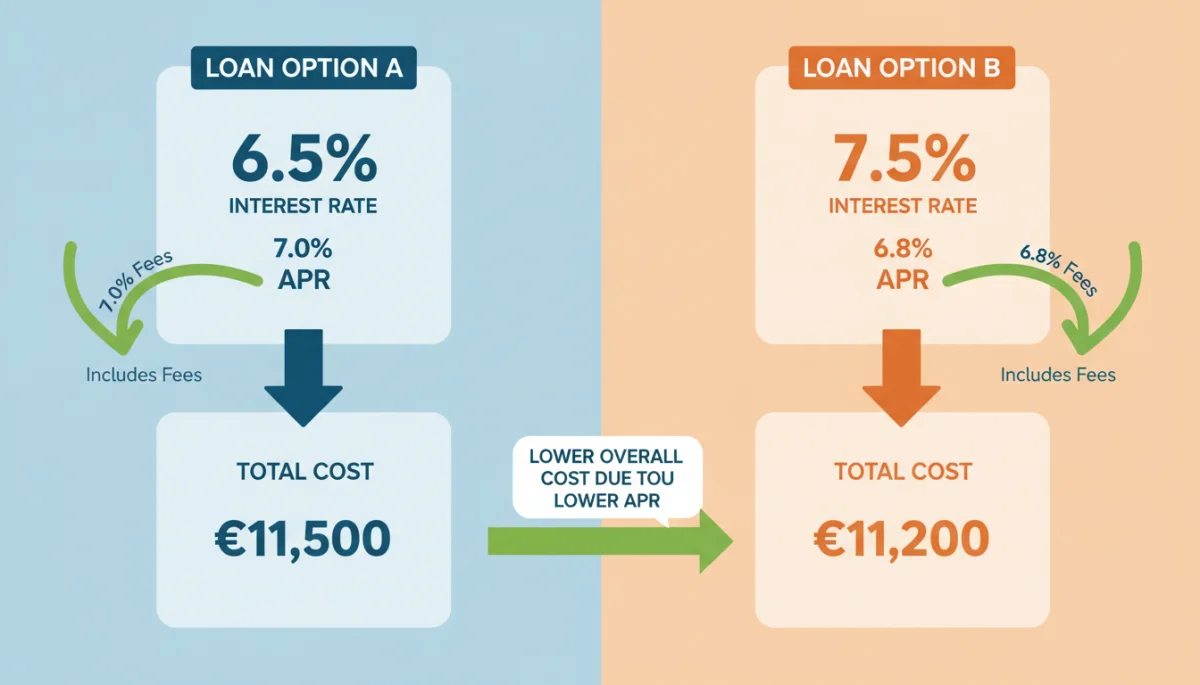
Consider two loan offers: Loan A has an interest rate of 4.5% and an APR of 5.0%, while Loan B has an interest rate of 4.7% but an APR of 4.8%. Despite Loan B having a higher interest rate, its lower APR indicates it is the less expensive option overall due to fewer additional fees. This example clearly illustrates why APR vs Interest Rate comparison is vital.
Calculating and Understanding APR in 2026
Calculating APR involves a formula that takes into account the interest rate, the loan amount, the repayment schedule, and all additional fees. While complex, the good news for consumers is that lenders are legally required to disclose the APR, making direct comparison simpler. However, understanding what goes into that calculation can further empower your financial decisions.
The Federal Truth in Lending Act (TILA) mandates that lenders clearly state the APR for most types of consumer loans. This regulation is designed to protect borrowers by ensuring they receive a standardized measure of the total cost of credit. In 2026, digital tools and online calculators can further assist in grasping these figures.
Factors Affecting APR Variation
Even for similar loan products, APRs can vary significantly between lenders. This is often due to different approaches to fee structures and risk assessment.
Lender’s Business Model: Some lenders may have lower overheads, allowing them to offer more competitive APRs.
Competitive Landscape: In a highly competitive market, lenders may reduce fees or interest rates to attract borrowers, influencing the APR.
Borrower’s Risk Profile: As with interest rates, a borrower’s creditworthiness heavily impacts the APR they are offered.
When reviewing loan offers, always ask for a detailed breakdown of all fees included in the APR. This proactive approach ensures you fully comprehend every component contributing to your total borrowing cost. Understanding the calculation, even if not performing it yourself, helps you scrutinize the figures presented by lenders.
APR in Different Loan Products
The application and significance of APR can vary depending on the type of loan. For instance, mortgage APRs often include points and other closing costs, making them higher than the nominal interest rate. Credit card APRs, on the other hand, typically reflect just the interest rate for purchases, but can have different APRs for cash advances or balance transfers, sometimes with additional fees.
In 2026, consumers engage with a wide array of loan products, from personal loans to auto loans and home equity lines of credit. Each comes with its own set of rules regarding how APR is calculated and disclosed. Being aware of these nuances is crucial for accurate comparisons.
Specific Loan Examples
Let’s look at how APR manifests in common loan types:
Mortgage Loans: The APR for a mortgage will include the interest rate, plus origination fees, discount points, mortgage insurance premiums, and sometimes even title insurance. This can make the mortgage APR significantly higher than the quoted interest rate.
Auto Loans: Auto loan APRs typically include the interest rate and any dealer fees or loan origination fees. They tend to be closer to the interest rate than mortgages, but still provide a more accurate total cost.
Personal Loans: Personal loan APRs encompass the interest rate and any administrative or origination fees. These can vary widely based on the lender and the borrower’s credit profile.
Credit Cards: Credit card APRs are often quoted as a range, depending on the cardholder’s creditworthiness. They reflect the interest rate charged on balances, but do not typically include annual fees or late payment charges in the APR itself.
Always examine the specific terms and conditions for each loan product. What’s included in the APR for one type of loan might not be for another. This detailed scrutiny is paramount for truly understanding the implications of APR vs Interest Rate across your financial portfolio.
Strategic Borrowing: Leveraging APR for Better Deals
Armed with a clear understanding of APR, borrowers are in a much stronger position to make strategic financial decisions. This knowledge allows you to not only compare offers effectively but also to potentially negotiate better terms with lenders. In 2026, financial literacy is your most valuable asset in the borrowing landscape.
Don’t just accept the first loan offer presented to you. Take the time to shop around, gather multiple offers, and meticulously compare their APRs. This simple yet powerful strategy can save you thousands of dollars over the life of a loan. Remember, a lower APR means a lower total cost of borrowing.
Tips for Smart Loan Shopping
To leverage your understanding of APR for better borrowing outcomes, consider these actionable steps:
Get Multiple Quotes: Apply to several lenders to receive diverse offers. Make sure these are ‘soft’ inquiries if possible, to avoid impacting your credit score.
Compare APRs Directly: Focus on the APR as your primary comparison metric, rather than just the interest rate.
Question All Fees: Ask lenders for a detailed breakdown of all fees included in the APR and inquire if any are negotiable or waivable.
Read the Fine Print: Always review the loan disclosure document thoroughly to understand all terms, conditions, and potential additional costs not included in the APR.
By adopting these strategies, you shift from being a passive borrower to an active participant in securing the most favorable loan terms. Your diligence in comparing APR vs Interest Rate will pay dividends, ensuring you borrow responsibly and cost-effectively in 2026.
The Future of Loan Transparency in 2026
As technology advances and consumer protection regulations evolve, the landscape of loan transparency continues to improve. In 2026, we can anticipate even greater clarity around loan costs, with digital platforms playing a crucial role in empowering borrowers. The trend is towards more accessible and understandable financial information, further solidifying the importance of metrics like APR.
Regulators are constantly working to ensure that financial products are presented clearly and fairly to consumers. This ongoing effort, combined with consumer education initiatives, aims to reduce confusion and foster an environment of trust in the lending industry. The emphasis on transparent disclosure will only grow.
Emerging Trends in Loan Disclosure
Several trends are shaping the future of loan transparency:
AI-Powered Financial Advisors: Artificial intelligence is increasingly being used to help consumers analyze loan offers and understand complex terms like APR.
Standardized Digital Disclosures: Efforts are underway to create more uniform digital formats for loan disclosures, making comparisons even easier.
Real-time APR Updates: Some platforms are beginning to offer real-time APR updates, reflecting market changes and personalized borrower profiles.
Enhanced Educational Resources: Financial institutions and consumer advocacy groups are providing more robust educational content to help borrowers understand loan costs.
The evolution of loan transparency benefits everyone. For borrowers, it means less confusion and more confidence in financial decisions. For lenders, it fosters trust and encourages fair competition. Embracing these advancements will be key to navigating the financial world successfully in the years to come, ensuring that the understanding of APR vs Interest Rate remains a cornerstone of financial literacy.
Key Concept
Brief Description
Interest Rate
The percentage charged by a lender for borrowing the principal amount, excluding most other fees.
Annual Percentage Rate (APR)
The total annual cost of a loan, including the interest rate and most additional fees, expressed as a single percentage.
Loan Cost Transparency
The ability for borrowers to clearly understand all costs associated with a loan, facilitated by APR disclosure.
Strategic Borrowing
Using knowledge of APR to compare loan offers, negotiate terms, and make informed financial decisions.
Frequently Asked Questions About APR vs. Interest Rate
What is the primary difference between APR and interest rate?▼
The interest rate is the cost of borrowing the principal amount only. APR, or Annual Percentage Rate, is a broader measure that includes the interest rate plus most other fees associated with the loan, providing the true total cost of borrowing as a single percentage.
Why should I pay more attention to APR than the interest rate?▼
APR offers a more accurate comparison of loan offers because it incorporates all significant costs, not just the interest. Focusing on APR helps you avoid hidden fees and truly understand which loan is the most cost-effective overall.
Are all loan fees included in the APR?▼
Most common fees like origination fees and discount points are included in the APR. However, some specific fees, such as late payment charges, appraisal fees (for mortgages), or certain third-party costs, are typically not part of the APR calculation.
Does a lower interest rate always mean a cheaper loan?▼
No, not necessarily. A loan with a slightly higher interest rate but significantly fewer fees might have a lower APR, making it the cheaper option in total. Always compare the APRs to get the full financial picture.
How can I use APR to my advantage when getting a loan?▼
By comparing APRs from multiple lenders, you can identify the most affordable loan. This knowledge also empowers you to negotiate with lenders to potentially reduce fees or improve other terms, leading to a lower overall borrowing cost.
Conclusion
In conclusion, mastering the difference between APR vs Interest Rate is not just a financial nicety but a fundamental requirement for responsible borrowing in 2026. While the interest rate provides a basic understanding of the cost of money, the Annual Percentage Rate offers a holistic view, encompassing nearly all associated fees and presenting the true annual cost of your loan. By prioritizing APR in your loan comparisons and understanding its components, you empower yourself to make smarter, more transparent financial decisions, securing the best possible terms for your borrowing needs and contributing to your overall financial well-being.