Deciding between gold and silver for investment in 2026 requires understanding their unique market dynamics, industrial demand, and safe-haven appeal. Both offer distinct advantages and risks, influencing their potential returns.
By: Rafaela on September 23, 2026
Deciding between gold and silver for investment in 2026 requires understanding their unique market dynamics, industrial demand, and safe-haven appeal, as both offer distinct advantages and risks influencing their potential returns.
As we approach 2026, many investors are keenly observing the precious metals market, asking: Gold vs. Silver: Which Precious Metal Offers Better Investment Returns in 2026? This perennial question takes on new urgency amidst evolving global economic landscapes, technological advancements, and geopolitical shifts. Understanding the unique characteristics and market drivers of each metal is crucial for making informed investment decisions.
Understanding Gold’s Enduring Appeal
Gold has long been revered as a safe-haven asset, a store of value that tends to perform well during times of economic uncertainty, inflation, and geopolitical turmoil. Its appeal extends across various cultures and financial systems, maintaining a consistent demand from central banks, institutional investors, and individual buyers.
The yellow metal’s limited supply, coupled with its historical track record, underpins its intrinsic value. In 2026, factors such as global inflation rates, interest rate policies by major central banks, and the overall stability of the financial system will significantly influence gold’s price trajectory. A weakening dollar or heightened geopolitical tensions could further bolster its appeal.
Inflationary Pressures and Gold’s Role
One of gold’s primary functions is as a hedge against inflation. When the purchasing power of fiat currencies erodes, gold often retains or even increases its value, providing a sanctuary for capital. This characteristic becomes particularly relevant in periods where economic stimulus packages or supply chain disruptions lead to rising prices.
Monetary Policy: Loose monetary policies and quantitative easing often lead to increased gold demand.
Currency Debasement: A decline in the value of major reserve currencies can drive investors towards gold.
Economic Uncertainty: Gold thrives when economic forecasts are bleak, acting as a flight-to-safety asset.
Moreover, gold’s lack of counterparty risk makes it a preferred asset for those seeking to diversify away from traditional financial instruments. Its tangible nature and global acceptance ensure its liquidity, making it an attractive component in a well-rounded investment portfolio, especially when looking ahead to 2026.
Silver, often referred to as ‘poor man’s gold,’ possesses a unique dual nature that sets it apart from its yellow counterpart. It serves not only as a precious metal for investment and jewelry but also as a crucial industrial commodity. This dual role means its price is influenced by a broader range of factors, offering both opportunities and volatilities.
The industrial demand for silver is vast, spanning various sectors including electronics, solar panels, medical applications, and electric vehicles. As global economies continue to electrify and innovate, the demand for silver in these critical applications is projected to grow substantially, potentially impacting its price in 2026 and beyond.
Technological Advancements and Silver’s Future
The rise of green technologies, particularly solar energy and electric vehicles, presents a significant tailwind for silver demand. Silver’s excellent electrical conductivity and reflectivity make it indispensable in photovoltaic cells and various electronic components. As governments worldwide push for decarbonization, silver’s role in these industries will only expand.
Solar Energy: Silver is a key component in solar panels, crucial for renewable energy growth.
Electric Vehicles: Used extensively in EV batteries, charging infrastructure, and electronic systems.
5G Technology: Essential in the production of 5G infrastructure components and devices.
However, silver’s industrial demand also exposes it to economic downturns. During recessions, industrial activity slows, which can depress silver prices. Conversely, a robust global economic recovery could significantly boost its value. This makes silver a more cyclical investment compared to gold, which primarily acts as a safe haven.
Historical Performance: Gold and Silver Trends
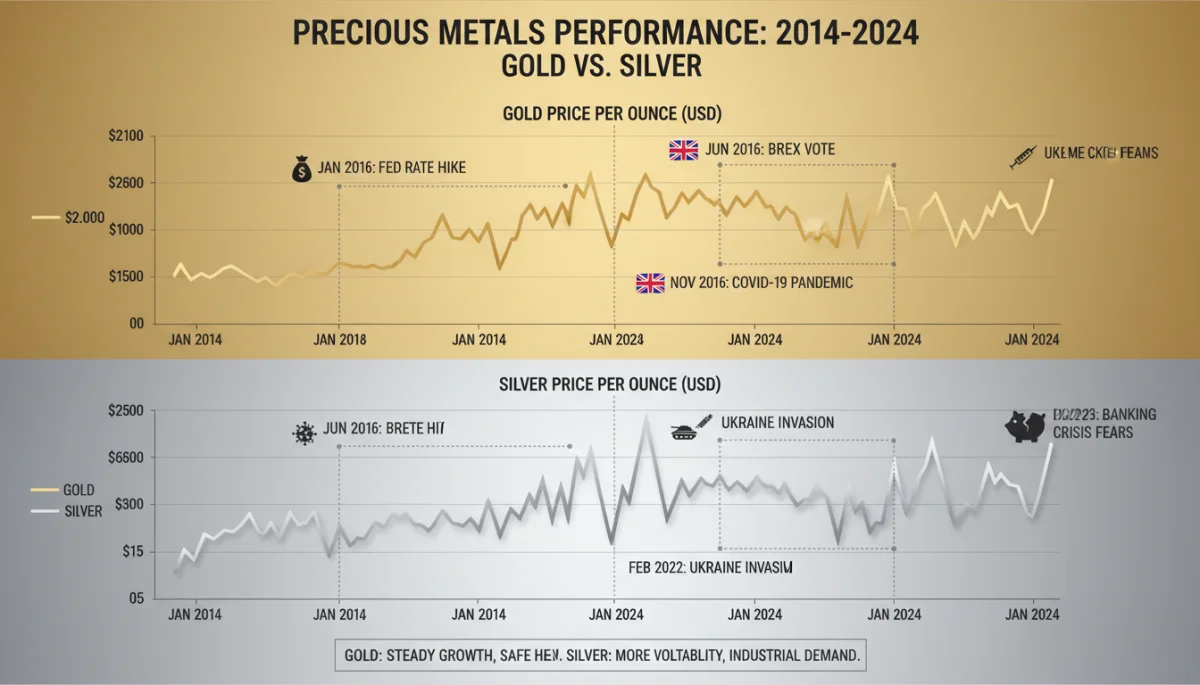
Examining the historical performance of both gold and silver provides valuable context for their potential in 2026. While both are precious metals, their price movements often diverge due to their distinct market drivers. Gold typically exhibits lower volatility and a more consistent upward trend during periods of economic instability.
Silver, on the other hand, tends to be more volatile, often outperforming gold during bull markets and underperforming during bear markets. This higher beta characteristic means silver can offer greater upside potential but also carries increased risk. Understanding these historical patterns is vital for investors seeking to optimize their portfolios.
Over the past decade, both metals have seen significant price fluctuations. Gold experienced substantial rallies during the 2008 financial crisis and the COVID-19 pandemic, reinforcing its safe-haven status. Silver also saw impressive gains during these periods, often with a more pronounced percentage increase.
Correlation and Divergence
While gold and silver often move in the same direction, their correlation is not perfect. The gold-to-silver ratio, which indicates how many ounces of silver it takes to buy one ounce of gold, is a widely watched metric. A high ratio suggests silver is undervalued relative to gold, while a low ratio indicates the opposite.
Gold-to-Silver Ratio: Historically fluctuates, providing clues about relative value.
Market Sentiment: Investor sentiment can drive short-term price movements for both metals.
Economic Indicators: GDP growth, manufacturing data, and inflation reports impact silver more directly due to its industrial uses.
For investors considering 2026, monitoring this ratio alongside broader economic indicators will be crucial. A significant shift in industrial demand or monetary policy could alter their relative performance, making a nuanced approach essential for maximizing returns from either metal.
Economic Factors Influencing Precious Metals in 2026
Several macroeconomic factors will play a pivotal role in shaping the investment landscape for gold and silver in 2026. These include global interest rates, inflation expectations, the strength of the U.S. dollar, and the overall health of the global economy. Each of these elements can significantly impact the attractiveness of precious metals as investment vehicles.
Interest rates, in particular, have a strong inverse relationship with gold prices. Higher interest rates increase the opportunity cost of holding non-yielding assets like gold, making interest-bearing investments more appealing. Conversely, lower rates tend to boost gold’s attractiveness. Silver, with its industrial component, also reacts to these factors but can be more sensitive to industrial demand.
Interest Rates and the Dollar
The Federal Reserve’s monetary policy, along with actions by other major central banks, will be a critical determinant. If central banks maintain an accommodative stance with low rates, it could be bullish for both gold and silver. However, aggressive rate hikes to combat inflation could put downward pressure on precious metal prices.
Federal Reserve Policy: Interest rate decisions directly influence the cost of holding gold.
U.S. Dollar Index: A weaker dollar makes dollar-denominated commodities, like gold and silver, cheaper for international buyers.
Real Interest Rates: Negative real interest rates (nominal rate minus inflation) are historically very favorable for gold.
Furthermore, the U.S. dollar’s strength or weakness directly impacts the prices of gold and silver. As these commodities are typically priced in dollars, a stronger dollar makes them more expensive for holders of other currencies, potentially dampening demand. Conversely, a weaker dollar can make them more affordable and boost demand. These intricate relationships must be carefully considered when forecasting 2026 returns.
Geopolitical Landscape and Safe-Haven Demand
The geopolitical climate remains a significant, albeit unpredictable, factor influencing precious metal prices. Global instability, trade wars, regional conflicts, and political uncertainties often trigger a flight to safety, with investors seeking refuge in assets perceived as reliable stores of value. Gold traditionally benefits most from such scenarios.
In 2026, potential flashpoints could include ongoing tensions between major global powers, cybersecurity threats, and the lingering effects of conflicts in various regions. These events can create an environment of heightened risk aversion, driving up demand for gold as a hedge against systemic risks. While silver also benefits from safe-haven flows, its industrial ties mean it might react differently.
Global Instability and Investor Behavior
Periods of geopolitical unrest tend to increase investor uncertainty, leading to a reallocation of capital towards perceived safe-haven assets. Gold’s historical role as a crisis commodity makes it a primary beneficiary during such times. Central banks also tend to increase their gold reserves during periods of global instability, further supporting its price.
Regional Conflicts: Escalation of conflicts often leads to a spike in gold prices.
Trade Disputes: Uncertainty in international trade can prompt investors to seek safety in gold.
Political Instability: Domestic political turmoil in key economies can boost precious metal demand.
While silver also attracts some safe-haven buying, its industrial demand component means it can be more susceptible to economic slowdowns that might accompany geopolitical crises. Therefore, its performance during such times can be more nuanced than gold’s. Investors must weigh the potential for geopolitical events against the specific market dynamics of each metal for 2026.
Investment Strategies for Gold and Silver in 2026
Developing a sound investment strategy for gold and silver in 2026 requires a clear understanding of your financial goals, risk tolerance, and market outlook. Both metals can serve different purposes within a portfolio, and a diversified approach might be the most prudent. Whether you opt for physical metal, ETFs, or mining stocks, careful consideration is key.
For those prioritizing capital preservation and a hedge against inflation and uncertainty, gold often stands out. Its lower volatility and consistent demand from central banks make it a staple for long-term stability. Silver, with its higher growth potential driven by industrial demand, might appeal to investors seeking greater upside, albeit with increased risk.
Diversification and Risk Management
A balanced portfolio often includes exposure to both gold and silver, allowing investors to benefit from their respective strengths. Gold provides stability, while silver offers leverage to economic growth and technological advancements. The proportion of each metal in a portfolio should align with individual investment objectives.
Physical Metals: Direct ownership offers tangible security and eliminates counterparty risk.
ETFs and ETNs: Provide exposure to price movements without the complexities of physical storage.
Mining Stocks: Offer leverage to metal prices but come with additional operational and company-specific risks.
Futures and Options: For sophisticated investors seeking to speculate or hedge price movements.
Ultimately, the decision of which precious metal offers better investment returns in 2026 will depend on a confluence of global economic trends, technological progress, and geopolitical stability. Investors should conduct thorough research and consider consulting with a financial advisor to tailor a strategy that best suits their individual circumstances.
Key Aspect
Description for 2026
Gold’s Role
Safe-haven asset, inflation hedge, benefits from economic uncertainty and geopolitical tensions.
Silver’s Dual Nature
Industrial demand (solar, EV, electronics) and investment asset; higher volatility.
Economic Influences
Interest rates, U.S. dollar strength, and global economic growth are key drivers for both.
Investment Outlook
Gold for stability, silver for growth potential. Diversification often recommended.
Frequently Asked Questions About Gold and Silver Investing in 2026
Will inflation drive gold prices higher in 2026?▼
Persistent inflation is generally a strong catalyst for gold prices. If inflation remains elevated or rises further into 2026, gold’s appeal as an inflation hedge will likely increase, potentially pushing its value higher as investors seek to preserve purchasing power.
How will industrial demand affect silver’s returns in 2026?▼
Industrial demand is a major driver for silver. With continued growth in solar energy, electric vehicles, and electronics, strong industrial uptake could significantly boost silver prices in 2026, making it an attractive investment.
Is silver a more volatile investment than gold?▼
Historically, silver tends to exhibit higher price volatility than gold. Its dual role as both a precious metal and an industrial commodity means its price can fluctuate more significantly in response to economic cycles and market sentiment.
What role do interest rates play in precious metal investments?▼
Interest rates have a significant impact. Higher interest rates typically increase the opportunity cost of holding non-yielding assets like gold and silver, potentially dampening their prices. Conversely, lower rates can make them more appealing.
Should I diversify my portfolio with both gold and silver?▼
Many financial advisors recommend diversifying with both metals. Gold offers stability and safe-haven properties, while silver provides exposure to industrial growth and higher potential upside, balancing risk and reward within a diversified portfolio.
Conclusion: Navigating Precious Metal Investments in 2026
The decision of whether gold or silver will offer better investment returns in 2026 is complex, hinging on a multitude of interconnected global factors. Gold’s enduring role as a safe haven and inflation hedge positions it well for periods of economic uncertainty and monetary expansion. Silver, with its robust industrial demand driven by green technologies and electrification, presents a compelling growth story, albeit with higher volatility. Investors must carefully assess the evolving macroeconomic landscape, geopolitical stability, and technological advancements to determine which metal, or perhaps a combination of both, best aligns with their investment objectives and risk tolerance. A thoughtful, diversified approach, informed by continuous market analysis, will be key to navigating the precious metals market successfully in the coming year.