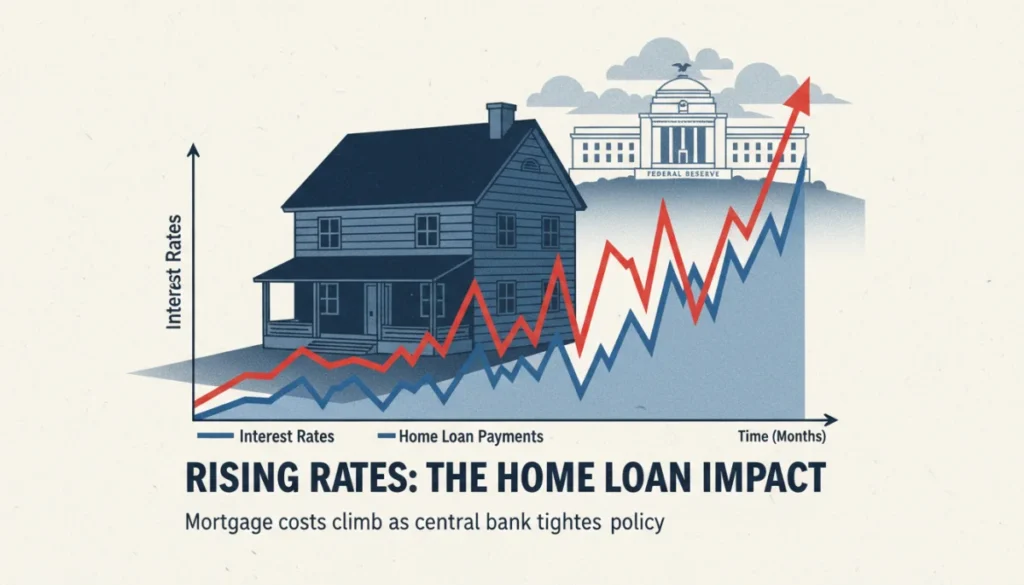
Federal Reserve Rate Hikes: Impact on 2026 Home Loan Rates
The Federal Reserve's rate hikes directly influence 2026 home loan interest rates by increasing the cost of borrowing for banks, which then passes these higher costs on to consumers through elevated mortgage rates.
By: Rafaela on September 23, 2026
The Federal Reserve’s rate hikes directly influence 2026 home loan interest rates by increasing the cost of borrowing for banks, which then passes these higher costs on to consumers through elevated mortgage rates.
Understanding how the Federal Reserve influences the economy, particularly interest rates, is crucial for anyone considering a home loan. The prospect of Navigating the New Federal Reserve Rate Hikes: What They Mean for Your 2026 Home Loan Interest Rates can seem daunting, but with the right information, you can make informed decisions.
The Federal Reserve’s Role in Interest Rates
The Federal Reserve, often called the Fed, serves as the central bank of the United States. Its primary mandates include maximizing employment, stabilizing prices, and moderating long-term interest rates. To achieve these goals, the Fed employs various monetary policy tools, with adjusting the federal funds rate being one of the most prominent.
When the Fed raises the federal funds rate, it’s essentially increasing the cost for banks to borrow money overnight from each other. This ripple effect extends throughout the financial system, impacting everything from savings account yields to, most significantly for our discussion, mortgage rates. These adjustments are not arbitrary; they are carefully considered responses to economic conditions such as inflation, employment data, and overall economic growth.
Understanding the Federal Funds Rate
The federal funds rate is a target rate, not a direct rate that consumers pay. However, it acts as a benchmark for many other interest rates in the economy. When the Fed signals a hike, it’s a clear indication that borrowing costs across the board are likely to increase. This expectation alone can influence market behavior even before the actual rate change takes effect.
Benchmark Rate: The federal funds rate influences prime rate, which in turn affects credit card rates and adjustable-rate mortgages.
Economic Indicator: Changes in this rate reflect the Fed’s outlook on inflation and economic health.
Indirect Impact: While not directly tied to fixed-rate mortgages, it influences the broader bond market, which fixed rates track.
The Fed’s decisions are forward-looking, aiming to pre-empt economic imbalances. Therefore, understanding their rationale behind rate hikes provides a critical lens through which to view future home loan interest rates. These decisions are not made in a vacuum; they are a response to complex economic data and forecasts, influencing market sentiment and lending practices.
In conclusion, the Federal Reserve’s role in setting the federal funds rate is foundational to the entire interest rate structure. Its actions are a powerful signal to the market, directly influencing the cost of borrowing for financial institutions and, consequently, impacting the interest rates offered to consumers for home loans.
How Rate Hikes Influence Mortgage Rates
Federal Reserve rate hikes do not directly dictate fixed-rate mortgage interest rates, but their influence is undeniable and significant. Fixed mortgage rates are more closely tied to the yields on long-term U.S. Treasury bonds, particularly the 10-year Treasury note. However, the Fed’s actions often have a strong indirect impact on these bond yields.
When the Federal Reserve raises its short-term rates, it typically signals a belief in a strengthening economy or concerns about inflation. This can lead investors to demand higher yields on longer-term bonds to compensate for potential inflation erosion of their returns. As bond yields rise, so do fixed mortgage rates, making home loans more expensive for prospective buyers.
The Connection Between Fed Hikes and Bond Yields
The bond market reacts to the Fed’s monetary policy signals. An expectation of future rate hikes can cause bond prices to fall and yields to rise, as investors anticipate higher returns elsewhere. This dynamic is crucial for understanding how your 2026 home loan interest rates might be affected.
Inflation Expectations: Higher inflation forecasts often lead to increased bond yields and mortgage rates.
Economic Growth: A strong economy, often indicated by Fed rate hikes, can also push bond yields up.
Market Sentiment: Investor confidence and speculation about future Fed moves play a significant role.
Furthermore, adjustable-rate mortgages (ARMs) are more directly affected by short-term interest rate changes, which are closely linked to the federal funds rate. While fixed-rate mortgages are popular, ARMs can see more immediate and dramatic changes in their interest rates following Fed actions.
Ultimately, the relationship between Fed rate hikes and mortgage rates is complex, involving a delicate interplay of market expectations, economic indicators, and investor behavior. While not a one-to-one correlation, the Fed’s policy changes are a primary driver of the direction of mortgage rates.
In summary, while the Fed doesn’t directly set mortgage rates, its policy decisions create a cascade effect through the bond market and broader economy, ultimately influencing the cost of both fixed and adjustable-rate home loans.
Economic Outlook for 2026 and Interest Rate Projections
Forecasting economic conditions and interest rates for 2026 involves analyzing a multitude of factors, including global economic trends, domestic inflation pressures, labor market strength, and geopolitical events. While precise predictions are challenging, current indicators and expert consensus can offer valuable insights into potential scenarios for Navigating the New Federal Reserve Rate Hikes: What They Mean for Your 2026 Home Loan Interest Rates.
Many economists anticipate that by 2026, the Federal Reserve will have achieved its inflation targets, potentially leading to a more stable or even declining federal funds rate. However, this is contingent on various factors, including the continued unwinding of supply chain issues and a balanced labor market. Persistent inflation or unforeseen economic shocks could alter this outlook significantly.
Factors Influencing 2026 Rate Projections
Several key economic indicators will heavily influence the Federal Reserve’s decisions and, by extension, home loan rates in 2026. Monitoring these factors can help prospective homeowners anticipate market movements.
Inflation Trajectory: The sustained return of inflation to the Fed’s 2% target is paramount.
Employment Data: A strong but balanced labor market, without excessive wage growth, supports stable rates.
Global Economic Health: International economic conditions and central bank policies worldwide can impact U.S. rates.
The housing market itself also plays a role. If housing demand remains strong and inventory low, it could exert upward pressure on prices, which the Fed might consider in its inflation assessments. Conversely, a significant cooling of the housing market could lead to a more dovish stance from the Fed.
It’s important to remember that these projections are based on current data and models, which can shift. Staying informed about economic news and expert analyses will be vital for anyone planning a home purchase or refinancing in 2026.
In essence, the 2026 interest rate environment will be shaped by the Fed’s success in managing inflation and maintaining a healthy labor market, alongside broader global economic developments. These interconnected factors will determine the trajectory of home loan interest rates.
Strategies for Homebuyers Amidst Rising Rates
Even with the possibility of rising interest rates, prospective homebuyers in 2026 have several strategies they can employ to mitigate the impact and secure favorable home loan terms. Proactive planning and a solid understanding of financing options are key to Navigating the New Federal Reserve Rate Hikes: What They Mean for Your 2026 Home Loan Interest Rates.
One primary strategy is to focus on strengthening your financial profile. This includes improving your credit score, reducing existing debt, and accumulating a larger down payment. A higher credit score can qualify you for better interest rates, while a larger down payment reduces the loan amount, thereby lowering your monthly payments and overall interest paid.
Optimizing Your Mortgage Application
Before even looking at homes, understanding the various mortgage products available and how to present yourself as an attractive borrower can make a significant difference. Don’t assume all lenders offer the same rates or terms.
Shop Around: Compare offers from multiple lenders, including banks, credit unions, and online mortgage brokers.
Consider an ARM (Carefully): While fixed rates are popular, an Adjustable-Rate Mortgage might offer a lower initial rate if you plan to move or refinance before the adjustment period. Understand the risks thoroughly.
Lock Your Rate: If you find a favorable rate, consider locking it in to protect against future increases.
Another crucial step is to get pre-approved for a mortgage. Pre-approval not only gives you a clear budget but also shows sellers that you are a serious and qualified buyer. It can also help you understand the current interest rates you qualify for and allow you to plan accordingly.
Furthermore, exploring government-backed loan programs, such as FHA, VA, or USDA loans, can sometimes offer more lenient qualification requirements and competitive interest rates, even in a rising rate environment. These options should be thoroughly investigated to see if you meet the eligibility criteria.
Ultimately, navigating a market with potentially higher rates requires diligence and strategic financial planning. By focusing on your financial health and exploring all available loan options, you can position yourself to secure the best possible home loan in 2026.
Refinancing Considerations for Current Homeowners
Current homeowners are also directly affected by changes in federal interest rates. As we look towards 2026, the decision to refinance an existing home loan will depend heavily on the prevailing interest rate environment and individual financial goals. Understanding the implications of Navigating the New Federal Reserve Rate Hikes: What They Mean for Your 2026 Home Loan Interest Rates is crucial for homeowners.
If interest rates continue to rise, refinancing might become less attractive for those with already low fixed rates. However, if rates stabilize or even decline, or if a homeowner has an adjustable-rate mortgage that is set to reset at a higher rate, refinancing could offer significant savings or more predictable payments. The key is to evaluate the current rate against your existing loan’s rate and terms.
When Refinancing Makes Sense
Refinancing isn’t just about getting a lower interest rate; it can also be used to change loan terms, tap into home equity, or switch from an adjustable-rate to a fixed-rate mortgage. Each scenario has its own set of considerations.
Lowering Monthly Payments: If new rates are significantly lower than your current rate, refinancing can reduce your monthly outlay.
Shortening Loan Term: Refinancing to a shorter term (e.g., from 30 to 15 years) can save substantial interest over the life of the loan, though monthly payments will be higher.
Switching Loan Types: Converting an ARM to a fixed-rate mortgage provides stability and predictability, especially in a rising rate environment.
Homeowners should also consider the closing costs associated with refinancing. These costs can range from 2% to 5% of the loan amount and need to be factored into the decision-making process. It’s essential to calculate the break-even point – how long it will take for the savings from the new, lower payment to offset the closing costs.
Consulting with a financial advisor or mortgage professional can provide personalized guidance. They can help analyze your current loan, assess the market conditions for 2026, and determine if refinancing aligns with your long-term financial objectives.
In conclusion, for current homeowners, the decision to refinance in 2026 will hinge on the interplay of future interest rate movements, personal financial circumstances, and a careful analysis of the costs versus the benefits of a new loan.
The Impact on Housing Market Dynamics
The Federal Reserve’s rate hikes have a profound impact on the broader housing market dynamics, influencing everything from affordability and demand to inventory levels and home values. As we analyze Navigating the New Federal Reserve Rate Hikes: What They Mean for Your 2026 Home Loan Interest Rates, it’s crucial to consider these wider market effects.
Higher interest rates generally lead to increased borrowing costs, which can reduce purchasing power for many prospective homebuyers. This often translates to a decrease in overall demand for housing, as fewer buyers can afford the higher monthly mortgage payments. A drop in demand can, in turn, slow down the pace of home price appreciation or even lead to price corrections in some markets.
Supply and Demand Shifts
The relationship between supply and demand is particularly sensitive to interest rate fluctuations. When rates rise, not only does demand soften, but existing homeowners might also be less inclined to sell, especially if they have a historically low mortgage rate that they don’t want to give up.
Reduced Affordability: Higher rates mean higher monthly payments, making homeownership less accessible.
Slower Sales Volume: Fewer buyers in the market can lead to longer selling times and reduced transaction numbers.
Inventory Challenges: Some homeowners may choose not to sell, potentially exacerbating inventory shortages in certain areas.
Furthermore, the construction of new homes can also be affected. Higher borrowing costs for developers can slow down new projects, further impacting housing supply. This complex interplay of factors can create a more challenging environment for both buyers and sellers.
However, it’s not all negative. A cooling market can also bring a sense of normalcy after periods of rapid appreciation, potentially creating opportunities for buyers who were previously priced out. The extent of these impacts will vary by local market conditions and the overall strength of the economy.
Ultimately, the Federal Reserve’s rate hikes are a significant force shaping the housing market. They influence affordability, demand, and inventory, requiring both buyers and sellers to adapt their strategies to the evolving landscape.
Preparing for 2026: Financial Planning Tips
As we anticipate the potential effects of Navigating the New Federal Reserve Rate Hikes: What They Mean for Your 2026 Home Loan Interest Rates, proactive financial planning becomes indispensable. Preparing adequately can help you secure the best possible terms for a home loan, whether you are a first-time buyer or looking to refinance.
One of the most effective steps you can take is to improve your personal financial health. This involves a comprehensive review of your income, expenses, savings, and debt. The stronger your financial standing, the more attractive you will be to lenders, potentially qualifying you for lower rates and better loan terms.
Key Financial Preparations
Focusing on these areas can significantly enhance your position when applying for a home loan in 2026.
Boost Your Credit Score: Pay bills on time, reduce credit card balances, and avoid opening new credit lines unnecessarily.
Increase Savings: Aim for a larger down payment to reduce your loan amount and potentially avoid private mortgage insurance (PMI).
Reduce Debt-to-Income Ratio: Pay down high-interest debts, as a lower DTI ratio indicates greater ability to manage mortgage payments.
Beyond personal finances, staying informed about market trends and economic forecasts is crucial. Follow reputable financial news sources, attend webinars, and consult with financial professionals. Understanding the nuances of the Federal Reserve’s actions and their likely impact on mortgage rates will empower you to make timely and strategic decisions.
Consider creating a detailed budget and sticking to it. This will not only help you save for a down payment but also demonstrate to lenders that you have a disciplined approach to managing your money. Explore different mortgage calculators to understand how various interest rates and loan terms could affect your monthly payments and overall costs.
In conclusion, effective financial planning for 2026 involves a combination of personal financial discipline, continuous market awareness, and strategic consultation. By taking these steps, you can confidently approach the home loan market regardless of the prevailing interest rate environment.
Key Point
Brief Description
Fed’s Influence
Federal Reserve rate hikes indirectly raise mortgage rates by impacting bond yields and bank borrowing costs.
2026 Outlook
Rates in 2026 depend on inflation, labor market, and global economic stability; potential for stabilization or decline.
Homebuyer Strategies
Improve credit, save for a larger down payment, shop lenders, and consider rate locks to mitigate higher rates.
Refinancing Impact
Current homeowners should evaluate refinancing based on new rates, loan terms, and associated closing costs.
Frequently Asked Questions About 2026 Home Loan Rates
How do Federal Reserve rate hikes specifically affect fixed-rate mortgages?▼
While the Fed directly influences short-term rates, fixed-rate mortgages are more closely tied to long-term Treasury bond yields. Fed hikes signal economic conditions that often lead investors to demand higher bond yields, which in turn pushes fixed mortgage rates up indirectly.
What are the primary indicators to watch for 2026 mortgage rate predictions?▼
Key indicators include inflation rates, employment figures, GDP growth, and the Federal Reserve’s official statements regarding future monetary policy. Global economic events and geopolitical stability also play significant roles in shaping the outlook.
Should I wait for rates to drop before buying a home in 2026?▼
Timing the market is challenging. While waiting might yield lower rates, it could also mean higher home prices due to increased demand. Focus on your financial readiness and consider locking in a rate if you find one that fits your budget.
How can I improve my chances of getting a good home loan rate in 2026?▼
To secure a favorable rate, focus on improving your credit score, reducing your debt-to-income ratio, and saving for a substantial down payment. Shopping around with multiple lenders is also crucial for comparing offers.
What if I have an adjustable-rate mortgage (ARM) and rates are rising?▼
If you have an ARM, rising rates could lead to higher monthly payments when your rate adjusts. Consider refinancing to a fixed-rate mortgage before your adjustment period, if current fixed rates are still manageable and beneficial for your long-term plans.
Conclusion
The landscape of home loan interest rates in 2026 will undoubtedly be shaped by the Federal Reserve’s monetary policy decisions, particularly its response to inflation and economic growth. While rate hikes can present challenges for both prospective homebuyers and current homeowners, understanding the mechanisms at play and implementing proactive financial strategies can significantly mitigate these impacts. By focusing on personal financial health, staying informed about market forecasts, and exploring all available loan options, individuals can confidently navigate the evolving mortgage environment. The key is not to fear the changes but to prepare for them with knowledge and strategic planning, ensuring that homeownership remains an achievable and stable part of your financial future.