Hedge Your Bets: Options & Futures for Risk Management in 2026
Effectively managing financial risk is crucial for investors, and in 2026, options and futures contracts offer powerful tools for hedging against market volatility and protecting portfolios from unforeseen downturns.
By: Rafaela on September 23, 2026
Effectively managing financial risk is crucial for investors, and in 2026, options and futures contracts offer powerful tools for hedging against market volatility and protecting portfolios from unforeseen downturns.
As we navigate the complexities of 2026, understanding how to effectively manage investment risk is more critical than ever. This article will explore how you can hedge your bets: using options and futures to manage risk in 2026, offering powerful strategies to protect your portfolio and potentially enhance returns.
Understanding the Basics: Options and Futures Explained
Options and futures are sophisticated financial derivatives that allow investors to manage risk and speculate on future price movements without owning the underlying asset directly. They are foundational tools in any comprehensive risk management strategy for the modern market.
These instruments derive their value from an underlying asset, such as stocks, commodities, or indices. While both are agreements to buy or sell an asset at a predetermined price, their structures and applications differ significantly, making them suitable for various hedging and speculative objectives.
What are Options Contracts?
An options contract gives the holder the right, but not the obligation, to buy or sell an underlying asset at a specified price (the strike price) on or before a certain date (the expiration date). This flexibility is what makes options particularly attractive for hedging.
Call Options: Grant the right to buy the underlying asset. Investors buy calls when they expect the price to rise, or sell calls to generate income or hedge a short position.
Put Options: Grant the right to sell the underlying asset. Investors buy puts when they expect the price to fall, or sell puts to generate income or hedge a long position.
Premiums: The price paid by the buyer to the seller for an option contract. This is the maximum loss for the option buyer.
What are Futures Contracts?
A futures contract is a standardized legal agreement to buy or sell something at a predetermined price at a specified time in the future. Unlike options, futures contracts carry an obligation for both parties to fulfill the agreement.
Futures are widely used in commodity markets (oil, gold, agricultural products) and financial markets (stock indices, interest rates, currencies). They offer a direct way to lock in a price for a future transaction, providing certainty in volatile markets. Their mandatory nature means potential for unlimited gains and losses, requiring careful risk assessment.
In essence, options provide flexibility with limited risk for the buyer, while futures offer price certainty but with greater commitment. Understanding these fundamental differences is key to integrating them effectively into your risk management framework for 2026.
Strategic Hedging with Options: Protecting Your Portfolio
Options contracts are incredibly versatile tools for hedging, allowing investors to protect existing portfolios from adverse market movements without necessarily selling their assets. This protective capability is invaluable in uncertain economic climates, such as those anticipated in 2026.
The ability to cap potential losses while retaining upside potential makes options a preferred choice for many sophisticated investors. They can be tailored to specific risk tolerances and market outlooks, offering a dynamic approach to portfolio defense.
Protective Put Options
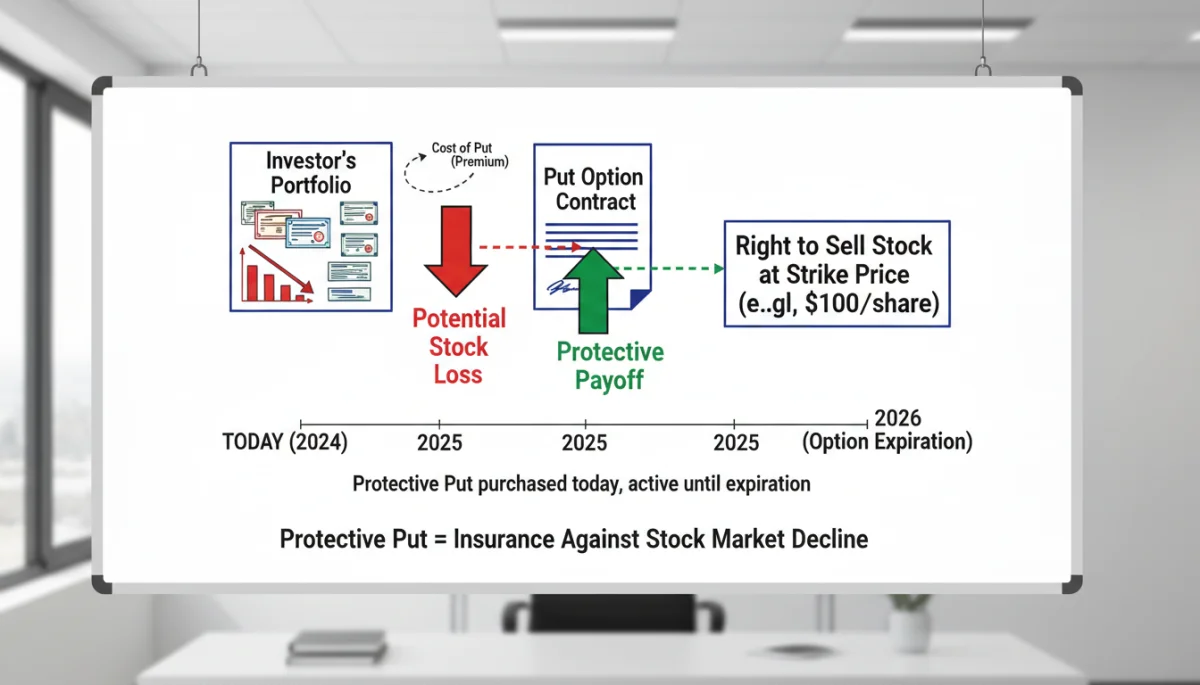
A protective put is a common strategy where an investor buys a put option on a stock they already own. This strategy acts like an insurance policy, setting a floor on how much the investor can lose if the stock price falls.
For example, if you own 100 shares of XYZ stock trading at $100, you could buy a put option with a strike price of $95. If XYZ falls to $80, your put option allows you to sell your shares at $95, limiting your loss to $5 per share plus the premium paid for the put. Your upside, however, remains unlimited if the stock rises.
Collar Strategy
A collar strategy involves holding shares of a stock, buying a protective put option, and simultaneously selling a call option. This strategy limits both potential gains and losses, often used by investors seeking to generate income from their holdings while providing downside protection.
By selling a call option, the investor receives a premium, which can offset the cost of buying the put option. This creates a “collar” around the stock’s price, defining a range within which the investor’s profit or loss will fall. It’s a balanced approach for moderate market views.
Benefits: Reduces the net cost of hedging, provides defined risk and reward.
Drawbacks: Caps potential upside gains, requires active management.
Application in 2026: Useful for investors holding significant stock positions who anticipate moderate volatility and wish to protect against sudden drops while generating some income.
These option strategies provide robust mechanisms to protect capital and manage risk, offering peace of mind in potentially turbulent markets. By carefully selecting strike prices and expiration dates, investors can customize their hedges to align with their market outlook and risk appetite.
Leveraging Futures for Price Certainty and Exposure Management
Futures contracts, while carrying more obligation than options, are indispensable tools for managing price risk in commodities, currencies, and interest rates. Their ability to lock in future prices makes them critical for businesses and investors seeking certainty in volatile markets.
In 2026, as global markets continue to evolve, the strategic use of futures can help mitigate exposure to price fluctuations, ensuring more predictable financial outcomes for various operations.
Commodity Price Hedging
Businesses that rely heavily on raw materials, such as manufacturers or agricultural producers, use futures contracts to hedge against unfavorable price changes. A farmer, for instance, can sell corn futures to lock in a price for their harvest, protecting against a potential drop in corn prices by the time of sale.
Similarly, an airline might buy crude oil futures to fix the price of jet fuel for future consumption, safeguarding against rising fuel costs. This provides budgetary stability and allows businesses to focus on core operations without constant worry about commodity price volatility.
Interest Rate Hedging
Financial institutions and large corporations often use interest rate futures to hedge against adverse movements in interest rates. For example, a bank anticipating a future loan origination might sell Treasury bond futures to hedge against a rise in interest rates that would decrease the value of their fixed-income assets.
This type of hedging is crucial in environments where central bank policies and economic indicators can lead to rapid and unpredictable shifts in borrowing and lending costs. Futures offer a way to stabilize future interest rate exposures.
Currency Risk Management
International businesses are constantly exposed to currency risk, where fluctuations in exchange rates can impact the profitability of cross-border transactions. Currency futures allow these businesses to lock in an exchange rate for future payments or receipts.
Consider a U.S. company expecting to receive a payment in Euros in three months. By selling Euro futures, the company can fix the USD equivalent of that payment, eliminating the risk of the Euro depreciating against the Dollar. This brings predictability to international trade and investment. Futures contracts thus serve as powerful instruments for managing various forms of market exposure, providing a robust framework for price certainty in a dynamic global economy.
Advanced Strategies: Combining Options and Futures for Enhanced Protection
For sophisticated investors, combining options and futures contracts can create highly customized and robust hedging strategies. These advanced approaches allow for fine-tuning risk exposure, potentially reducing costs, and achieving more precise outcomes than using either instrument in isolation.
The synergy between the limited risk of options and the price certainty of futures opens up a wide array of possibilities for managing complex portfolio risks, especially in a year like 2026 where market dynamics might be particularly intricate.
Synthetic Positions
Investors can create synthetic positions using options and futures that mimic the payoff of other securities or derivatives. For example, a synthetic long stock position can be created by buying a call option and selling a put option at the same strike price and expiration date. This allows for exposure to the underlying asset without direct ownership, often with less capital outlay.
This flexibility is valuable for investors who want to replicate certain market exposures or manage capital efficiently. It also provides opportunities for arbitrage if pricing discrepancies exist between the synthetic position and the actual asset.
Spreads and Combinations
Options and futures spreads involve buying and selling multiple contracts simultaneously to create specific risk-reward profiles. These can range from simple vertical spreads (buying and selling options with different strike prices but the same expiration) to more complex combinations like iron condors or butterflies.
Calendar Spreads: Involve options or futures with different expiration dates, betting on time decay or changes in volatility.
Ratio Spreads: Involve buying and selling different numbers of options or futures contracts to create a desired risk-reward profile, often used to capitalize on specific price movements.
Straddles and Strangles: Involve buying both calls and puts to profit from significant price movements, either up or down, often used during periods of high anticipated volatility.
These strategies require a deep understanding of market dynamics and careful execution. However, they offer powerful ways to fine-tune risk, manage volatility, and potentially generate profits in various market conditions. By combining the strengths of options and futures, investors can construct highly sophisticated hedges that are perfectly aligned with their financial objectives for 2026.
Risk Management Best Practices and Considerations for 2026
While options and futures offer powerful tools for risk management, they also come with inherent complexities and risks. Effective utilization requires a disciplined approach, continuous education, and adherence to best practices. Ignoring these considerations can lead to significant financial losses, even with hedging strategies in place.
The rapidly evolving financial landscape of 2026 demands a proactive and informed stance when engaging with these derivative instruments. Market conditions can shift quickly, and a well-thought-out plan is essential.
Understanding Leverage and Margin
Futures contracts, in particular, involve significant leverage, meaning a small initial margin deposit controls a large notional value of the underlying asset. While this amplifies potential gains, it equally magnifies potential losses. It’s crucial to understand your broker’s margin requirements and maintain sufficient capital to avoid margin calls.
Options also involve leverage, as a small premium can control a large number of shares. However, the maximum loss for an option buyer is limited to the premium paid, which is a key advantage over futures for some strategies.
Continuous Monitoring and Adjustment
Market conditions are dynamic, and a hedging strategy that was effective yesterday might not be optimal tomorrow. Continuous monitoring of your positions, the underlying assets, and broader market trends is essential. Be prepared to adjust your hedges as circumstances change.
This might involve rolling options to different strike prices or expiration dates, adjusting the number of futures contracts, or even unwinding a hedge if the initial risk scenario no longer exists. Flexibility is a cornerstone of successful derivative trading.
Regular Review: Schedule periodic reviews of your hedging positions, ideally weekly or monthly.
Market News: Stay informed about economic data, geopolitical events, and company-specific news that could impact your positions.
Scenario Planning: Consider various market scenarios and how your hedges would perform under each, preparing for potential outcomes.
By adhering to these best practices, investors can harness the power of options and futures to manage risk effectively in 2026, turning potential volatility into opportunities for protection and growth.
Common Pitfalls to Avoid When Using Derivatives
Despite their utility, derivatives like options and futures are not without their perils. Many investors, especially those new to these instruments, fall prey to common mistakes that can erode capital quickly. Understanding and actively avoiding these pitfalls is as important as understanding the strategies themselves.
In the complex market environment of 2026, vigilance against these errors will be paramount for any investor seeking to effectively manage risk and achieve their financial objectives.
Over-Leveraging and Insufficient Capital
One of the most dangerous mistakes is over-leveraging, particularly with futures contracts. While leverage offers the potential for high returns, it also means that a small adverse price movement can lead to substantial losses, potentially exceeding your initial investment. Many investors fail to allocate sufficient capital to cover potential margin calls, leading to forced liquidation of positions at unfavorable prices.
It’s crucial to only trade with capital you can afford to lose and to maintain a healthy buffer above margin requirements. A conservative approach to leverage is often the most sustainable.
Lack of Understanding and Education
Derivatives are complex instruments. Trading them without a thorough understanding of their mechanics, pricing, and associated risks is akin to gambling. Many investors jump into options and futures trading based on tips or without fully grasping the implications of their strategies.
Before entering any derivative trade, take the time to educate yourself thoroughly. Understand the Greeks (delta, gamma, theta, vega) for options, and the specifics of contract specifications for futures. Continuous learning is non-negotiable in this field.
Emotional Trading and Lack of a Plan
Emotional decisions, driven by fear or greed, are detrimental to derivative trading. Panicking during market downturns or becoming overly confident during rallies can lead to deviations from a well-thought-out plan. A clear trading plan, outlining entry and exit points, risk tolerance, and profit targets, is essential.
Define Your Strategy: Clearly articulate your objectives, the specific derivatives to use, and your risk parameters before entering a trade.
Set Stop-Losses: Implement stop-loss orders for futures positions to limit potential losses, or define maximum loss thresholds for options strategies.
Avoid Chasing Markets: Resist the urge to chase rapid price movements; stick to your analysis and plan.
By consciously avoiding these common pitfalls, investors can approach options and futures trading with greater confidence and increase their chances of successful risk management in the dynamic market conditions of 2026.
The Future of Risk Management: Innovations in Derivatives for 2026
The financial landscape is constantly evolving, and 2026 is poised to bring further innovations in derivative products and trading technologies. These advancements will offer new opportunities and challenges for investors seeking to manage risk and optimize their portfolios.
Staying abreast of these developments is crucial for maintaining a competitive edge and effectively navigating the markets of the future. The integration of technology and novel contract structures promises to reshape how we approach risk.
Technological Advancements and Algorithmic Trading
The proliferation of artificial intelligence (AI) and machine learning (ML) is already transforming derivative markets. Algorithmic trading strategies, powered by AI, can identify arbitrage opportunities, execute trades at optimal prices, and manage complex portfolios with unprecedented efficiency. For 2026, we can expect even more sophisticated AI models that offer predictive analytics and real-time risk assessment.
Blockchain technology is also set to play a larger role, potentially leading to more transparent, secure, and efficient clearing and settlement of derivative contracts. This could reduce counterparty risk and operational costs, making derivatives more accessible.
New Derivative Products and Market Structures
As economies and industries evolve, so do the needs for specialized risk management tools. We may see the emergence of new derivative products tailored to specific risks, such as climate risk derivatives, intellectual property derivatives, or even contracts tied to new economic indicators.
ESG Derivatives: Expect to see more options and futures linked to Environmental, Social, and Governance (ESG) indices or metrics, allowing investors to hedge against ESG-related risks or speculate on ESG performance.
Micro Futures and Options: The growth of smaller, more accessible futures and options contracts could democratize derivative trading, allowing retail investors to participate with less capital.
Decentralized Finance (DeFi) Derivatives: The DeFi space is rapidly innovating, and decentralized derivative exchanges could offer new avenues for hedging and speculation, characterized by greater transparency and lower fees, albeit with their own set of unique risks.
These innovations promise to make risk management more precise, efficient, and accessible. However, they also necessitate a continuous commitment to learning and adapting to new market structures and technologies. Investors who embrace these changes will be best positioned to leverage options and futures effectively in 2026 and beyond.
Key Concept
Brief Description
Options Contracts
Give the right, but not the obligation, to buy or sell an asset at a set price.
Futures Contracts
Obligatory agreement to buy or sell an asset at a set price on a future date.
Protective Put
Buying a put option on owned stock to cap potential losses, like insurance.
Leverage & Margin
Using borrowed capital to increase potential returns, also magnifies risks.
Frequently Asked Questions About Options and Futures
What is the primary difference between options and futures?▼
The main difference lies in obligation: options grant the buyer the right, but not the obligation, to act, while futures contracts create a binding obligation for both parties to buy or sell the underlying asset at expiration. This distinction impacts risk and flexibility.
How can options help me hedge my stock portfolio?▼
Options can hedge a stock portfolio by using strategies like buying protective puts. A protective put acts as an insurance policy, limiting potential losses on your stock holdings if the market declines, while still allowing you to benefit from any upside.
Are futures contracts only for large institutions or commodities?▼
While historically associated with institutions and commodities, futures contracts are increasingly accessible to individual investors. They are used for a wide range of assets, including stock indices, currencies, and interest rates, offering diverse hedging and speculative opportunities.
What are the biggest risks associated with trading derivatives?▼
Key risks include leverage, which can amplify losses; market volatility, leading to rapid price changes; and the complexity of these instruments, which requires significant education. In futures, the obligation to buy or sell can lead to substantial losses if the market moves unfavorably.
How important is continuous learning in derivative trading?▼
Continuous learning is paramount because derivative markets are dynamic and complex. New strategies, products, and technologies emerge regularly. Staying informed helps investors adapt to changing market conditions, understand new risks, and refine their hedging and trading approaches effectively.
Conclusion
As we look towards 2026, the strategic deployment of options and futures contracts remains an indispensable component of a robust risk management framework. These derivatives offer sophisticated mechanisms to protect portfolios, lock in prices, and even speculate on market movements, providing investors with flexibility and control in an ever-changing economic landscape. While their complexity demands thorough understanding and disciplined application, the benefits of effectively using options and futures to mitigate risk are undeniable. By embracing education, adhering to best practices, and staying attuned to market innovations, investors can confidently navigate future uncertainties and safeguard their financial well-being.