DMPs in 2026: Reducing Credit Card Debt by 15% Annually

Debt Management Plans (DMPs) in 2026 enable individuals to reduce credit card debt by approximately 15% annually through structured repayment and reduced interest rates.
Are you feeling overwhelmed by mounting credit card debt? The financial landscape of 2026 presents both challenges and opportunities for those seeking a path to financial freedom. One of the most effective strategies for tackling this burden is through a Debt Management Plan (DMP). These plans are designed to help you streamline your payments, reduce interest rates, and ultimately, significantly cut down your credit card debt, often by as much as 15% annually. Let’s explore how DMPs can be your essential tool in navigating towards a healthier financial future.
Understanding Debt Management Plans (DMPs)
Debt Management Plans (DMPs) are formal agreements between you, your creditors, and a credit counseling agency. The primary goal is to help you repay your unsecured debts, primarily credit cards, through a single, affordable monthly payment. This process can significantly alleviate the stress associated with managing multiple due dates and varying interest rates.
In 2026, DMPs continue to be a cornerstone of consumer debt relief. They are not loans; instead, they are structured repayment programs facilitated by non-profit credit counseling agencies. These agencies negotiate with your creditors on your behalf to secure more favorable terms, such as lower interest rates and reduced monthly payments. This structured approach provides a clear roadmap out of debt, making it a viable option for many struggling with high credit card balances.
How DMPs work: The foundational steps
The process of initiating a DMP typically begins with a comprehensive financial assessment by a certified credit counselor. This assessment helps determine your current financial situation, including your income, expenses, and all outstanding debts. Based on this information, the counselor will propose a personalized repayment plan.
- Initial Consultation: A confidential review of your finances.
- Creditor Negotiation: The agency contacts your creditors to secure concessions.
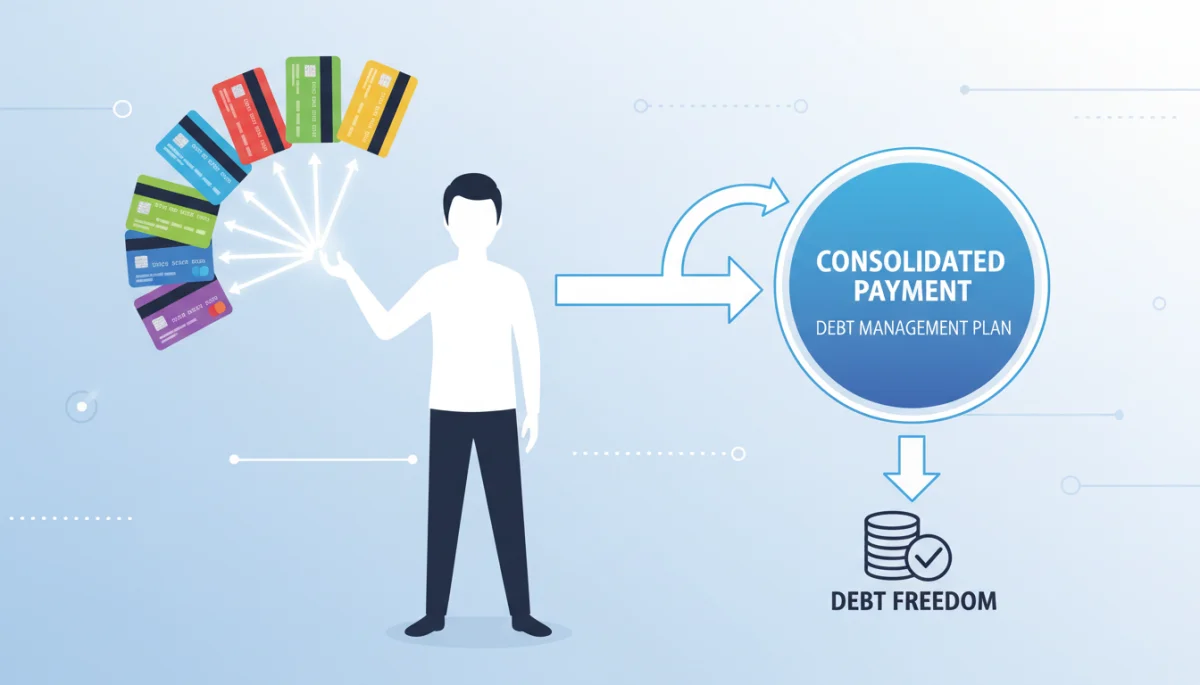
- Consolidated Payments: You make one monthly payment to the agency, which then distributes funds to your creditors.
- Fixed Repayment Period: Most DMPs are designed to be completed within three to five years.
Once an agreement is reached with your creditors, you commit to making regular, on-time payments to the credit counseling agency. This consistency is crucial for the success of the plan and for demonstrating your commitment to resolving your debt. The agency handles all communication and payments to your creditors, simplifying the entire process for you.
The benefits of DMPs in 2026
The advantages of enrolling in a Debt Management Plan in 2026 are manifold, extending beyond just reducing your debt. They offer a holistic approach to financial recovery, providing both immediate relief and long-term stability. The ability to reduce credit card debt by 15% annually is a significant draw, but it’s just one piece of the puzzle.
One of the most compelling benefits is the potential for significantly lower interest rates. Creditors are often willing to reduce rates for DMP participants because it demonstrates a proactive effort to repay debt, increasing their chances of recovering funds. This reduction frees up more of your payment to go towards the principal balance, accelerating your debt payoff timeline.
Streamlined payments and reduced stress
Managing multiple credit card payments, each with different due dates and minimums, can be incredibly stressful and lead to missed payments. A DMP simplifies this by consolidating all your unsecured debts into a single, manageable monthly payment. This not only reduces the mental burden but also helps prevent late fees and further damage to your credit score.
- Single Monthly Payment: Simplifies budgeting and reduces administrative hassle.
- Lower Interest Rates: More of your payment goes towards the principal.
- Waived Fees: Creditors may waive late fees or over-limit charges.
- Improved Financial Discipline: Fosters better budgeting habits and financial awareness.
Furthermore, DMPs can help stop harassing collection calls. Once you are enrolled in a plan and payments are being made consistently, creditors typically cease collection efforts, providing a much-needed reprieve. This allows you to focus on your financial recovery without constant pressure.
Eligibility and requirements for DMPs
While Debt Management Plans offer a lifeline for many, they are not a one-size-fits-all solution. Eligibility for a DMP in 2026 depends on several factors, including the type and amount of debt you have, your income, and your willingness to commit to the program. Understanding these requirements is crucial before embarking on this path.
Generally, DMPs are best suited for individuals with significant unsecured debt, such as credit card balances, medical bills, and personal loans, who are struggling to make minimum payments but still have a stable income. They are not designed for secured debts like mortgages or car loans, nor for student loans or taxes. The credit counseling agency will assess your financial situation to determine if a DMP is the most appropriate solution for your specific circumstances.
Key considerations for enrollment
Before enrolling, the credit counseling agency will evaluate your debt-to-income ratio. This ratio helps determine if you can realistically afford the consolidated monthly payment. It’s important to be transparent and honest about your financial situation to ensure the plan is sustainable and effective.
- Unsecured Debt Focus: Primarily targets credit cards, personal loans, and medical bills.
- Stable Income: Requires a reliable source of income to make consistent payments.
- Commitment: Demands discipline and adherence to the repayment schedule.
- Credit Counseling: Mandatory initial consultation with a certified counselor.
It’s also important to note that while a DMP can temporarily impact your credit score, especially if accounts are closed or marked as ‘managed by credit counseling,’ the long-term benefits of becoming debt-free often outweigh these initial drawbacks. As you successfully complete the plan, your credit score will likely improve.
The role of credit counseling agencies
Credit counseling agencies are the backbone of Debt Management Plans. These non-profit organizations provide expert guidance, negotiate with creditors, and administer the repayment process. Choosing a reputable agency is paramount to the success of your DMP in 2026.
A certified credit counselor will work closely with you to create a budget, analyze your debt, and develop a personalized repayment plan. They act as an intermediary between you and your creditors, leveraging their relationships and expertise to secure more favorable terms. Their objective is to help you achieve financial stability, not to make a profit from your debt.
Selecting the right agency
When selecting a credit counseling agency, look for one that is accredited by reputable organizations like the National Foundation for Credit Counseling (NFCC) or the Financial Counseling Association of America (FCAA). Accreditation ensures that the agency adheres to high standards of ethics and professionalism.
- Accreditation: Verify the agency’s credentials and affiliations.
- Transparency: Ensure clear communication about fees and services.
- Counselor Certification: Confirm counselors are certified and experienced.
- Client Reviews: Check online reviews and testimonials for reliability.
The agency will also educate you on financial literacy, budgeting, and responsible credit usage, empowering you with the knowledge and skills to avoid future debt problems. This educational component is invaluable, providing tools for long-term financial health.
Potential drawbacks and alternatives
While Debt Management Plans offer significant advantages, it’s essential to be aware of their potential drawbacks and to consider alternative debt relief options. No financial solution is perfect for everyone, and what works for one individual might not be suitable for another. A thorough understanding of all facets helps in making an informed decision.
One potential drawback is the temporary impact on your credit score. While it’s often a necessary step towards long-term improvement, some creditors may close your accounts or mark them as ‘managed by credit counseling,’ which can be viewed negatively by future lenders. Additionally, DMPs require strict adherence to the payment schedule; missing payments can lead to the cancellation of the plan and a return to original interest rates and fees.
Exploring other debt relief options
Depending on the severity of your debt and your financial situation, other options might be more appropriate. These alternatives offer different approaches to debt resolution and cater to various circumstances.
- Debt Consolidation Loans: A new loan to pay off multiple existing debts, potentially with a lower interest rate.
- Debt Settlement: Negotiating with creditors to pay a lump sum that is less than the total amount owed.
- Bankruptcy: A legal process to eliminate or reorganize debt, typically a last resort.
- DIY Debt Payoff Strategies: Aggressive budgeting and payment methods like the debt snowball or avalanche.
Each of these alternatives has its own set of pros and cons, including impacts on your credit score, eligibility requirements, and overall cost. Consulting with a financial advisor or credit counselor can help you weigh these options and determine the best course of action for your unique situation.
Maximizing your DMP success in 2026
Embarking on a Debt Management Plan is a significant step towards financial freedom. To ensure its success and achieve the goal of reducing credit card debt by 15% annually, certain strategies and commitments are essential. A DMP is not a magic bullet; it requires active participation and discipline from your end.
First and foremost, adherence to the payment schedule is paramount. Missing payments can jeopardize the entire plan, causing creditors to reinstate original terms and interest rates. Set up automatic payments to avoid any oversights and regularly review your budget to ensure you can consistently meet your obligations. Financial discipline is the cornerstone of a successful DMP.
Tips for sustained financial health
Beyond just making payments, adopting healthier financial habits will contribute significantly to your long-term success. A DMP provides a framework, but your personal commitment to financial literacy and responsible spending will solidify your progress.
- Stick to Your Budget: Regularly review and adjust your budget to align with your financial goals.
- Avoid New Debt: Refrain from opening new credit accounts or incurring additional debt during the DMP.
- Build an Emergency Fund: Start saving a small amount regularly to cover unexpected expenses.
- Monitor Progress: Keep track of your debt reduction and celebrate milestones to stay motivated.
Engage actively with your credit counseling agency. If your financial situation changes, communicate immediately with your counselor. They can help adjust your plan if necessary, preventing potential defaults. By proactively managing your DMP and embracing sound financial practices, you can successfully navigate your way out of debt and build a more secure financial future.
The future of DMPs and financial wellness
As we look towards the future, especially in 2026 and beyond, Debt Management Plans will continue to evolve, adapting to new financial technologies and consumer needs. The core principle of assisting individuals in debt repayment remains, but the methods and accessibility are likely to see further enhancements. This continuous evolution aims to make debt relief more efficient and effective for a broader audience.
Technological advancements are already playing a significant role in personal finance, and DMPs are no exception. Expect to see more sophisticated digital tools for budgeting, payment tracking, and direct communication with credit counselors. These innovations can streamline the process, making it easier for individuals to manage their plans and stay on track. The focus will likely shift towards more personalized and accessible solutions, leveraging AI and data analytics to offer tailored advice.
Embracing digital tools and personalized support
The landscape of financial wellness is increasingly digital. Future DMPs may integrate more seamlessly with personal finance apps, providing real-time insights into spending habits and debt progression. This integration can empower individuals with greater control and understanding of their financial journey, fostering a more proactive approach to debt management.
- AI-Powered Budgeting: Tools that automatically categorize expenses and suggest savings.
- Gamified Debt Payoff: Engaging platforms that make debt reduction feel less daunting.
- Virtual Counseling: Enhanced video conferencing and chat support for convenient access to counselors.
- Predictive Analytics: Early warnings for potential financial hurdles, allowing for timely adjustments.
Ultimately, the future of DMPs is geared towards empowering individuals to achieve lasting financial wellness. By combining structured repayment plans with cutting-edge technology and personalized support, DMPs in 2026 and beyond will remain a vital resource for those committed to reducing credit card debt and securing a brighter financial future. The emphasis will be on education, prevention, and sustainable financial habits, ensuring that once debt-free, individuals stay debt-free.
| Key Aspect | Brief Description |
|---|---|
| Purpose | Consolidate unsecured debts and reduce interest rates. |
| Key Benefit | Potential to reduce credit card debt by 15% annually. |
| Process | Facilitated by non-profit credit counseling agencies. |
| Eligibility | For individuals with significant unsecured debt and stable income. |
Frequently asked questions about DMPs
The primary goal of a DMP is to help individuals repay their unsecured debts, such as credit card balances, through a single, affordable monthly payment. It aims to reduce interest rates and streamline the repayment process, leading to significant debt reduction over time, often by 15% annually.
Most Debt Management Plans are designed to be completed within a period of three to five years. The exact duration depends on the total amount of debt, the negotiated interest rates, and the individual’s ability to make consistent monthly payments to the credit counseling agency.
Initially, a DMP can have a temporary negative impact on your credit score, as some accounts might be closed or marked as ‘managed by credit counseling.’ However, successfully completing the plan and becoming debt-free typically leads to a significant improvement in your credit score over the long term.
DMPs primarily focus on unsecured debts, which include credit card balances, personal loans, and medical bills. Secured debts like mortgages or car loans, as well as student loans and taxes, are typically not eligible for inclusion in a Debt Management Plan.
A credit counseling agency acts as an intermediary, negotiating with your creditors to secure lower interest rates and more favorable terms. They consolidate your payments, distribute funds to creditors, and provide financial education, guiding you through the entire debt repayment process.
Conclusion
Navigating the complexities of credit card debt can be daunting, but as we’ve explored, Debt Management Plans (DMPs) in 2026 offer a robust and reliable pathway to financial recovery. By consolidating payments, reducing interest rates, and providing a structured repayment schedule, DMPs empower individuals to effectively reduce their credit card debt, often by as much as 15% annually. The support of accredited credit counseling agencies, coupled with personal commitment and adherence to financial discipline, are critical components for success. While it’s essential to consider all available options and understand the potential impacts, a DMP remains a powerful tool for those seeking to regain control of their finances and build a more secure future. Embrace these strategies, and take the proactive steps necessary to achieve lasting financial wellness.