Personal Loans 2026: Secure Rates Below 8% with Good Credit

Securing personal loans below 8% in 2026 hinges on understanding market trends and leveraging a strong credit history for optimal financial outcomes.
Navigating the landscape of personal finance can be complex, especially when seeking favorable borrowing terms. For those with a solid financial foundation, securing personal loans in 2026 with rates below 8% is an attainable goal, provided you understand the market and optimize your credit profile.
Understanding the 2026 Personal Loan Landscape
The financial world is constantly evolving, and 2026 will bring its own set of dynamics influencing personal loan rates. Economic forecasts, Federal Reserve policies, and lender competition all play crucial roles. Staying informed about these broader trends is the first step toward securing an advantageous loan.
As we look towards 2026, experts anticipate a somewhat stabilized, yet competitive, lending environment. While inflation and economic growth will always be factors, a mature understanding of these influences can help you predict and react to market shifts. Lenders are increasingly using advanced algorithms to assess risk, meaning your credit profile will be more critical than ever.
Key Economic Indicators to Watch
- Federal Funds Rate: This benchmark rate directly impacts the cost of borrowing for banks, which then trickles down to consumer loan rates.
- Inflation Trends: Persistent high inflation can lead to higher interest rates as lenders seek to maintain purchasing power.
- Unemployment Rates: Low unemployment often signals a stronger economy, potentially leading to more favorable lending conditions.
In conclusion, understanding the macro-economic environment in 2026 is fundamental. These indicators provide a framework for anticipating interest rate movements and can help you time your loan application strategically. A proactive approach to monitoring these factors will give you a significant edge in the personal loan market.
The Power of a Good Credit History
Your credit history is arguably the most influential factor in determining the interest rate you’ll be offered on a personal loan. A strong credit score signals to lenders that you are a reliable borrower, reducing their perceived risk and making them more willing to offer lower rates. This is especially true when aiming for rates below 8%.
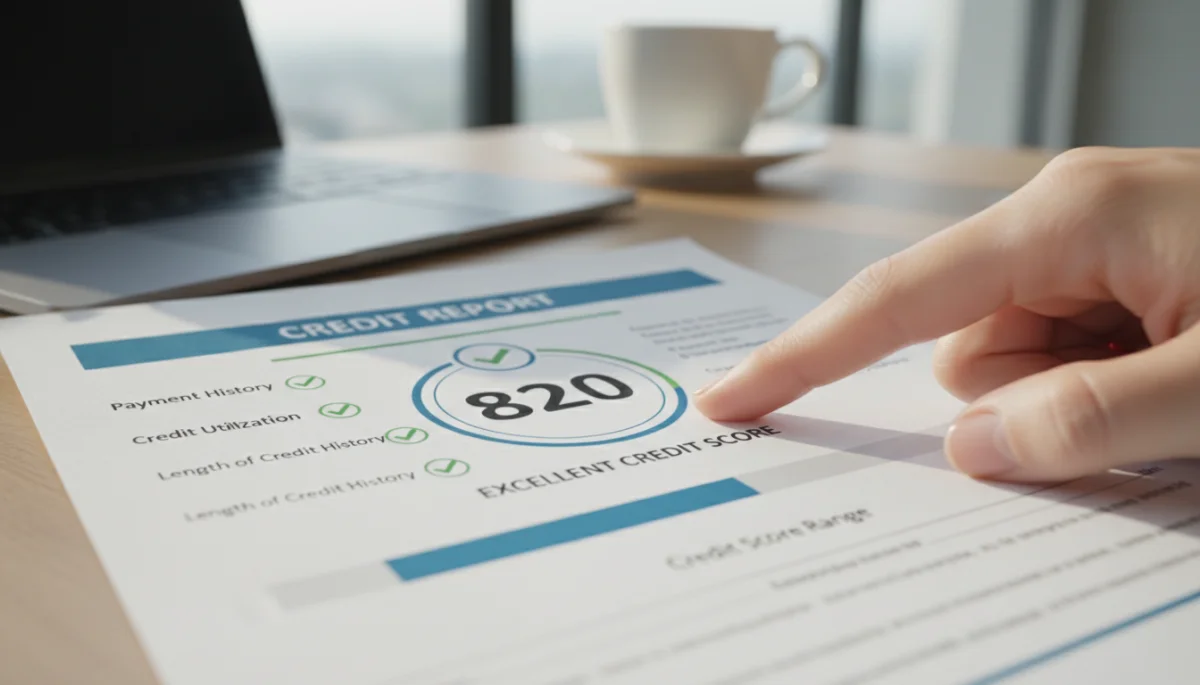
Building and maintaining excellent credit isn’t a secret; it involves consistent, responsible financial behavior over time. Lenders will scrutinize your payment history, credit utilization, length of credit history, and types of credit accounts. Each of these elements contributes to your overall credit score and, consequently, your eligibility for top-tier rates.
Components of an Excellent Credit Score
- Payment History: Making all payments on time, every time, is paramount. Late payments can severely damage your score.
- Credit Utilization: Keeping your credit card balances low relative to your credit limits demonstrates responsible credit management. Aim for under 30%.
- Length of Credit History: A longer history of responsible credit use generally leads to a higher score.
- Credit Mix: Having a diverse mix of credit, such as credit cards, installment loans, and mortgages, can positively impact your score.
Ultimately, a good credit history is your most valuable asset when seeking low-interest personal loans. It opens doors to the most competitive offers and positions you as a preferred borrower. Prioritizing your credit health now will pay dividends in 2026 and beyond.
Strategies for Optimizing Your Credit Score Before 2026
To truly target those sub-8% rates in 2026, you need to proactively optimize your credit score. This isn’t about quick fixes but rather a sustained effort to demonstrate financial responsibility. Start by reviewing your credit reports from all three major bureaus—Equifax, Experian, and TransUnion—to identify any discrepancies or areas for improvement.
Disputing errors on your credit report is a crucial step. Even minor inaccuracies can negatively impact your score. Beyond corrections, focus on habits that consistently build credit. This includes setting up automatic payments to avoid missed due dates and strategically paying down high-interest debt to improve your credit utilization ratio.
Actionable Steps to Boost Your Score
- Review Credit Reports Annually: Get free copies from AnnualCreditReport.com and dispute any errors immediately.
- Pay Bills On Time: This is the single most important factor. Consider automatic payments.
- Reduce Credit Card Balances: Lowering your credit utilization ratio (amounts owed vs. credit limit) can significantly improve your score.
- Avoid New Hard Inquiries: Limit applications for new credit in the months leading up to a loan application, as each inquiry can temporarily drop your score.
By implementing these strategies, you’ll be well on your way to building a credit profile that makes you an attractive candidate for the best personal loan rates in 2026. Consistency and diligence are key to unlocking the full potential of your credit score.
Comparing Lenders and Loan Products
Even with an excellent credit score, comparing different lenders and their loan products is essential. The personal loan market is diverse, with banks, credit unions, and online lenders each offering unique terms, fees, and eligibility requirements. What might be the best fit for one borrower may not be ideal for another, even with similar credit profiles.
Don’t assume that your current bank will offer the best rate. Online lenders, in particular, have become highly competitive, often leveraging lower overheads to provide more attractive interest rates. It’s crucial to gather multiple offers and meticulously review the Annual Percentage Rate (APR), which includes both the interest rate and any fees associated with the loan.
Factors to Consider When Comparing Offers
- APR (Annual Percentage Rate): The true cost of borrowing, encompassing interest and fees. This is the most important number to compare.
- Origination Fees: Some lenders charge an upfront fee deducted from your loan amount.
- Repayment Terms: Shorter terms usually mean lower overall interest paid, but higher monthly payments. Longer terms mean lower monthly payments but more interest over time.
- Customer Service and Reviews: A lender’s reputation for customer support can be invaluable if issues arise.
Comparing lenders effectively involves more than just looking at the advertised interest rate. A holistic evaluation of all terms and conditions will ensure you select the personal loan that best aligns with your financial goals for 2026, maximizing your chances of securing a rate below 8%.
The Application Process: What to Expect in 2026
The personal loan application process in 2026 will likely be streamlined, with many lenders offering fully digital applications. However, thorough preparation remains key. Having all necessary documentation ready can significantly expedite the approval process and prevent delays that could impact your rate lock-in.
Lenders will typically require proof of identity, income verification (pay stubs, tax returns), and bank statements. They will also perform a hard credit inquiry, which will temporarily affect your credit score. Therefore, it’s wise to apply for loans within a short window (typically 14-45 days) to minimize the impact of multiple inquiries on your score.
Preparing Your Loan Application
- Gather Documentation: Have recent pay stubs, W-2s or 1099s, bank statements, and government-issued ID ready.
- Understand Your Debt-to-Income Ratio: Lenders assess this to ensure you can comfortably manage new debt.
- Pre-qualification: Many lenders offer pre-qualification with a soft credit check, allowing you to see potential rates without impacting your score.
Approaching the application process with diligence and transparency will instill confidence in lenders, increasing your likelihood of approval and securing those coveted sub-8% interest rates. A well-prepared application reflects your financial responsibility.
Maintaining Financial Health Post-Loan
Securing a personal loan below 8% in 2026 is a significant achievement, but the journey doesn’t end there. Responsible management of your new loan is crucial for maintaining your excellent credit history and overall financial health. Consistent, on-time payments are paramount, not just for avoiding late fees but for reinforcing your positive credit standing.
Consider setting up automatic payments to ensure you never miss a due date. Also, be mindful of your overall debt-to-income ratio. While a personal loan can consolidate debt or fund a significant purchase, taking on too much additional debt can strain your finances and impact your ability to secure future credit at favorable rates. Regularly review your budget to ensure your loan payments are sustainable.
Best Practices for Loan Management
- Automate Payments: Set up auto-pay from your checking account to avoid late payments.
- Monitor Your Budget: Ensure loan payments fit comfortably within your monthly budget without causing financial strain.
- Avoid New Unnecessary Debt: Resist the temptation to take on additional high-interest debt after securing your personal loan.
- Review Credit Report Periodically: Continue to monitor your credit report for accuracy and to track your financial progress.
By diligently managing your personal loan, you not only fulfill your financial obligations but also solidify your reputation as a responsible borrower. This ongoing commitment to financial health ensures that the favorable rates you secured in 2026 continue to benefit you in the long run.
| Key Aspect | Brief Description |
|---|---|
| Good Credit History | Essential for securing low interest rates (below 8%) on personal loans. |
| Market Understanding | Monitor economic indicators and Federal Reserve policies for optimal timing. |
| Lender Comparison | Compare APRs, fees, and terms from various lenders (banks, credit unions, online). |
| Post-Loan Management | Maintain on-time payments and monitor debt-to-income ratio to preserve financial health. |
Frequently Asked Questions About 2026 Personal Loans
A good credit history typically implies a FICO score of 670 or higher, with excellent scores starting around 800. For sub-8% rates in 2026, aiming for a score in the very good to excellent range (740+) will significantly improve your chances. Lenders look for consistent on-time payments and low credit utilization.
While quick fixes are rare, focusing on reducing credit card balances to lower your utilization ratio and ensuring all current bills are paid on time can show immediate, albeit modest, improvements. Disputing any errors on your credit report is also a fast way to potentially boost your score.
Predicting exact rate movements is challenging, but general consensus suggests a stabilization or slight decrease in rates if inflation cools and the Federal Reserve maintains a steady policy. However, individual rates will always depend on your creditworthiness and the specific lender’s risk assessment.
Lenders commonly request proof of identity (driver’s license, passport), income verification (pay stubs, W-2s, tax returns), and bank statements to assess your financial stability and ability to repay the loan. Having these ready streamlines the application process significantly.
Unsecured personal loans are more common and don’t require collateral, but may have slightly higher rates. Secured personal loans, backed by an asset like a car or savings account, often offer lower rates due to reduced lender risk. With a good credit history, an unsecured loan below 8% is achievable.
Conclusion
Achieving personal loan rates below 8% in 2026 with a good credit history is a realistic and achievable goal for financially diligent individuals. It requires a combination of proactive credit management, a keen eye on economic trends, and a strategic approach to lender comparison. By understanding the nuances of the lending market and continuously optimizing your financial profile, you position yourself to access the most competitive rates available, ensuring your borrowing supports your financial well-being without undue burden. The effort invested in maintaining excellent credit today will undoubtedly pay off in favorable loan terms tomorrow.