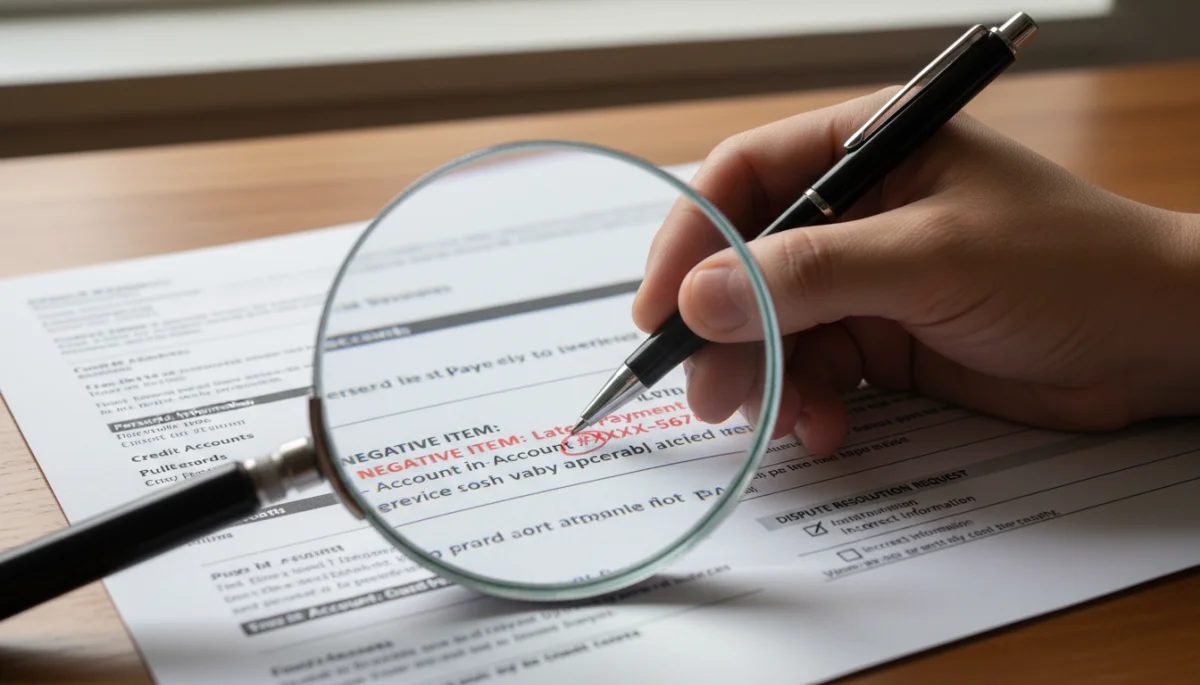
Credit Repair Strategies for 2026: Remove 5 Negative Items
Effectively improve your credit score in 2026 by understanding and implementing proven credit repair strategies, focusing on the removal of five prevalent negative items from your credit report.
By: Rafaela on September 23, 2026
To effectively improve your credit score in 2026, focus on understanding your credit report and strategically disputing inaccurate or outdated negative items, such as late payments, collections, charge-offs, bankruptcies, and repossessions.
Navigating the complexities of your credit report can often feel like deciphering a secret code, especially when negative entries are dragging your score down. However, understanding and implementing effective credit repair strategies for 2026 is not just possible, but essential for your financial well-being. This guide will walk you through a step-by-step process to identify and challenge five common negative items, empowering you to take control of your financial future.
Understanding Your Credit Report: The First Step
Before you can begin any credit repair, you must first understand what’s on your credit report. This document is a detailed record of your borrowing and repayment history, compiled by the three major credit bureaus: Experian, Equifax, and TransUnion. Each bureau may have slightly different information, making it crucial to review all three reports regularly.
Accessing your credit reports is your right, and you can do so for free once every 12 months from each bureau through AnnualCreditReport.com. This initial review is not just about finding errors; it’s about gaining a comprehensive understanding of your financial footprint and identifying potential areas for improvement. Look for anything that seems inaccurate, outdated, or unfamiliar.
Why Regular Review Matters
Regularly checking your credit reports helps you catch discrepancies early. Errors can range from incorrect account balances to accounts that don’t belong to you, potentially indicating identity theft. Addressing these issues promptly can prevent long-term damage to your credit score.
Accuracy Check: Verify all personal information, account numbers, and payment statuses.
Fraud Detection: Identify any accounts opened in your name without your knowledge.
Dispute Preparation: Gather evidence for items you intend to challenge.
Once you have a clear picture of your credit reports, you can pinpoint the specific negative items that are most impacting your score. This foundational step is critical, as it dictates the subsequent strategies you will employ to clean up your credit and move towards a healthier financial standing.
Late Payments: Addressing a Common Foe
Late payments are one of the most common negative items found on credit reports and can significantly lower your score. A payment reported 30, 60, 90, or 120 days late can stay on your report for up to seven years. However, not all hope is lost; there are specific strategies to address these entries.
The first step is to ensure the late payment report is accurate. Check the date of the payment, the amount, and whether it was truly late. If you believe the report is incorrect, you have the right to dispute it with the credit bureau. Provide any documentation you have, such as bank statements or payment confirmations, to support your claim.
“Goodwill” Letters and Pay for Delete
If the late payment is accurate, you still have options. A “goodwill” letter can be a surprisingly effective tool. This letter is a polite request to the creditor to remove the late payment from your report as a gesture of goodwill, especially if you have a history of on-time payments otherwise. Explain any extenuating circumstances that led to the late payment and emphasize your commitment to timely payments moving forward.
Drafting a Goodwill Letter: Be courteous, explain your situation, and highlight your positive payment history.
Follow-Up: If initially denied, you can try again or escalate to a supervisor.
Another strategy, though less common and not guaranteed, is a “pay for delete” offer. This involves negotiating with a collection agency or creditor to remove a negative entry in exchange for full or partial payment of the outstanding debt. Always get this agreement in writing before making any payment. Successfully addressing late payments can provide a noticeable boost to your credit score, paving the way for better financial opportunities.
Collections and Charge-Offs: Tackling Serious Debt
Collections and charge-offs represent more severe credit issues than late payments. A collection account means a creditor has given up trying to collect a debt and sold it to a third-party collection agency. A charge-off occurs when a creditor writes off a debt as a loss, typically after several months of non-payment. Both can severely damage your credit for up to seven years.
When dealing with collections, it’s crucial to first verify the debt. Request a “debt validation letter” from the collection agency within 30 days of their initial contact. This letter should provide proof that you owe the debt and that the agency has the right to collect it. If they cannot validate the debt, they must stop collection efforts and remove the item from your credit report.
Negotiating and Settling Debt
If the debt is valid, your next step is to negotiate. Collection agencies often buy debts for pennies on the dollar, so they may be willing to settle for less than the full amount. Aim to negotiate a “pay for delete” agreement, where they agree to remove the collection account from your credit report in exchange for payment. Always get this agreement in writing before you pay a single cent.
Debt Validation: Always verify the debt with the collection agency first.
Negotiate for Removal: Aim for a ‘pay for delete’ agreement.
Document Everything: Keep records of all communications and agreements.
For charge-offs, similar negotiation tactics can be employed. While a creditor might be less inclined to remove a charge-off entirely, they might agree to change the reporting status to “paid as agreed” or “settled” once the debt is resolved. This won’t remove the negative mark, but it can make it look less severe to future lenders. Diligent negotiation and careful documentation are key to mitigating the impact of these significant negative items.
Bankruptcies: Navigating the Long-Term Impact
Bankruptcy is one of the most damaging entries on a credit report, capable of staying there for seven to ten years, depending on the type. While it offers a fresh financial start, its presence can make securing new credit, loans, or even housing incredibly difficult. Repairing credit after bankruptcy is a long-term commitment, but it is achievable with strategic effort.
The first step after a bankruptcy discharge is to review your credit reports meticulously. Ensure that all debts included in the bankruptcy are reported with a $0 balance and listed as “discharged in bankruptcy.” Any account that is still showing an outstanding balance or is reported incorrectly should be disputed immediately with the credit bureaus.
Rebuilding Credit Post-Bankruptcy
Rebuilding credit after bankruptcy involves establishing new, positive credit history. This often begins with secured credit cards. These cards require a cash deposit, which acts as your credit limit, reducing the risk for lenders. Using a secured card responsibly, by making small purchases and paying them off in full and on time, can slowly demonstrate your ability to manage credit.
Secured Credit Cards: A safe way to start rebuilding positive payment history.
Credit Builder Loans: Loans designed to help you save and build credit simultaneously.
Authorized User Status: Becoming an authorized user on someone else’s well-managed credit card can also help.
Another option is a credit builder loan, where a portion of the loan is held in a savings account until you’ve made all payments. This helps you build savings while simultaneously building a positive payment history. Patience and consistent, responsible financial behavior are paramount in overcoming the long-term impact of bankruptcy and restoring your creditworthiness.
Repossessions: Overcoming Asset Loss
A repossession occurs when a lender takes back property (like a car) that was used as collateral for a loan, typically due to missed payments. This negative mark can stay on your credit report for seven years and significantly impact your ability to obtain future loans, especially for vehicles. Addressing a repossession requires careful attention to detail and proactive steps.
Upon noticing a repossession on your credit report, the first action is to verify its accuracy. Check the dates, the amount owed at the time of repossession, and ensure that all details align with your records. Inaccuracies, even minor ones, can be grounds for dispute with the credit bureaus. Gather any paperwork related to the loan and the repossession process.
Dealing with Deficiency Balances
Often, after a repossession, the lender sells the asset at auction. If the sale price doesn’t cover the remaining loan balance, you may be responsible for a “deficiency balance.” This balance can then be sent to collections, creating another negative entry on your report. It’s crucial to negotiate this deficiency balance.
Verify Deficiency: Ensure the amount is correct and legally owed.
Negotiate Settlement: Attempt to settle the deficiency for a lower amount.
Get it in Writing: Always confirm any settlement or payment plan in writing.
Similar to collections, you can attempt to negotiate a “pay for delete” for the deficiency balance with the collection agency or original lender. If a pay for delete isn’t possible, paying off the deficiency balance will at least update the account status to “paid” or “settled,” which is better than an open collection. Rebuilding after a repossession involves demonstrating new, responsible financial habits, often starting with secured credit and carefully managing any remaining deficiency debt.
Identity Theft and Fraud: Protecting Your Financial Future
Identity theft and fraud are insidious threats that can wreak havoc on your credit report, leaving you with accounts you never opened and debts you never incurred. Discovering fraudulent activity requires immediate and decisive action to protect your financial standing and prevent further damage. Vigilance is your strongest defense against these malicious acts.
If you suspect identity theft, the very first step is to place a fraud alert on your credit reports with all three major bureaus. This makes it harder for identity thieves to open new accounts in your name. Next, obtain copies of your credit reports and meticulously review them for any unfamiliar accounts, inquiries, or addresses. Highlight every suspicious entry.
Reporting and Recovering from Fraud
Report the identity theft to the Federal Trade Commission (FTC) at IdentityTheft.gov. They will provide you with an identity theft report, which is a crucial document for disputing fraudulent accounts. You should also file a police report, as this can add weight to your disputes with creditors and credit bureaus. Keep detailed records of all communications and documents.
Fraud Alert: Place immediately with all three credit bureaus.
FTC Report: File a report at IdentityTheft.gov for an official document.
Police Report: File with local law enforcement to strengthen your case.
Dispute Fraudulent Accounts: Use your FTC and police reports to dispute all unauthorized entries.
Once you have your identity theft report, contact each creditor where fraudulent accounts were opened. Provide them with the report and request that the fraudulent accounts be removed from your credit file. Follow up regularly to ensure these items are indeed removed. Taking these swift and comprehensive actions is vital for safeguarding your credit and recovering from the devastating effects of identity theft.
Maintaining a Healthy Credit Profile for 2026 and Beyond
Successfully removing negative items is a significant achievement, but credit repair is an ongoing process that extends beyond just cleaning up past mistakes. To ensure your credit remains strong and continues to improve, it’s vital to adopt habits that foster a healthy credit profile. This proactive approach will help you avoid future pitfalls and maximize your financial potential in 2026 and in the years to come.
One of the most impactful habits is consistent on-time payments. Payment history accounts for a substantial portion of your credit score, so making sure all your bills are paid by their due dates is paramount. Consider setting up automatic payments or reminders to avoid accidental late payments. This simple practice alone can steadily build a positive credit history.
Key Habits for Sustainable Credit Health
Another crucial aspect is managing your credit utilization ratio, which is the amount of credit you’re using compared to your total available credit. Keeping this ratio below 30% is generally recommended for optimal scores. If you have a $10,000 credit limit, try to keep your balance below $3,000. Paying down balances aggressively can quickly improve this ratio.
On-Time Payments: Always pay your bills before the due date.
Low Credit Utilization: Keep balances below 30% of your available credit.
Diverse Credit Mix: A healthy mix of credit types (e.g., credit cards, installment loans) can be beneficial.
Avoid New Debt: Be judicious about taking on new credit, especially after repair efforts.
Regularly monitoring your credit reports and scores is also essential. Tools like free credit monitoring services can alert you to any significant changes or new activity, allowing you to quickly address potential issues. By consistently applying these principles, you’ll not only repair your credit but also build a robust financial foundation that supports your long-term goals and aspirations.
Key Strategy
Brief Description
Review All Reports
Obtain and meticulously check all three credit reports for errors.
Dispute Inaccuracies
Challenge incorrect or outdated information with credit bureaus and creditors.
Negotiate Debts
Engage creditors/collectors for ‘pay for delete’ or settlement options.
Build New Credit
Utilize secured cards and credit builder loans for positive history.
Frequently Asked Questions About Credit Repair
How long does it take to repair my credit?▼
Credit repair timelines vary greatly depending on the severity of negative items and your consistent efforts. Minor errors might be fixed in a few months, while more serious issues like bankruptcies can take several years. Consistent positive financial behavior is key to seeing steady improvement over time.
Can I remove accurate negative items from my credit report?▼
It’s challenging but sometimes possible. While accurate negative items generally remain for their reporting period (usually 7 years), you can try a “goodwill” letter for late payments or negotiate a “pay for delete” for collection accounts. Success depends on the creditor’s discretion and your payment history.
What is the most important factor in improving my credit score?▼
Payment history is the most significant factor, accounting for about 35% of your FICO score. Making all your payments on time, every time, is crucial for improving and maintaining a healthy credit score. Consistent on-time payments demonstrate reliability to lenders.
Should I use a credit repair company?▼
While credit repair companies can assist, most actions they take can be done yourself for free. If you lack time or confidence, research companies thoroughly, check their reputation, and understand their fees. Be wary of those promising quick fixes or demanding upfront payments.
How often should I check my credit reports?▼
It’s advisable to check your credit reports from all three major bureaus at least once a year via AnnualCreditReport.com. Some financial services offer more frequent access. Regular monitoring helps you detect errors, fraudulent activity, and track your progress in credit repair effectively.
Conclusion
Embarking on the journey of credit repair can seem daunting, but with the right knowledge and consistent effort, it’s an incredibly rewarding endeavor. By systematically addressing common negative items such as late payments, collections, charge-offs, bankruptcies, and repossessions, you can significantly improve your credit standing. Remember that patience, persistence, and proactive financial management are your most powerful tools. As you move through 2026 and beyond, maintaining healthy credit habits will not only help you achieve your financial goals but also unlock new opportunities for a more secure and prosperous future. Take control of your credit today and build the financial foundation you deserve.