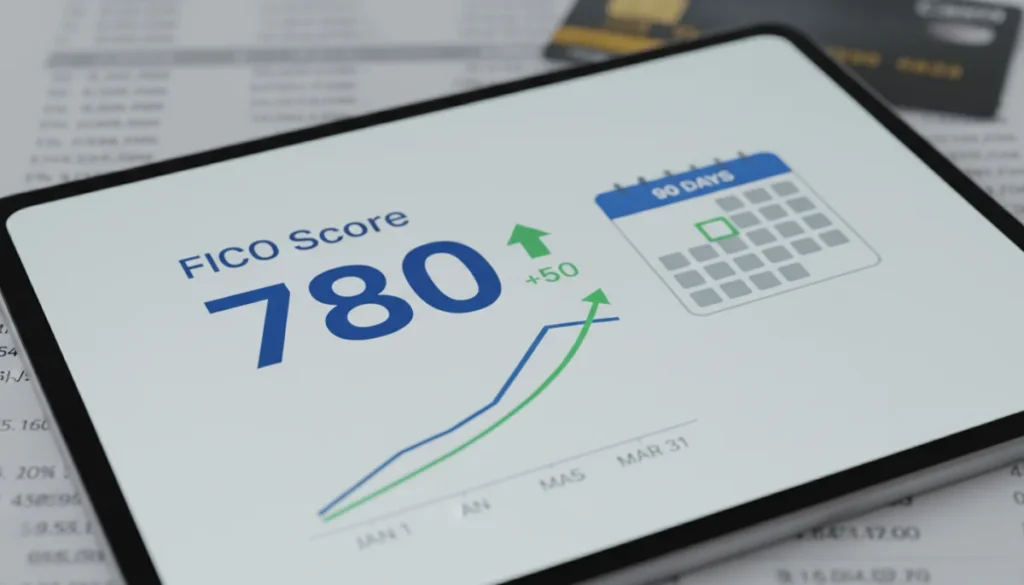
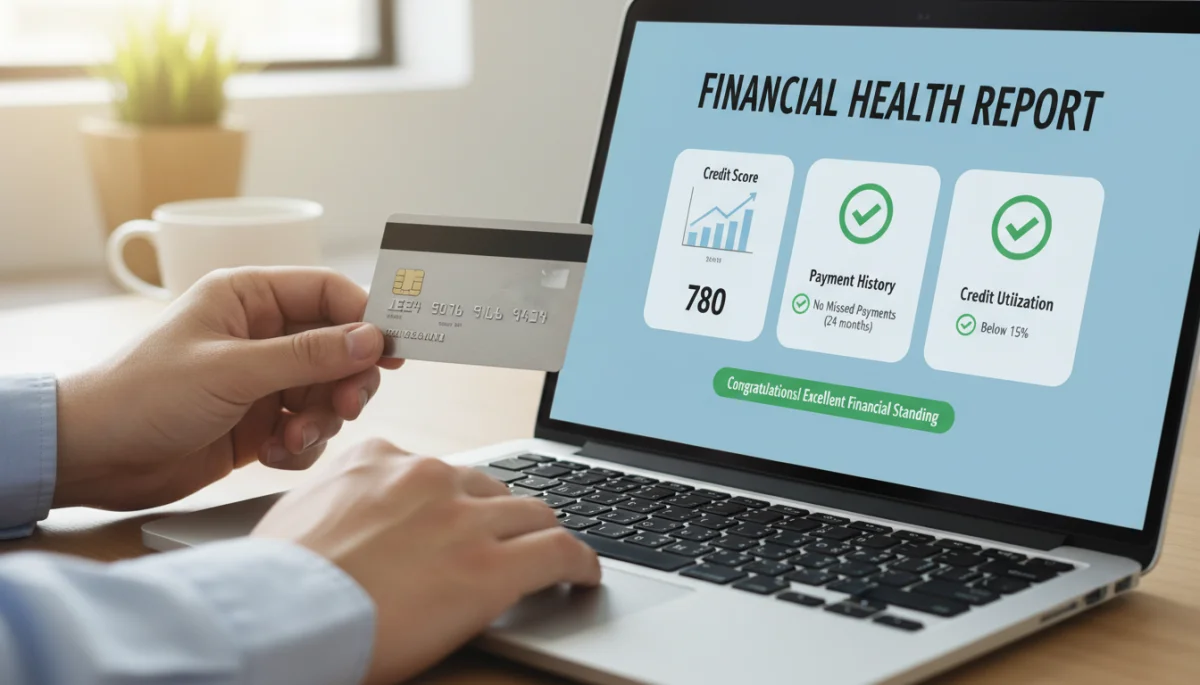
Credit Score Boost: Improve Your FICO Score by 50 Points in 90 Days
Boosting your FICO score by 50 points in 90 days requires strategic financial management, focusing on credit utilization, payment history, and addressing negative items effectively for US consumers.
By: Rafaela on September 23, 2026
Boosting your FICO score by 50 points in 90 days requires strategic financial management, focusing on credit utilization, payment history, and addressing negative items effectively for US consumers.
Are you a US consumer looking to significantly improve your financial standing? Understanding how to achieve a credit score boost is crucial. This article outlines three time-sensitive strategies designed to help you increase your FICO score by 50 points within a mere 90 days.
Understanding Your Current FICO Score and Its Impact
Before embarking on any improvement plan, it’s essential to know where you stand. Your FICO score is a three-digit number that lenders use to assess your creditworthiness, directly impacting your ability to secure loans, mortgages, and even apartment rentals. A higher score typically translates to better interest rates and more favorable terms.
Many factors contribute to your FICO score, with payment history and credit utilization being the most influential. Understanding these components is the first step toward strategic improvement. By regularly monitoring your credit report, you can identify areas needing attention and track your progress effectively.
Accessing Your Credit Report and Score
You are entitled to a free credit report from each of the three major credit bureaus—Experian, Equifax, and TransUnion—once every 12 months. Websites like AnnualCreditReport.com provide a centralized way to access these reports. Reviewing them carefully helps you spot inaccuracies that might be dragging your score down.
Experian: Offers free FICO score access.
Equifax: Provides free credit report access.
TransUnion: Also offers free credit report access.
Identifying errors is a critical part of the process. Even a small mistake, like an incorrectly reported late payment, can negatively affect your score. Once identified, disputing these errors promptly can lead to a quick resolution and potential score improvement. Understanding your starting point is the foundation for any successful credit-building journey.
Strategy 1: Optimizing Credit Utilization for Rapid Gains
Credit utilization, or the amount of credit you’re using compared to your total available credit, is a significant factor in your FICO score, accounting for about 30% of its calculation. Keeping this ratio low is paramount for a quick credit score boost. Lenders view high utilization as a sign of financial distress, which can lower your score.
The general recommendation is to keep your credit utilization below 30%. However, for a rapid increase, aiming for under 10% is ideal. This signals to credit bureaus that you are a responsible borrower who doesn’t rely heavily on credit.
Reducing Your Credit Card Balances
The most direct way to lower your credit utilization is to pay down your credit card balances. Focus on cards with high balances relative to their credit limits. If you have multiple cards, concentrate on paying off the one with the highest utilization first, or consider a snowball or avalanche method for debt repayment.
Pay down high-balance cards: Prioritize cards where you’re close to the limit.
Make multiple payments: Paying down balances throughout the month, rather than just once, can show lower utilization when creditors report to bureaus.
Avoid new debt: Resist the urge to open new credit lines or make large purchases that could increase your balances.
Even if you can’t pay off balances entirely, reducing them significantly before your statement closing date can have a positive impact. Credit bureaus typically report your balance as of the statement closing date, so timing your payments strategically is key.
Strategy 2: Ensuring Flawless Payment History
Your payment history is the single most important factor in your FICO score, making up 35% of the total. A consistent record of on-time payments demonstrates reliability to lenders. Even a single late payment can severely damage your score and take a long time to recover from, especially if it’s within the last 90 days.
For a rapid credit score improvement, absolute diligence in making all payments on time is non-negotiable. This includes credit cards, loans, utility bills, and any other accounts reported to credit bureaus. Every on-time payment reinforces a positive credit behavior.
Setting Up Payment Reminders and Auto-Pay
To prevent missed payments, leverage technology. Most financial institutions offer automatic payment options or email/text reminders. Setting these up can provide a crucial safety net, ensuring you never miss a due date. Even if you prefer to make manual payments, reminders can serve as a valuable prompt.
Automate payments: Set up automatic payments for minimum amounts to avoid late fees and negative marks.
Calendar reminders: Use digital calendars or apps to track due dates for all your bills.
Pay more than the minimum: While not directly affecting payment history, paying more than the minimum helps reduce balances, indirectly supporting your utilization goals.
Consistency is key here. A 90-day window is sufficient to establish a strong pattern of on-time payments, especially if your recent history has been less than perfect. This positive behavior will be reflected in subsequent credit report updates, contributing significantly to your FICO score boost.
Negative items on your credit report, such as late payments, collections, or charge-offs, can severely depress your FICO score. While some negative items fade with time, proactively addressing them can accelerate your credit improvement, especially within a 90-day timeframe. This strategy requires careful planning and negotiation.
It’s important to understand that removing negative items isn’t always straightforward, but certain approaches can be effective. The goal is to either have them removed or to minimize their impact on your score.
Disputing Inaccurate Information
The first step in addressing negative items is to meticulously review your credit reports for any inaccuracies. If you find errors, such as a payment reported late when it was on time, or an account that doesn’t belong to you, dispute it immediately with the credit bureau and the creditor. They are legally obligated to investigate and correct any verified errors.
Gather evidence: Collect bank statements, payment confirmations, or other documents supporting your claim.
Submit disputes in writing: Send disputes via certified mail for a paper trail.
Follow up consistently: Monitor the progress of your disputes and re-engage if necessary.
A successful dispute can lead to the removal of the negative item, potentially boosting your score quickly. This is often the fastest way to improve your credit if errors exist.
Negotiating Pay-for-Delete with Creditors
For legitimate negative items, particularly collection accounts, you might be able to negotiate a “pay-for-delete” agreement. This involves offering to pay a portion or all of the outstanding debt in exchange for the creditor agreeing to remove the negative mark from your credit report. It’s crucial to get any such agreement in writing before making a payment.
While not all creditors will agree to a pay-for-delete, it’s a worthwhile strategy to explore for older, smaller debts. This can be particularly impactful for items that are still relatively recent and thus weighing heavily on your score. A successful negotiation can remove a significant obstacle to your FICO score boost.
Monitoring Your Progress and Staying Consistent
Achieving a 50-point FICO score boost in 90 days is an ambitious but attainable goal with consistent effort. Regular monitoring of your credit score and reports is not just a starting point but an ongoing process throughout this period. Many credit card companies and financial apps now offer free credit score monitoring, which can be incredibly helpful.
Seeing your score gradually increase can be a powerful motivator to continue with good financial habits. Be patient, as changes may not appear instantly. Credit bureaus update reports periodically, so it might take a few weeks for your efforts to be reflected.
Utilizing Credit Monitoring Services
Free credit monitoring services can alert you to changes in your credit report, including new accounts, inquiries, or updated balances. This allows you to quickly identify any new issues and verify that your positive actions are being reported correctly. Being proactive about credit monitoring empowers you to maintain control over your financial health.
Set up alerts: Receive notifications for significant changes to your credit report.
Review reports regularly: Check your reports at least monthly during this 90-day period.
Understand score fluctuations: Small dips and rises are normal; focus on the overall upward trend.
Maintaining the habits established during these 90 days is vital for long-term credit health. The strategies for a rapid credit score boost are also the bedrock of excellent credit management. By staying diligent, you can not only achieve your 50-point goal but also sustain a strong credit profile for years to come.
Additional Tips for Sustained Credit Health
While the 90-day strategies focus on rapid improvement, building and maintaining excellent credit is a continuous journey. Beyond the immediate actions, several long-term practices can ensure your FICO score remains robust. These tips reinforce the foundation laid during your intensive 90-day effort and help prevent future setbacks.
Diversifying your credit mix, understanding hard inquiries, and being mindful of account closures are all aspects that contribute to a healthy credit profile. Adopting these habits will serve you well beyond the initial improvement phase.
Credit mix, which includes different types of credit like revolving (credit cards) and installment (mortgages, auto loans), contributes about 10% to your FICO score. While not a primary focus for a 90-day boost, having a healthy mix over time can positively impact your score. It shows you can manage various forms of credit responsibly.
Installment loans: Responsibly managing a car loan or student loan.
Revolving credit: Utilizing credit cards wisely.
Secured credit cards: An option for those with limited credit history to build a mix.
It’s important not to open new accounts just to diversify your mix, especially during the 90-day improvement period. New credit inquiries can temporarily lower your score. Instead, focus on managing your existing accounts well, and diversification will naturally occur as your financial needs evolve.
Understanding Hard Inquiries and Account Closures
Each time you apply for new credit, a “hard inquiry” is placed on your credit report, which can slightly lower your score for a short period. Limit new credit applications during your 90-day improvement window. Similarly, closing old credit card accounts, especially those with no annual fees, can sometimes negatively impact your credit utilization by reducing your total available credit. Think carefully before closing accounts.
Maintaining older accounts with good payment history contributes to your “length of credit history,” another factor in your FICO score. An older, well-managed account is a positive indicator to lenders. Therefore, unless an account has an annual fee you can’t justify, it’s often better to keep it open and use it occasionally to keep it active.
Key Strategy
Brief Description
Optimize Credit Utilization
Keep credit card balances below 10% of your total available credit to signal responsible borrowing.
Flawless Payment History
Ensure all payments are made on time, every time, as this is the biggest factor in your FICO score.
Address Negative Items
Dispute inaccuracies and negotiate pay-for-delete for legitimate negative marks on your report.
Monitor Progress
Regularly check your credit score and reports to track improvements and identify any new issues.
Frequently Asked Questions About FICO Score Improvement
How quickly can I see changes in my FICO score after implementing these strategies?▼
While some changes can appear within a billing cycle, significant improvements like a 50-point boost typically take 60-90 days. This is because credit bureaus update reports periodically, and creditors report balances monthly. Consistency over this period is key to seeing noticeable results.
Is it possible to increase my FICO score by more than 50 points in 90 days?▼
Yes, it is possible, especially if your starting score is low or if you have multiple errors on your report that can be quickly removed. The impact varies based on your individual credit profile and the severity of the issues being addressed. However, 50 points is a realistic and achievable goal for many.
Should I close old credit card accounts to improve my score?▼
Generally, no. Closing old credit card accounts can actually hurt your score by reducing your total available credit, which increases your credit utilization ratio. It also shortens your average length of credit history. It’s usually better to keep old, unused accounts open, especially if they have no annual fees.
What is the ideal credit utilization ratio I should aim for?▼
While keeping your credit utilization below 30% is a common recommendation, aiming for under 10% for a rapid credit score boost is ideal. This demonstrates to lenders that you are not over-reliant on credit and manage your finances responsibly, leading to a more significant positive impact on your FICO score.
How often should I check my credit report and score during this 90-day period?▼
During a 90-day credit improvement push, it’s advisable to check your credit report at least once a month and your credit score more frequently, perhaps weekly if your credit card or bank offers free score updates. This helps you monitor progress, spot new issues, and ensure your efforts are being reflected.
Conclusion
Achieving a significant credit score boost of 50 points in just 90 days is an ambitious yet entirely attainable goal for US consumers. By meticulously focusing on optimizing your credit utilization, maintaining a flawless payment history, and strategically addressing any negative items on your credit report, you lay a solid foundation for financial improvement. Remember, consistency and diligence are your greatest allies in this process. Embrace these time-sensitive strategies, monitor your progress, and you’ll be well on your way to a stronger, healthier financial future, unlocking better opportunities and more favorable financial terms.