Navigating 2026 Tax Law Changes: Maximize US Investment Returns

Understanding and adapting to the 2026 US tax law changes is crucial for implementing effective investment strategies to maximize financial returns.
The impending shift in US tax legislation by 2026 presents a critical juncture for investors. To effectively navigate these changes, understanding and implementing strategic investment approaches are paramount for maximizing returns. This guide will explore five key investment strategies designed to help you thrive in the evolving tax landscape.
Understanding the Looming 2026 Tax Law Changes
As we approach 2026, significant shifts in US tax law are on the horizon, primarily due to the expiration of various provisions from the Tax Cuts and Jobs Act (TCJA) of 2017. These changes will impact individual income tax rates, estate taxes, and potentially capital gains, making proactive planning essential for every investor. Ignoring these impending adjustments could lead to unforeseen financial consequences, eroding investment gains and increasing tax liabilities.
The TCJA introduced a range of tax reforms, including lower individual income tax rates, increased standard deductions, and changes to itemized deductions. While beneficial for many, these provisions were temporary, with most set to revert to pre-TCJA levels by the end of 2025. This expiration will likely result in higher tax burdens for a broad spectrum of taxpayers, especially those in higher income brackets. Understanding the specifics of these expirations is the first step in formulating a robust investment strategy that accounts for future tax implications.
Key Areas of Impact
- Individual Income Tax Rates: Expect a potential return to higher marginal tax rates for many income levels.
- Standard and Itemized Deductions: The increased standard deduction may decrease, and certain itemized deduction limitations could reappear.
- Estate Tax Exemption: The generous estate tax exemption is slated to be cut in half, significantly impacting high-net-worth individuals and their estate planning.
- Capital Gains and Dividends: While less direct, changes in ordinary income tax rates can indirectly influence the effective tax rate on capital gains and qualified dividends.
The cumulative effect of these changes demands a thorough review of current investment portfolios and financial plans. Investors who align their strategies with the new tax environment will be better positioned to preserve wealth and maximize after-tax returns. Early preparation and expert guidance are invaluable in navigating this complex transition.
Strategy 1: Rebalancing Portfolios for Tax Efficiency
One of the most immediate and impactful strategies for 2026 tax investment strategies is to rebalance your investment portfolio with a keen eye on tax efficiency. This involves analyzing your current holdings and making adjustments to minimize future tax liabilities, particularly concerning capital gains and income generation. The goal is not just to generate returns, but to generate returns that are tax-optimized.
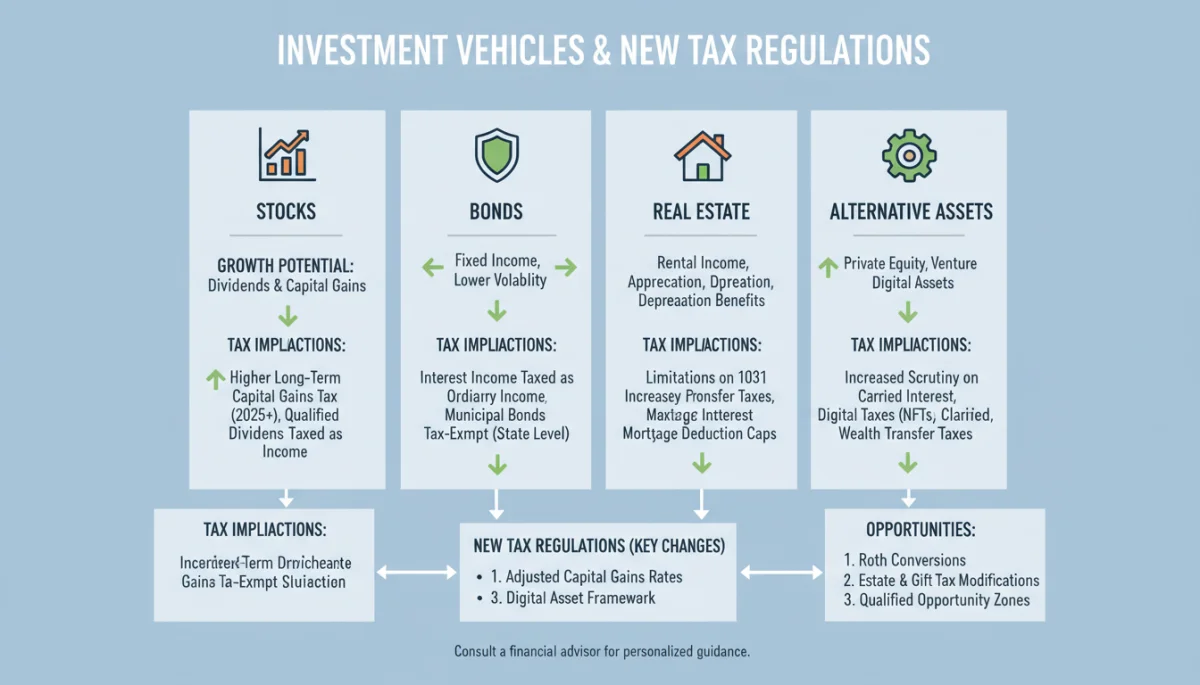
Rebalancing for tax efficiency means considering the tax implications of different asset classes and investment vehicles. For instance, assets that generate ordinary income, such as certain bonds or REITs, might be better held in tax-advantaged accounts like IRAs or 401(k)s. Conversely, growth stocks or other assets expected to generate long-term capital gains could be more suitable for taxable brokerage accounts, leveraging potentially lower long-term capital gains rates.
Implementing Tax-Loss Harvesting
As part of rebalancing, tax-loss harvesting becomes an even more critical tool. This involves selling investments at a loss to offset capital gains and, if losses exceed gains, up to $3,000 of ordinary income annually. Any unused losses can be carried forward to future years. Proactively engaging in tax-loss harvesting before year-end can significantly reduce your taxable income, especially in anticipation of potentially higher tax rates in 2026.
- Identify Losses: Regularly review your portfolio for investments trading below their purchase price.
- Offset Gains: Use these losses to cancel out capital gains from other profitable sales.
- Reduce Income: Apply remaining losses (up to $3,000) against ordinary income.
- Plan Ahead: Consider the timing of sales to maximize the benefit in the current or future tax years.
By strategically rebalancing and utilizing tools like tax-loss harvesting, investors can position their portfolios to be more resilient against the upcoming tax changes, ensuring that a larger portion of their investment gains remains in their pockets rather than going to taxes.
Strategy 2: Maximizing Tax-Advantaged Accounts
As tax rates potentially rise in 2026, maximizing contributions to tax-advantaged accounts becomes an even more critical component of sound 2026 tax investment strategies. These accounts offer various tax benefits, such as tax-deferred growth or tax-free withdrawals, which can significantly enhance your after-tax returns over the long term. This strategy is about sheltering as much of your investment growth from current and future taxation as legally possible.
Traditional IRAs and 401(k)s allow for tax-deductible contributions, reducing your current taxable income, and offer tax-deferred growth until retirement. When tax rates are expected to be higher in the future, deferring income into these accounts can be particularly advantageous. Conversely, Roth IRAs and Roth 401(k)s, while not offering an upfront tax deduction, provide tax-free withdrawals in retirement, which can be immensely beneficial if you anticipate being in a higher tax bracket later in life or if tax rates generally increase.
Exploring Health Savings Accounts (HSAs)
Beyond traditional retirement accounts, Health Savings Accounts (HSAs) offer a unique triple tax advantage: tax-deductible contributions, tax-free growth, and tax-free withdrawals for qualified medical expenses. For those eligible (enrolled in a high-deductible health plan), HSAs can serve as an excellent long-term investment vehicle, especially as healthcare costs continue to rise. Funds in an HSA can be invested, growing tax-free, and after age 65, can be withdrawn for any purpose, subject to ordinary income tax if not used for medical expenses.
Furthermore, explore other specialized accounts like 529 plans for education savings, which offer tax-free growth and withdrawals for qualified educational expenses. Each of these accounts serves a specific purpose but collectively provides a powerful toolkit for minimizing tax exposure and maximizing investment growth in a changing tax environment. Consistently contributing the maximum allowable amounts to these accounts should be a cornerstone of your financial planning.
Strategy 3: Strategic Use of Capital Gains and Losses
The effective management of capital gains and losses will become increasingly important in the context of 2026 tax investment strategies. With potential changes to capital gains tax rates or income tax brackets that influence them, understanding how to strategically realize gains and losses can significantly impact your overall tax bill. This strategy focuses on the timing and allocation of your investment sales.
One key aspect is differentiating between short-term and long-term capital gains. Short-term gains (from assets held for one year or less) are taxed at ordinary income rates, which could be higher in 2026. Long-term gains (from assets held for more than a year) are typically taxed at preferential rates. Therefore, holding onto appreciated assets for at least a year and a day before selling can result in substantial tax savings. This principle becomes even more critical if ordinary income tax rates increase more significantly than long-term capital gains rates.
Timing Your Investment Sales
Consider the timing of your investment sales carefully. If you anticipate being in a lower income tax bracket in a future year (perhaps due to retirement or a career change), deferring the realization of capital gains until then could be beneficial. Conversely, if you expect to be in a higher bracket, realizing gains in the current year, assuming rates are more favorable, might be the better option. This requires foresight and a good understanding of your projected income and the evolving tax landscape.
- Evaluate Holdings: Regularly assess which investments have significant unrealized gains or losses.
- Match Gains and Losses: Use capital losses to offset capital gains, reducing your taxable income.
- Long-Term vs. Short-Term: Prioritize holding assets for over a year to qualify for lower long-term capital gains rates.
- Future Tax Projections: Consider your expected income and tax bracket in future years when deciding to sell.
By actively managing your capital gains and losses, you can optimize your tax position and ensure that your investment returns are not unduly diminished by taxation. This proactive approach is a cornerstone of intelligent financial planning for the upcoming tax changes.
Strategy 4: Diversifying into Tax-Advantaged Investments
Diversification is a foundational principle of investing, and as we look towards 2026, diversifying into tax-advantaged investments becomes a crucial element of your 2026 tax investment strategies. This involves exploring investment vehicles that offer inherent tax benefits, regardless of the account type they are held in. Such investments can provide a layer of protection against rising tax burdens and enhance overall after-tax returns.
One prime example is municipal bonds. Interest earned on municipal bonds is typically exempt from federal income tax and, in many cases, from state and local taxes if you reside in the issuing state. This tax exemption makes municipal bonds particularly attractive for investors in higher income tax brackets, as their effective yield can often surpass that of taxable bonds, especially when income tax rates are high or expected to rise.
Exploring Qualified Opportunity Funds (QOFs)
Another avenue to consider is Qualified Opportunity Funds (QOFs). These funds allow investors to defer and potentially reduce capital gains taxes by investing in designated low-income communities. By reinvesting capital gains into a QOF, investors can defer taxation on those gains until 2026 (or until the investment is sold, if earlier). Furthermore, if the investment is held for at least 10 years, any new capital gains from the QOF investment can be entirely tax-free. This offers a powerful incentive for long-term growth and tax minimization.
- Municipal Bonds: Invest in tax-exempt income streams, especially beneficial for high-income earners.
- QOFs: Defer and potentially eliminate capital gains taxes through investments in specific development zones.
- REITs (in specific contexts): While generally generating ordinary income, some REIT structures or their placement within tax-advantaged accounts can offer benefits.
- Annuities: Offer tax-deferred growth, suitable for long-term savings, though withdrawals are taxed as ordinary income.
By consciously allocating a portion of your portfolio to these tax-advantaged investments, you can build a more robust and tax-efficient portfolio that is better equipped to navigate the changing tax landscape of 2026 and beyond.
Strategy 5: Proactive Estate Planning and Gifting
With the anticipated reduction in the federal estate tax exemption in 2026, proactive estate planning and strategic gifting become paramount components of your 2026 tax investment strategies. The current generous exemption, which allows individuals to pass a significant amount of wealth free of federal estate tax, is set to revert to much lower levels. This change will bring many more estates into the federal estate tax net, making early planning crucial.
Reviewing and updating your estate plan well before 2026 is essential. This includes wills, trusts, and beneficiary designations. For high-net-worth individuals, utilizing the current higher gift tax exemption amounts before they expire can be a powerful strategy. Gifting assets now, while the exemption is higher, can remove those assets and their future appreciation from your taxable estate, potentially saving your heirs significant estate taxes.
Considering Irrevocable Trusts
Irrevocable trusts can be a valuable tool in this context. Assets placed into an irrevocable trust are generally removed from your taxable estate. There are various types of irrevocable trusts, such as Grantor Retained Annuity Trusts (GRATs) or Irrevocable Life Insurance Trusts (ILITs), each with specific benefits for different estate planning goals. Consulting with an estate planning attorney is vital to determine the most appropriate trust structures for your individual circumstances.
- Update Estate Documents: Ensure your will, trusts, and beneficiary designations reflect current goals and future tax laws.
- Utilize Current Gift Exemptions: Make significant gifts to heirs while the federal gift tax exemption is still high.
- Explore Irrevocable Trusts: Consider trusts to remove assets from your taxable estate and provide for future generations.
- Charitable Giving: Incorporate charitable giving strategies to reduce estate taxes and support causes you care about.
Proactive estate planning, coupled with strategic gifting, can significantly mitigate the impact of the reduced estate tax exemption, ensuring your legacy is preserved and passed on according to your wishes with minimal tax burden.
Consulting with Financial and Tax Professionals
While these strategies provide a solid framework for navigating the 2026 tax law changes, the complexity and individualized nature of financial planning necessitate professional guidance. The nuances of tax law, combined with personal financial situations, mean that a one-size-fits-all approach is rarely effective. Engaging with qualified financial advisors and tax professionals is perhaps the most critical step in developing a truly optimized investment and tax strategy.
Financial advisors can help you assess your current financial standing, understand your risk tolerance, and align your investment goals with the evolving tax landscape. They can provide personalized recommendations on portfolio rebalancing, asset allocation, and the strategic use of various investment vehicles. Their expertise extends beyond just investments to encompass a holistic view of your financial health, including retirement planning, education savings, and wealth preservation.
The Role of Tax Professionals
Tax professionals, such as Certified Public Accountants (CPAs) or enrolled agents, specialize in tax law and can offer invaluable insights into the specific implications of the 2026 changes for your situation. They can help you with tax-loss harvesting, understanding the intricacies of capital gains and losses, and ensuring compliance with all tax regulations. Furthermore, they can assist with complex estate planning strategies, working in conjunction with your financial advisor to create a seamless and efficient plan.
- Personalized Advice: Obtain tailored strategies that match your unique financial situation and goals.
- Stay Informed: Professionals stay updated on the latest tax laws and regulations, ensuring your plan remains compliant and optimized.
- Holistic Planning: Integrate investment, tax, and estate planning into a cohesive strategy.
- Minimize Errors: Reduce the risk of costly mistakes due to misinterpretation of complex tax codes.
The investment in professional advice can yield significant returns by safeguarding your wealth, minimizing tax liabilities, and ultimately helping you achieve your long-term financial objectives amidst the anticipated 2026 tax law changes. Do not underestimate the value of expert guidance in this critical period.
| Key Strategy | Brief Description |
|---|---|
| Rebalance for Tax Efficiency | Adjust portfolios to minimize capital gains and optimize asset location for tax benefits. |
| Maximize Tax-Advantaged Accounts | Utilize IRAs, 401(k)s, and HSAs for tax-deferred or tax-free growth and withdrawals. |
| Strategic Capital Gains/Losses | Time sales and harvest losses to offset gains and reduce taxable income effectively. |
| Proactive Estate Planning | Update wills, trusts, and utilize current gift exemptions to minimize future estate taxes. |
Frequently Asked Questions About 2026 Tax Changes
The primary changes involve the expiration of many Tax Cuts and Jobs Act (TCJA) provisions, leading to potential increases in individual income tax rates, reduced standard deductions, and a lower federal estate tax exemption. These shifts can significantly impact after-tax investment returns and require proactive planning.
Tax-loss harvesting allows investors to sell investments at a loss to offset capital gains and a limited amount of ordinary income. This strategy can reduce your taxable income, especially when anticipating higher tax rates in 2026, by utilizing current market dips to your advantage.
Roth IRAs and Roth 401(k)s can be highly beneficial if you expect to be in a higher tax bracket in retirement or if tax rates generally increase. Contributions are not tax-deductible, but qualified withdrawals in retirement are entirely tax-free, offering significant long-term savings.
Municipal bonds are an excellent tool for tax-advantaged investing because their interest income is typically exempt from federal income tax, and often from state and local taxes. This makes them particularly attractive for investors in higher tax brackets seeking to minimize their tax burden.
The federal estate tax exemption is expected to significantly decrease in 2026. Proactive estate planning, including updating wills, trusts, and utilizing current higher gift tax exemptions, can help high-net-worth individuals minimize future estate tax liabilities and preserve wealth for heirs.
Conclusion: Preparing for a New Tax Era
The impending 2026 tax law changes represent a significant shift in the financial landscape for US investors. While the prospect of higher taxes might seem daunting, it also presents a unique opportunity for proactive planning and strategic adjustments. By understanding the potential impacts on individual income, capital gains, and estate taxes, investors can implement informed strategies to not only mitigate adverse effects but also uncover new avenues for maximizing returns. The five strategies outlined—rebalancing portfolios for tax efficiency, maximizing tax-advantaged accounts, strategic use of capital gains and losses, diversifying into tax-advantaged investments, and proactive estate planning—form a comprehensive framework for navigating this evolving environment. Ultimately, the key to thriving in the new tax era lies in foresight, adaptability, and the willingness to seek expert advice. Engaging with financial and tax professionals will ensure your investment strategies are robust, personalized, and fully compliant, setting you up for continued financial success in 2026 and beyond.