Fed Q1 2026 Rate Outlook & US Bonds Impact
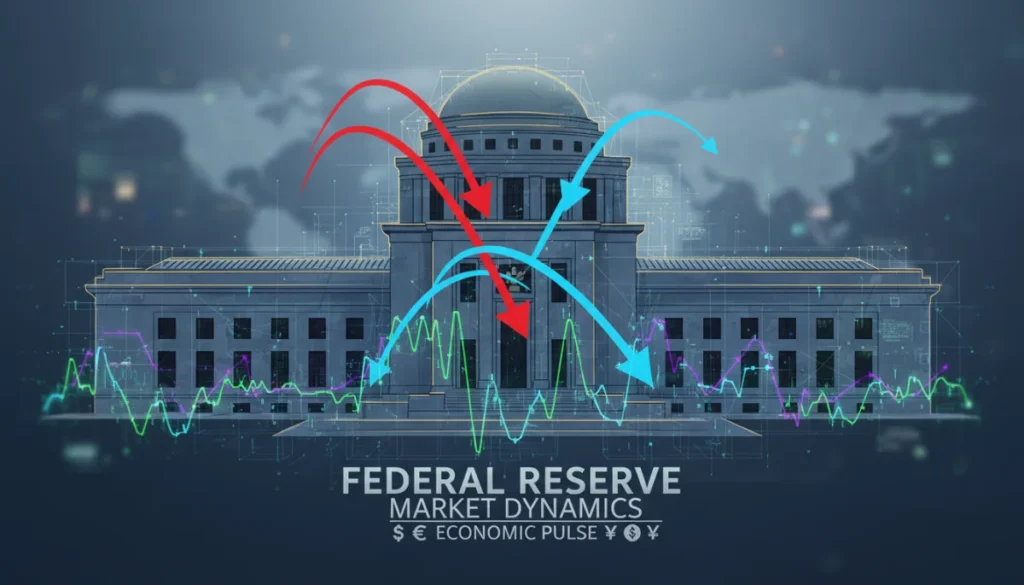
The Federal Reserve’s Q1 2026 interest rate outlook significantly shapes the landscape for US bonds, influencing yields, prices, and investor strategies.
As we approach Q1 2026, understanding the Federal Reserve’s interest rate outlook becomes paramount for anyone involved in the financial markets, especially those with stakes in US bonds. The Fed’s monetary policy decisions ripple through the economy, directly impacting borrowing costs, inflation expectations, and, crucially, the valuation of fixed-income securities. This article delves into the anticipated trajectory of interest rates and what it means for your bond portfolio.
The Federal Reserve’s Mandate and Tools
The Federal Reserve, often referred to as the Fed, serves as the central banking system of the United States. Its primary goals, mandated by Congress, are to maximize employment, stabilize prices, and moderate long-term interest rates. To achieve these objectives, the Fed employs a variety of tools, with the federal funds rate being the most prominent. This rate influences other interest rates throughout the economy, from mortgages to corporate bonds.
Understanding how the Fed utilizes these tools is crucial for anticipating future rate movements. The Federal Open Market Committee (FOMC) meets eight times a year to assess economic conditions and determine appropriate policy actions. Their forward guidance, often communicated through statements and press conferences, provides valuable insights into their future intentions, impacting market sentiment and investor behavior.
Key Monetary Policy Instruments
The Fed’s toolkit extends beyond just the federal funds rate target. These instruments work in concert to achieve the desired economic outcomes.
- Open Market Operations: The buying and selling of government securities in the open market to influence the supply of bank reserves and, consequently, the federal funds rate.
- Discount Rate: The interest rate at which commercial banks can borrow money directly from the Federal Reserve, serving as a backup source of liquidity.
- Reserve Requirements: The amount of funds banks must hold in reserve against deposits, though this tool is used less frequently in modern monetary policy.
- Interest on Reserve Balances: The interest rate paid to banks on their reserve balances held at the Fed, which helps to steer the federal funds rate within its target range.
Each of these tools plays a role in managing liquidity and influencing the broader financial system. The Fed’s communication around these tools is often as important as the actions themselves, as it shapes market expectations.
In conclusion, the Fed’s dual mandate guides its use of powerful monetary policy tools. The federal funds rate remains central to its strategy, with open market operations and other instruments providing flexibility. Keeping an eye on these mechanisms and the FOMC’s statements is key to understanding the potential direction of interest rates.
Economic Indicators Shaping Q1 2026 Outlook
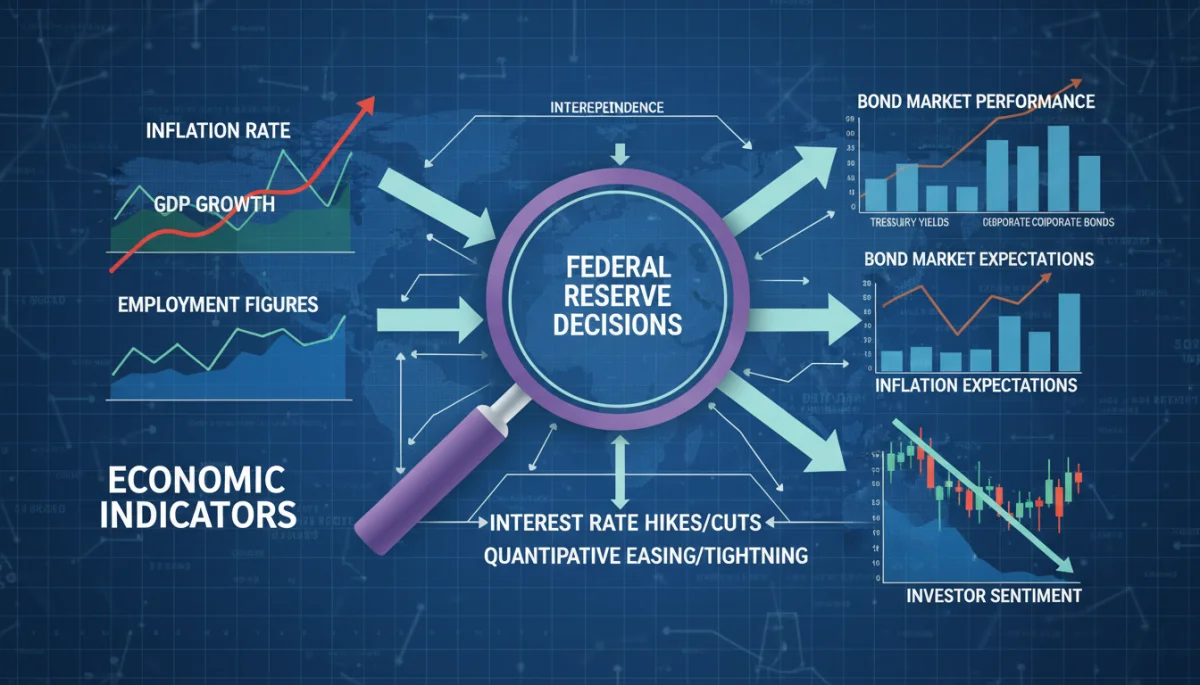
The Federal Reserve’s interest rate decisions are not made in a vacuum; they are heavily influenced by a comprehensive analysis of various economic indicators. For Q1 2026, the FOMC will be scrutinizing inflation data, employment figures, GDP growth, and global economic conditions to determine the most appropriate course of action. These indicators provide a snapshot of the economy’s health and its trajectory, guiding policy adjustments.
Inflation, specifically the Personal Consumption Expenditures (PCE) price index, is a critical measure for the Fed, as it targets a 2% average inflation rate over the long run. Sustained deviations from this target can prompt rate adjustments. Similarly, the labor market, reflected in unemployment rates and wage growth, provides insights into the economy’s capacity and potential inflationary pressures.
Key Economic Data Points
Several reports offer crucial insights into the economic landscape that the Fed will consider. These data points are closely watched by analysts and investors alike.
- Consumer Price Index (CPI) and PCE: These reports measure inflation, with PCE being the Fed’s preferred gauge. Persistent inflation above target could lead to tighter monetary policy.
- Employment Situation Report: Provides data on job creation, unemployment rates, and wage growth, indicating the health of the labor market. A strong labor market might suggest inflationary pressures.
- Gross Domestic Product (GDP): A broad measure of economic activity, showing the overall growth or contraction of the economy. Robust GDP growth might support higher rates.
- Retail Sales: An indicator of consumer spending, which is a significant component of economic activity. Strong retail sales can signal economic momentum.
Global economic stability and geopolitical events also play a role, as they can impact supply chains, commodity prices, and overall market sentiment. The Fed considers these external factors when formulating its domestic policy.
In essence, the Q1 2026 interest rate outlook will be a direct reflection of the prevailing economic conditions. A careful assessment of inflation, employment, and growth, coupled with an understanding of global dynamics, will shape the Fed’s decisions and, consequently, the bond market.
The Direct Impact of Interest Rates on US Bonds
The relationship between interest rates and bond prices is inverse: when interest rates rise, bond prices typically fall, and vice versa. This fundamental principle is crucial for understanding the potential impact of the Federal Reserve’s Q1 2026 outlook on US bonds. As the Fed adjusts its policy rate, it directly influences the yields demanded by investors for newly issued bonds and the market value of existing bonds.
Existing bonds, particularly those with longer maturities, are more sensitive to interest rate changes. If the Fed raises rates, new bonds will be issued with higher coupon payments, making older bonds with lower coupon rates less attractive. To compensate for this, the market price of older bonds must decrease to offer a comparable yield to maturity. This dynamic creates both risks and opportunities for bond investors.
Understanding Bond Yields and Prices
The yield on a bond represents the return an investor receives. There are several types of yields, but yield to maturity (YTM) is often the most important for investors. YTM considers the bond’s current market price, par value, coupon interest rate, and time to maturity.
- Rising Rates: If the Fed signals or enacts rate hikes, newly issued US Treasury bonds will likely offer higher yields. This makes existing bonds with lower yields less appealing, causing their market prices to drop. Investors holding these bonds would see a capital loss if they sold before maturity.
- Falling Rates: Conversely, if the Fed cuts rates, new bonds will carry lower yields. This makes existing bonds with higher yields more attractive, leading to an increase in their market prices. Investors could realize capital gains if they sell these bonds.
- Duration: This is a measure of a bond’s price sensitivity to changes in interest rates. Bonds with longer durations (longer maturities and lower coupon rates) are more sensitive to rate fluctuations.
The bond market is a forward-looking mechanism, often pricing in anticipated Fed actions well in advance. Therefore, the Fed’s forward guidance and market expectations surrounding Q1 2026 interest rates will play a significant role in determining bond movements even before any official announcement.
In summary, interest rate changes directly affect bond prices and yields. Investors must closely monitor the Fed’s outlook, particularly concerning Q1 2026, to navigate the US bond market effectively and manage portfolio risk.
Forecasting the Fed’s Q1 2026 Interest Rate Decisions
Forecasting the Federal Reserve’s interest rate decisions for Q1 2026 involves analyzing a complex interplay of economic data, market sentiment, and the Fed’s communication. While no forecast is foolproof, investors and analysts use various tools and models to anticipate potential movements. The Fed’s own “dot plot,” which summarizes FOMC members’ projections for the federal funds rate, provides a valuable, albeit often dynamic, glimpse into their collective thinking.
Market participants also closely monitor futures contracts on the federal funds rate, which reflect the market’s collective expectation of future rate levels. These contracts can offer real-time insights into how traders are pricing in the probability of rate hikes or cuts. However, these expectations can shift rapidly in response to new economic data or geopolitical developments.
Factors Influencing the Forecast
Several key factors will heavily influence the Fed’s decisions in Q1 2026, requiring continuous monitoring.
- Inflation Trajectory: Whether inflation has sustainably returned to the Fed’s 2% target will be paramount. Persistent above-target inflation could necessitate a tighter stance.
- Labor Market Strength: A robust labor market, characterized by low unemployment and healthy wage growth, might give the Fed more room to maintain or even raise rates without stifling economic activity.
- Global Economic Health: International economic slowdowns or crises can impact US economic growth and inflation, potentially leading the Fed to adopt a more accommodative stance.
- Fiscal Policy: Government spending and taxation policies can influence aggregate demand and inflation, indirectly affecting the Fed’s decisions.
Furthermore, the Fed’s communication strategy, including speeches by governors and the release of meeting minutes, provides crucial context and clues about their policy leanings. Any shifts in language or tone can signal potential changes in their outlook.
Ultimately, forecasting the Fed’s Q1 2026 interest rate decisions is an ongoing process of interpreting data and signals. A balanced approach, considering both quantitative metrics and qualitative guidance, is essential for forming a well-informed view.
Strategies for Bond Investors in a Changing Rate Environment
As the Federal Reserve’s Q1 2026 interest rate outlook takes shape, bond investors need to adapt their strategies to navigate potential market volatility and optimize returns. A dynamic rate environment presents both challenges and opportunities, requiring careful consideration of portfolio duration, credit quality, and diversification. Proactive management can help mitigate risks associated with rising rates and capitalize on new investment avenues.
For instance, if rates are expected to rise, investors might consider shortening the duration of their bond portfolios. Shorter-duration bonds are less sensitive to interest rate changes, thus preserving capital better in a rising rate environment. Conversely, if rates are anticipated to fall, extending duration could be beneficial, as longer-term bonds would experience greater price appreciation.
Portfolio Adjustments and Opportunities
Strategic adjustments can help investors position themselves effectively for the Q1 2026 rate environment.
- Shorten Duration: Reduce exposure to long-term bonds and increase holdings in short-term bonds or bond funds. This minimizes capital losses if rates increase.
- Consider Floating-Rate Instruments: These bonds have coupon payments that adjust periodically based on a benchmark rate, offering protection against rising rates.
- Diversify Across Bond Types: Look beyond traditional US Treasuries to include corporate bonds, municipal bonds, or even international bonds, considering their unique risk-reward profiles.
- Laddering Strategy: Invest in bonds with staggered maturities, allowing for reinvestment at potentially higher rates as shorter-term bonds mature.
Additionally, investors should pay close attention to the credit quality of their bond holdings. In periods of economic uncertainty or rising rates, lower-rated bonds can be more susceptible to default risk. Maintaining a focus on investment-grade bonds can help preserve capital.
Ultimately, a successful bond investment strategy in Q1 2026 will involve continuous monitoring of the Fed’s actions, a clear understanding of market dynamics, and a willingness to adjust portfolio allocations as conditions evolve. Diversification and risk management remain paramount.
Potential Scenarios for Q1 2026 and Their Bond Market Implications
Projecting the Federal Reserve’s Q1 2026 interest rate outlook involves considering a range of potential economic scenarios, each with distinct implications for the US bond market. While a precise prediction is impossible, outlining these scenarios helps investors prepare for various outcomes. These scenarios typically hinge on the trajectory of inflation, the strength of the labor market, and overall economic growth.
One scenario could involve a ‘soft landing,’ where inflation gradually returns to target without a significant economic downturn. In this case, the Fed might maintain a steady, slightly elevated federal funds rate, leading to stable or moderately rising bond yields. Another scenario might be a ‘reacceleration of inflation,’ forcing the Fed to implement further rate hikes, causing bond prices to fall and yields to rise sharply.
Scenario Analysis and Market Responses
Understanding how different economic pathways could influence the Fed’s decisions is key to navigating the bond market.
- Scenario 1: Soft Landing/Stable Rates. If inflation moderates and economic growth remains resilient, the Fed might hold rates steady or implement very gradual adjustments. Bond yields would likely stabilize, and prices would remain relatively steady, offering predictable returns for investors.
- Scenario 2: Inflation Reacceleration/Rate Hikes. Should inflation prove more persistent, the Fed might be compelled to raise rates further. This would lead to higher bond yields and a decline in existing bond prices, posing challenges for fixed-income portfolios.
- Scenario 3: Economic Downturn/Rate Cuts. A significant economic slowdown or recession could prompt the Fed to cut rates to stimulate growth. In this environment, bond yields would fall, and bond prices would rise, benefiting investors with longer-duration holdings.
- Scenario 4: Stagflation. A less likely but challenging scenario involves high inflation coupled with stagnant economic growth. The Fed would face a difficult balancing act, and bond markets could experience significant volatility as policy responses become unpredictable.
Investors should not only consider the most probable scenario but also prepare for less likely, high-impact events. Stress-testing portfolios against these different outcomes can help identify vulnerabilities and build resilience.
In conclusion, the Q1 2026 bond market will be shaped by how the underlying economic conditions unfold and the Fed’s corresponding policy response. By considering a spectrum of potential scenarios, investors can develop more robust and adaptable strategies for their fixed-income allocations.
The Role of Geopolitical Factors and Global Economy
While the Federal Reserve primarily focuses on domestic economic conditions, geopolitical factors and the state of the global economy increasingly influence its Q1 2026 interest rate outlook and, consequently, the US bond market. Events outside the United States can impact inflation, economic growth, and financial stability, creating ripple effects that the Fed must consider in its policy deliberations.
For example, disruptions in global supply chains due to international conflicts or natural disasters can lead to inflationary pressures on imported goods, even if domestic demand is subdued. Similarly, a significant economic slowdown in a major trading partner could reduce demand for US exports, affecting domestic employment and GDP growth. These external pressures add layers of complexity to the Fed’s decision-making process.
External Influences on Fed Policy
Several global elements are crucial for the Fed’s perspective on the US economy.
- Global Inflation Trends: Inflationary pressures in other major economies can spill over into the US through trade and commodity markets, influencing the Fed’s assessment of domestic price stability.
- International Capital Flows: Changes in global interest rate differentials can affect the attractiveness of US bonds to international investors, impacting demand and yields.
- Geopolitical Stability: Major geopolitical events, such as conflicts or trade wars, can introduce uncertainty into financial markets, prompting investors to seek safe-haven assets like US Treasuries, which can push down yields.
- Currency Fluctuations: The strength or weakness of the US dollar relative to other major currencies can affect import/export prices and, consequently, domestic inflation.
The Fed’s communication often acknowledges these global interconnections, indicating their awareness of how international developments can shape the domestic economic landscape. This holistic view is essential for a comprehensive understanding of the Q1 2026 outlook.
In conclusion, understanding the Federal Reserve’s Q1 2026 interest rate outlook requires looking beyond domestic borders. Geopolitical events and the health of the global economy are integral components that can significantly influence the Fed’s policy choices and the subsequent performance of US bonds.
| Key Point | Brief Description |
|---|---|
| Fed’s Mandate | Maximize employment, stabilize prices, moderate long-term rates using tools like the federal funds rate. |
| Economic Indicators | Inflation (PCE), employment, GDP growth, and global conditions guide Q1 2026 decisions. |
| Bonds & Rates | Inverse relationship: rising rates typically mean falling bond prices; duration is key. |
| Investor Strategies | Consider shortening duration, diversifying, and using laddering in changing rate environments. |
Frequently Asked Questions About Fed Rates and US Bonds
The federal funds rate is a benchmark for other short-term interest rates, influencing prime rates, credit card APRs, and adjustable-rate mortgages. When the Fed raises this rate, borrowing costs for consumers and businesses generally increase, making loans more expensive.
Bond duration measures a bond’s price sensitivity to interest rate changes. A higher duration means a bond’s price will fluctuate more with rate movements. It’s crucial for investors to understand duration to manage interest rate risk in their portfolios, especially in volatile markets.
Higher inflation expectations typically lead to higher bond yields as investors demand greater compensation for the erosion of purchasing power. This can cause existing bond prices to fall. Conversely, lower inflation expectations can lead to lower yields and higher bond prices.
The “dot plot” is a chart showing each FOMC member’s projection for the federal funds rate over several years. It provides insight into the committee’s collective thinking on future rate paths. Investors should view it as a guide, not a definitive forecast, as projections can change with economic data.
Absolutely. Global economic growth, geopolitical stability, and international capital flows can significantly impact US inflation, trade, and financial markets. The Fed considers these external factors to ensure its domestic policy decisions are effective and do not inadvertently destabilize the global or domestic economy.
Conclusion
The Federal Reserve’s Q1 2026 interest rate outlook is a critical determinant of the US bond market’s performance. By understanding the Fed’s mandate, the economic indicators it monitors, and the direct relationship between interest rates and bond prices, investors can better position their portfolios. While forecasting is challenging, a proactive approach to strategy, coupled with an awareness of potential economic scenarios and global influences, will be essential for navigating the evolving fixed-income landscape. Staying informed on the Fed’s communications and adapting investment tactics will be key to successful bond investing in the coming quarters.