Credit Card Minimum Payments: The True Cost of $5000 Debt
Discover the shocking reality of minimum payments on credit card debt. A $5000 balance at 20% APR can take 12 years to clear, costing thousands in interest. Learn strategies to pay off debt faster.
By: Rafaela on September 23, 2026
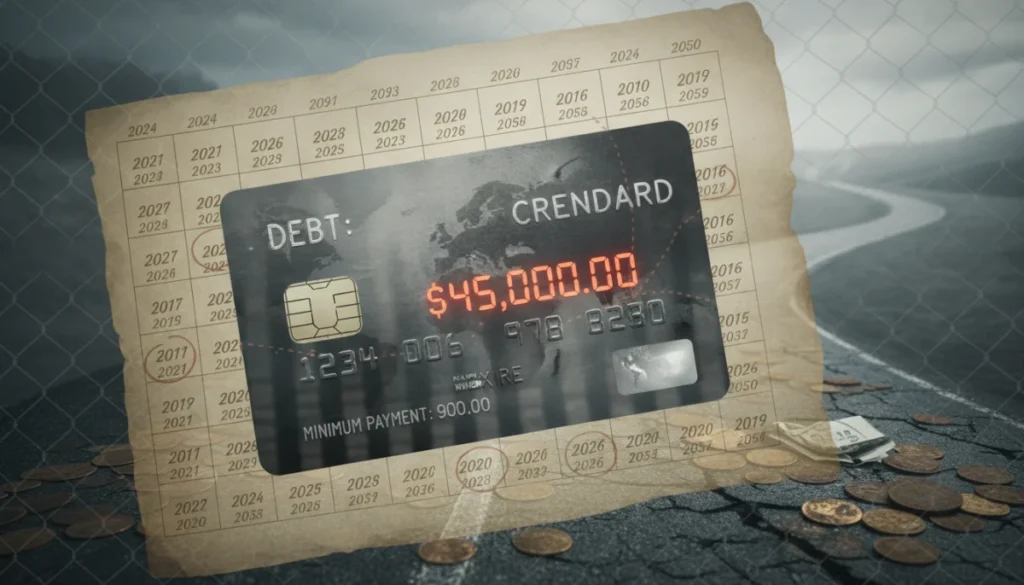
Paying only the minimum on a $5000 credit card debt at 20% APR can trap consumers in a cycle that takes over a decade to resolve, costing significantly more than the initial balance.
Have you ever wondered about the true financial implications of making only the minimum payment on your credit card? For many, the concept of minimum payments debt seems manageable, a small amount to keep the wolves at bay. However, this seemingly innocuous choice can lead to a prolonged and costly battle against interest, turning a modest debt into a financial albatross.
Understanding Credit Card Interest and APR
Credit card interest is the fee charged by lenders for borrowing money. It’s typically expressed as an Annual Percentage Rate (APR). This rate is crucial because it dictates how much extra you’ll pay on your outstanding balance over a year. While an APR might seem like a simple percentage, its impact, especially when compounded, can be staggering.
The calculation of interest often happens daily, meaning that even small balances can accrue significant charges over time. Understanding how your specific credit card calculates interest is the first step toward managing your debt effectively. Different cards can have different methods, but the core principle remains: the longer you carry a balance, the more interest you’ll pay.
How APR Affects Your Debt
Variable Rates: Many credit cards have variable APRs, meaning the rate can change based on market conditions, like the prime rate.
Introductory Offers: Be wary of low introductory APRs that skyrocket after a promotional period, significantly increasing your minimum payment and overall cost.
Penalty APR: Missing a payment can trigger a much higher penalty APR, making debt repayment even more challenging.
A higher APR means that a larger portion of your payment goes towards interest, leaving less to reduce the principal balance. This creates a vicious cycle, as the principal remains high, continuing to generate substantial interest charges. It’s a critical factor in determining how long it will take to pay off a debt and the total cost incurred.
The $5000 Debt Scenario: A Stark Reality Check
Let’s paint a clearer picture with a common scenario: a $5000 credit card debt with a 20% APR. On the surface, $5000 might not seem insurmountable, but when coupled with a high interest rate and the strategy of only making minimum payments, the reality becomes far more grim. Many consumers underestimate the long-term impact of this approach.
The minimum payment calculation typically involves a small percentage of the outstanding balance plus accrued interest. This often results in a payment that barely covers the interest, leaving very little to chip away at the principal. This is where the debt becomes a persistent, unwelcome companion, stretching out for years and costing far more than anticipated.
Breaking Down the Minimum Payment Trap
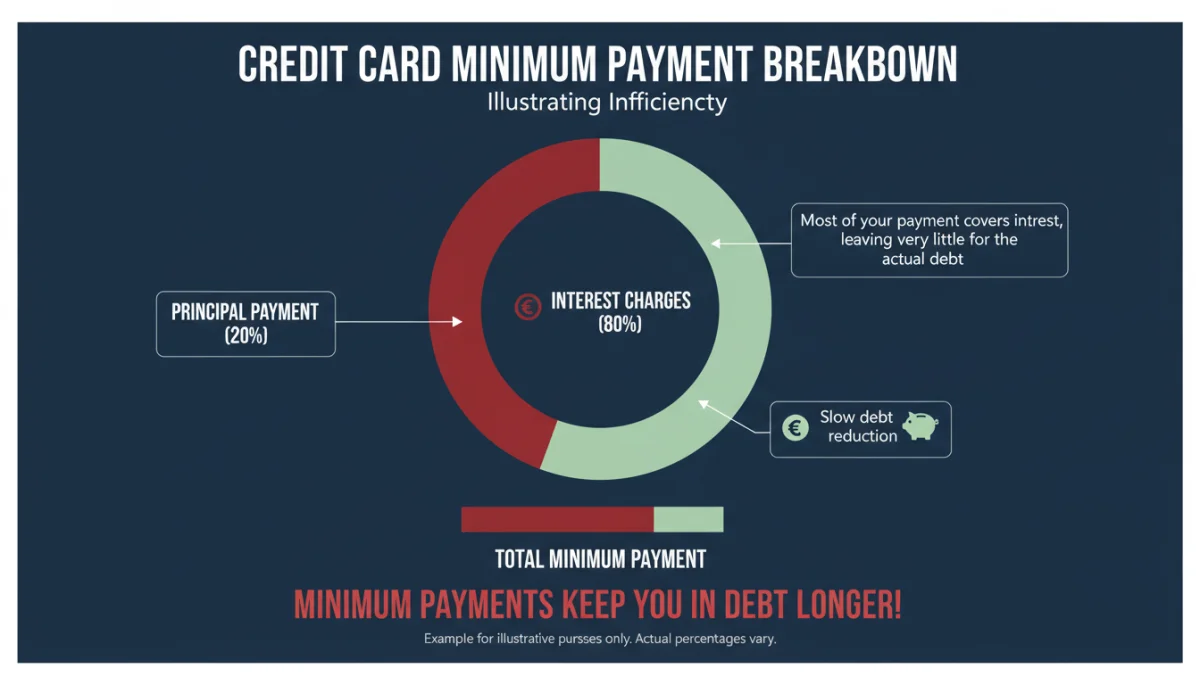
Imagine your minimum payment is 2% of your balance or $25, whichever is greater. On a $5000 balance, your initial minimum payment would be $100. However, a significant portion of that $100 immediately goes to cover the interest accrued. At 20% APR, the monthly interest on $5000 is approximately $83.33 ($5000 * 0.20 / 12). This means only about $16.67 actually reduces your principal.
Slow Principal Reduction: With only a small fraction of your payment going to principal, the overall balance decreases at a glacial pace.
Compounding Interest: The remaining high principal continues to accrue interest, which then compounds, further escalating the debt.
Psychological Impact: The slow progress can be demoralizing, making it harder to stay motivated in your debt repayment journey.
This scenario highlights the insidious nature of minimum payments. They offer a false sense of security, making debt seem manageable in the short term, while quietly extending the repayment period and dramatically increasing the total cost.
The Shocking 12-Year Payoff Period
Now, let’s reveal the hard truth: paying only the minimum on that $5000 credit card debt at 20% APR can indeed take an astonishing 12 years to pay off. This figure often catches people by surprise, as it’s far longer than most would ever anticipate for what seems like a relatively modest debt.
The extended payoff period is a direct consequence of the minimum payment structure. As only a tiny portion of each payment reduces the principal, the balance decreases very slowly. This means you continue to pay interest on a large amount for an incredibly long time, essentially financing your original purchase many times over.
The Math Behind the Years
When you crunch the numbers, the reality is stark. Over 12 years, you’ll make 144 payments. While the principal slowly diminishes, the cumulative interest paid becomes substantial. Many online credit card payoff calculators can demonstrate this effect vividly. They reveal how a slight increase in your monthly payment can drastically cut down the repayment time and total interest paid.
Total Interest Paid: Over 12 years, the total interest paid on a $5000 debt at 20% APR with minimum payments can easily exceed the original principal, often reaching $6000-$7000 or more.
Opportunity Cost: The money spent on interest could have been saved, invested, or used for other financial goals, representing a significant lost opportunity.
Financial Strain: Carrying debt for such a long period can create continuous financial stress and limit future borrowing capacity.
The 12-year payoff period is not just a number; it represents a significant portion of your financial life tied up in a single debt. It’s a powerful illustration of why understanding the mechanics of credit card debt is so vital.
The True Cost: Beyond the Principal
The true cost of minimum payments extends far beyond the original principal balance. While the initial $5000 might be what you borrowed, the total amount you repay can be double or even triple that amount, primarily due to accumulated interest. This hidden cost is what truly devastates personal finances.
Consider the cumulative impact: every month, a significant chunk of your payment disappears into interest, never reducing your core debt. Over a decade, these small, seemingly manageable interest payments add up to a staggering sum. It’s essentially paying a premium for the convenience of delaying full repayment.
Long-Term Financial Implications
Erosion of Savings: Funds that could have been directed to an emergency fund or retirement savings are instead consumed by interest payments.
Delayed Financial Goals: Major life goals, such as buying a home, starting a family, or funding education, can be postponed indefinitely due to ongoing debt obligations.
Impact on Credit Score: While making minimum payments prevents default, a high credit utilization ratio (how much credit you’re using compared to your limit) can negatively affect your credit score, making future borrowing more expensive.
The real cost isn’t just financial; it’s also psychological. The constant burden of debt can lead to stress, anxiety, and a feeling of being trapped. Breaking free from this cycle requires a clear understanding of these hidden costs and a proactive approach to debt management.
Strategies to Accelerate Debt Payoff
Escaping the minimum payment trap requires more than just awareness; it demands action and a strategic approach. There are several effective methods you can employ to accelerate your debt payoff, significantly reducing both the time frame and the total interest paid. The key is to commit to a plan and stick with it.
The most straightforward strategy is to simply pay more than the minimum whenever possible. Even an extra $20 or $50 per month can make a substantial difference over time. This additional amount goes directly towards reducing your principal, which in turn reduces the interest accrued in subsequent billing cycles.
Effective Debt Reduction Methods
Debt Snowball Method: Pay off your smallest debt first while making minimum payments on others. Once the smallest is paid, roll that payment into the next smallest debt. This provides psychological wins.
Debt Avalanche Method: Focus on paying off the debt with the highest interest rate first, while making minimum payments on others. This saves the most money on interest.
Balance Transfers: If you have good credit, consider transferring high-interest balances to a new card with a 0% introductory APR. Be sure to pay off the balance before the promotional period ends.
Debt Consolidation Loans: A personal loan with a lower, fixed interest rate can consolidate multiple credit card debts into one manageable payment, often at a reduced overall cost.
Beyond these methods, consider increasing your income or cutting expenses to free up more money for debt repayment. Every dollar extra you put towards your principal is a dollar saved in future interest. A disciplined approach, combined with one of these strategies, can dramatically shorten your debt journey.
Preventing Future Credit Card Debt Accumulation
Once you’ve tackled existing credit card debt, the next crucial step is to prevent its recurrence. Building healthy financial habits and understanding the pitfalls of credit card use are essential for long-term financial stability. It’s about shifting your mindset from reactive debt management to proactive financial planning.
Establishing a realistic budget is foundational. A budget allows you to track your income and expenses, identify areas where you can save, and ensure you’re not spending more than you earn. This awareness is key to avoiding the overspending that often leads to credit card debt.
Key Prevention Strategies
Create and Stick to a Budget: Regularly review your spending and adjust your budget as needed to stay on track.
Build an Emergency Fund: Having 3-6 months’ worth of living expenses saved can prevent you from relying on credit cards for unexpected costs.
Pay in Full Each Month: The golden rule of credit cards: if you can’t pay it off in full, don’t buy it. This completely avoids interest charges.
Monitor Your Credit Utilization: Keep your credit utilization below 30% to protect your credit score and avoid appearing overextended to lenders.
Be Mindful of Promotional Offers: Understand the terms and conditions of new credit cards or balance transfers to avoid hidden fees or sudden rate increases.
Preventing future debt accumulation is about financial discipline and making informed choices. It’s a continuous process of learning and adapting, but the rewards of a debt-free life are well worth the effort.
Key Aspect
Description
Minimum Payments
Often barely cover interest, leading to slow principal reduction and extended payoff times.
20% APR on $5000
Results in significant monthly interest charges, making debt repayment highly inefficient.
12-Year Payoff
The estimated time to clear a $5000 debt at 20% APR with only minimum payments.
Total Cost
Can be double or triple the original principal due to compounded interest over time.
Frequently Asked Questions About Credit Card Debt
Why do minimum payments take so long to pay off debt?▼
Minimum payments are designed to be low, primarily covering interest charges. Only a small fraction goes towards reducing the principal balance, which means the debt decreases very slowly. This extended period allows more interest to accrue, prolonging the payoff time significantly.
What is APR and how does it affect my credit card debt?▼
APR stands for Annual Percentage Rate, representing the annual cost of borrowing. A higher APR means more interest accrues on your balance, making your debt more expensive and harder to pay off quickly. It directly impacts how much of your payment goes to interest versus principal.
Is it always bad to make only minimum payments?▼
While making minimum payments prevents late fees and protects your credit score from defaults, it’s generally not advisable for long-term debt. It extends the payoff period and significantly increases the total interest paid, costing you much more in the long run.
What are some effective ways to pay off credit card debt faster?▼
Effective strategies include paying more than the minimum, using the debt snowball or avalanche methods, consolidating debt with a lower-interest loan, or transferring balances to a 0% APR card. Increasing income or reducing expenses can also free up funds for faster repayment.
How can I prevent accumulating credit card debt in the future?▼
Preventing future debt involves creating and sticking to a budget, building an emergency fund, paying off your balance in full each month, and monitoring your credit utilization. These habits foster financial discipline and reduce reliance on credit cards for everyday expenses.
Conclusion
The journey to financial freedom often begins with a clear understanding of debt’s true nature. As we’ve explored, the seemingly innocuous act of making only minimum payments on a credit card can transform a $5000 debt at 20% APR into a prolonged, 12-year financial burden, costing thousands in avoidable interest. This stark reality underscores the critical importance of proactive debt management. By understanding the mechanics of interest, embracing strategic payoff methods like the debt snowball or avalanche, and cultivating robust financial habits, you can break free from the cycle of minimum payments. Your financial future hinges on making informed choices today, ensuring that your hard-earned money works for you, not against you, in the relentless pursuit of interest. Take control, accelerate your payoff, and build a more secure financial foundation.